If you have any questions, you are always welcome to contact us. We'll get back to you as soon as possible, withing 24 hours on weekdays.
Customer service
All questions about your order, return and delivery must be sent to our customer service team by e-mail at yourstore@yourdomain.com
Sale & Press
If you are interested in selling our products, need more information about our brand or wish to make a collaboration, please contact us at press@yourdomain.com
Help
If you have any questions, you are always welcome to contact us. We'll get back to you as soon as possible, withing 24 hours on weekdays.
Customer service
All questions about your order, return and delivery must be sent to our customer service team by e-mail at yourstore@yourdomain.com
Sale & Press
If you are interested in selling our products, need more information about our brand or wish to make a collaboration, please contact us at press@yourdomain.com
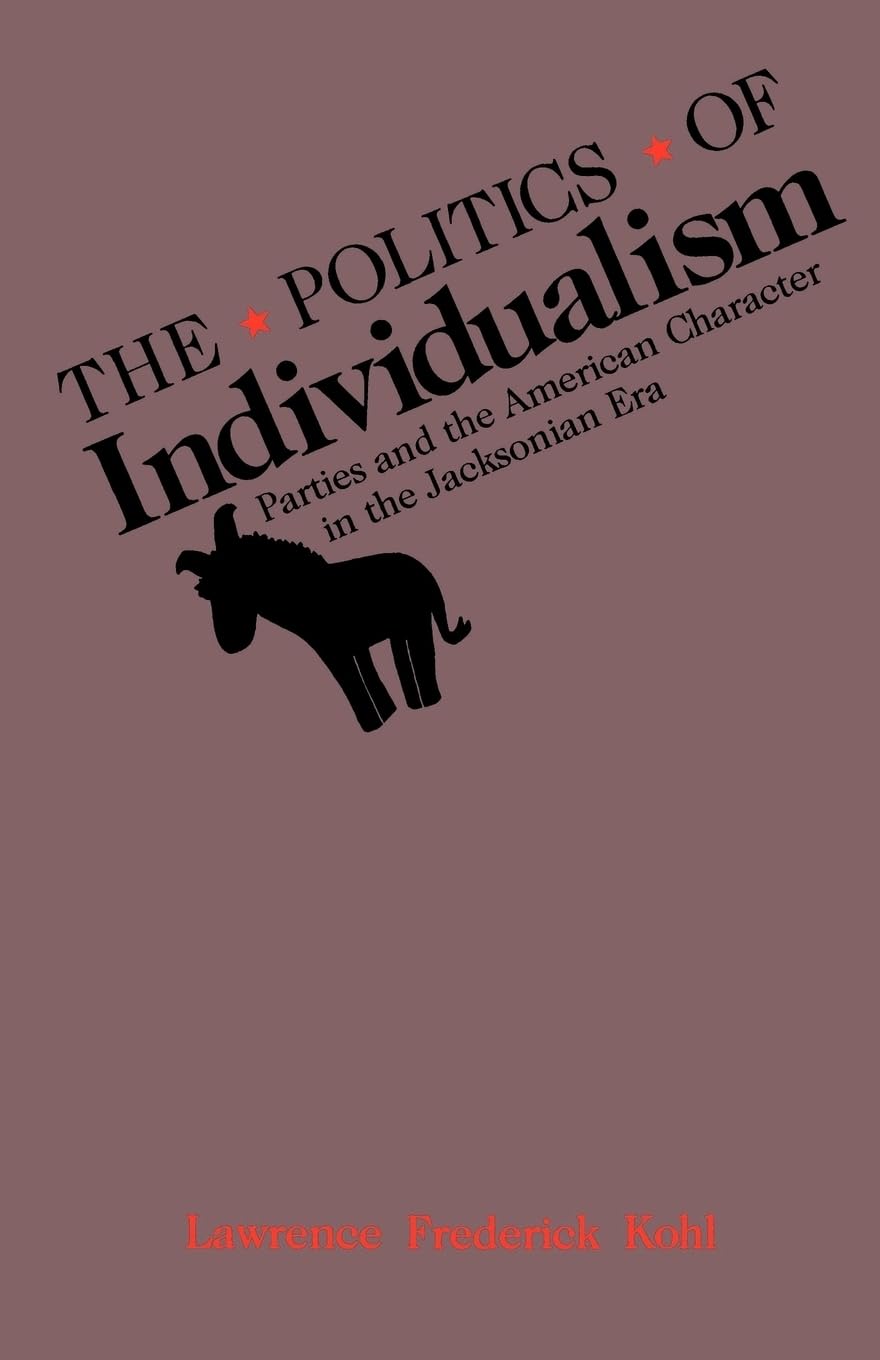
In the fifty years following the Revolution, America's population nearly quadrupled, its boundaries expanded, industrialization took root in the Northeast, new modes of transportation flourished, state banks proliferated and offered easy credit to eager entrepreneurs, and Americans found themselves in the midst of an accelerating age of individualism, equality, and selfreliance. To the Jacksonian generation, it seemed as if their world had changed practically overnight. The Politics of Individualism looks at the political manifestations of these staggering social transformations.During the 1830s and 1840s, Americans were consumed by politics and party loyalties were fierce. Here, Kohl draws on the political rhetoric found in speeches, newspapers, periodicals, and pamphlets to place the Democrats and the Whigs in a solid social and psychological context. He contends that the political division between these two parties reflected the division between Americans unsettled by the new individualistic social order and those whose character allowed them to strive more confidently within it. Democrats, says Kohl, were more 'traditiondirected,' bound to others in more personal ways; Whigs, on the other hand, were more 'innerdirected' and embraced the impersonal, selfinterested relationships of a market society. By examining this fascinating dialogue of parties, Kohl brings us bright new insight into the politics and people of Jacksonian America.
⚠️ WARNING (California Proposition 65):
This product may contain chemicals known to the State of California to cause cancer,
birth defects, or other reproductive harm.
For MAP (Minimum Advertised Price) violations and Intellectual Property (IP) or Trademark concerns, please contact:
support@ergodebooks.com
⚠️ California Proposition 65 Warning: Some products sold on this website may expose you to chemicals known to the State of California to cause cancer, birth defects, or other reproductive harm. For more information, visit www.P65Warnings.ca.gov.