
Title
The Politics of Party Funding: State Funding to Political Parties and Party Competition in Western Europe (Comparative Politics),Used
Sold by Ergodebooks, an authorized reseller.
Returns accepted within 30 days | support@ergodebooks.com
Shipping Information
- Free Standard Shipping — United States only
- Processing Time: 3–5 business days
- Estimated Delivery: 6–10 business days after dispatch
- Double-boxed, fully insured & discreetly packaged
- Tracking number sent via email once dispatched
Returns & Refund
Returns accepted within 30 days of delivery.
Damaged or Defective Item
Free return shipping + replacement or full refund
Wrong Item Received
Free return shipping + replacement or full refund
Change of Mind
Return shipping at customer's expense · 25% restocking fee applies
Payment Option

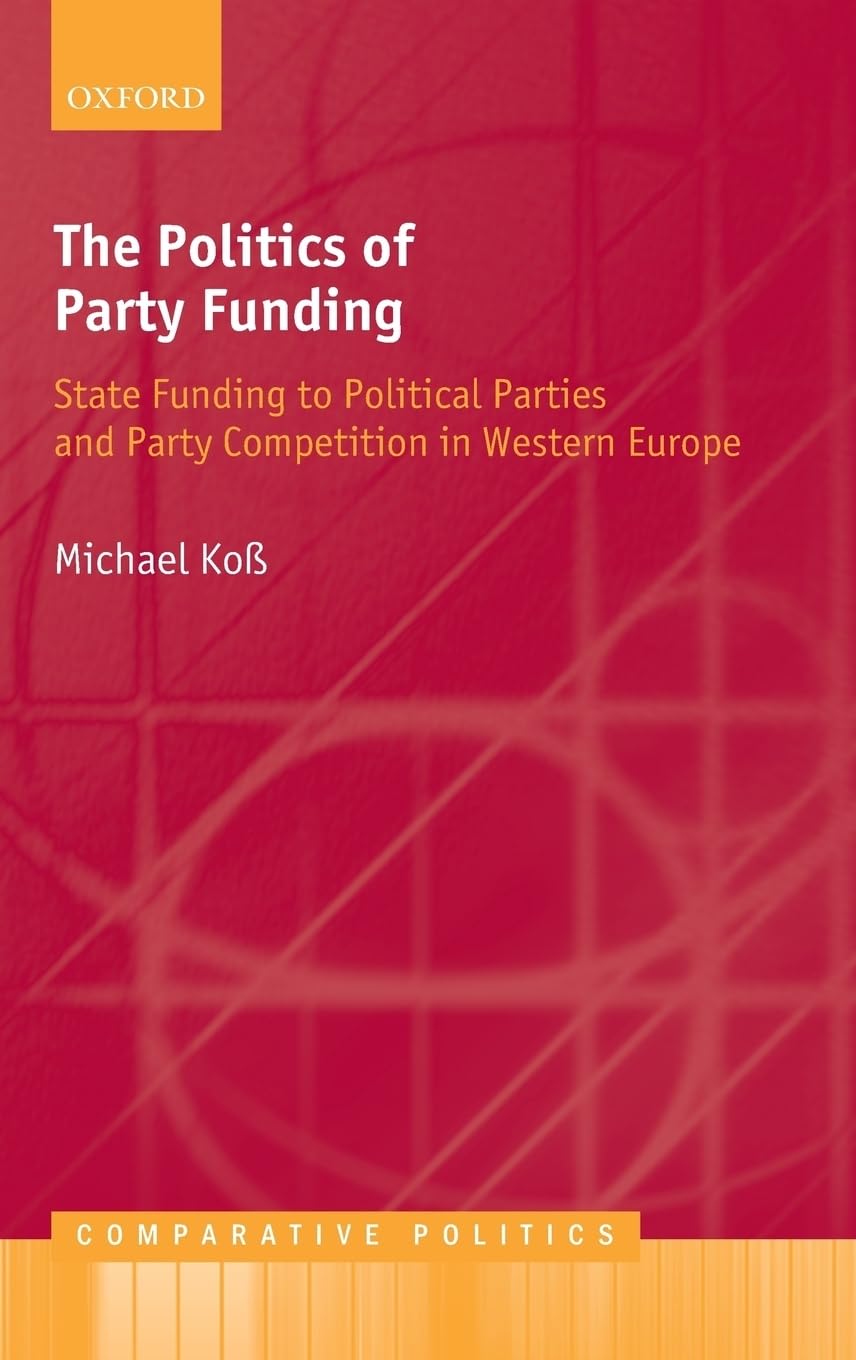
Recently there has been a convergence of party funding regimes across many states of Western Europe. The driving force behind this process has been the introduction of state funding to political parties. The Politics of Party Funding subsequently asks why state funding to political parties has been introduced in ever more countries and yet there still remain some places where it has only been introduced to a decidedly limited degree? It argues that a consensus of the relevant parties is a prerequisite for the introduction of state funding, thereby assuming a nexus between particular forms of party competition and the outcome of party funding reforms.The author, Michael Ko, shows how the introduction of state funding is more likely to occur in countries where parties have a high number of institutional veto points at their disposal, where both policy and officeseeking play a more important role in parties' strategic preferences than voteseeking, and where the discourse on political corruption identifies state funding as a remedy against corrupt practices. These assumptions are confirmed for four cases: Germany, Sweden, the UK, and France. Ko argues that two constellations of independent variables facilitate the introduction or reform of state subsidies. On the one hand, in political systems that provide parties with a considerable number of veto points, voteseeking generally plays a minor role in decisions about party funding. On the other hand parties can reach a consensus independently of the institutional environment and their strategic preferences by engaging in the discourse on political corruption.Decreasing levels of ideological polarization prior to the introduction of state funding imply that causal mechanisms similar to the ones identified in the four case studies are at work in established democracies in Western Europe more generally. Thus, The Politics of Party Funding represents a first step towards a theory which explains differences and similarities in party funding regimes.
⚠️ WARNING (California Proposition 65):
This product may contain chemicals known to the State of California to cause cancer, birth defects, or other reproductive harm.
For more information, please visit www.P65Warnings.ca.gov.