If you have any questions, you are always welcome to contact us. We'll get back to you as soon as possible, withing 24 hours on weekdays.
Customer service
All questions about your order, return and delivery must be sent to our customer service team by e-mail at yourstore@yourdomain.com
Sale & Press
If you are interested in selling our products, need more information about our brand or wish to make a collaboration, please contact us at press@yourdomain.com
Help
If you have any questions, you are always welcome to contact us. We'll get back to you as soon as possible, withing 24 hours on weekdays.
Customer service
All questions about your order, return and delivery must be sent to our customer service team by e-mail at yourstore@yourdomain.com
Sale & Press
If you are interested in selling our products, need more information about our brand or wish to make a collaboration, please contact us at press@yourdomain.com
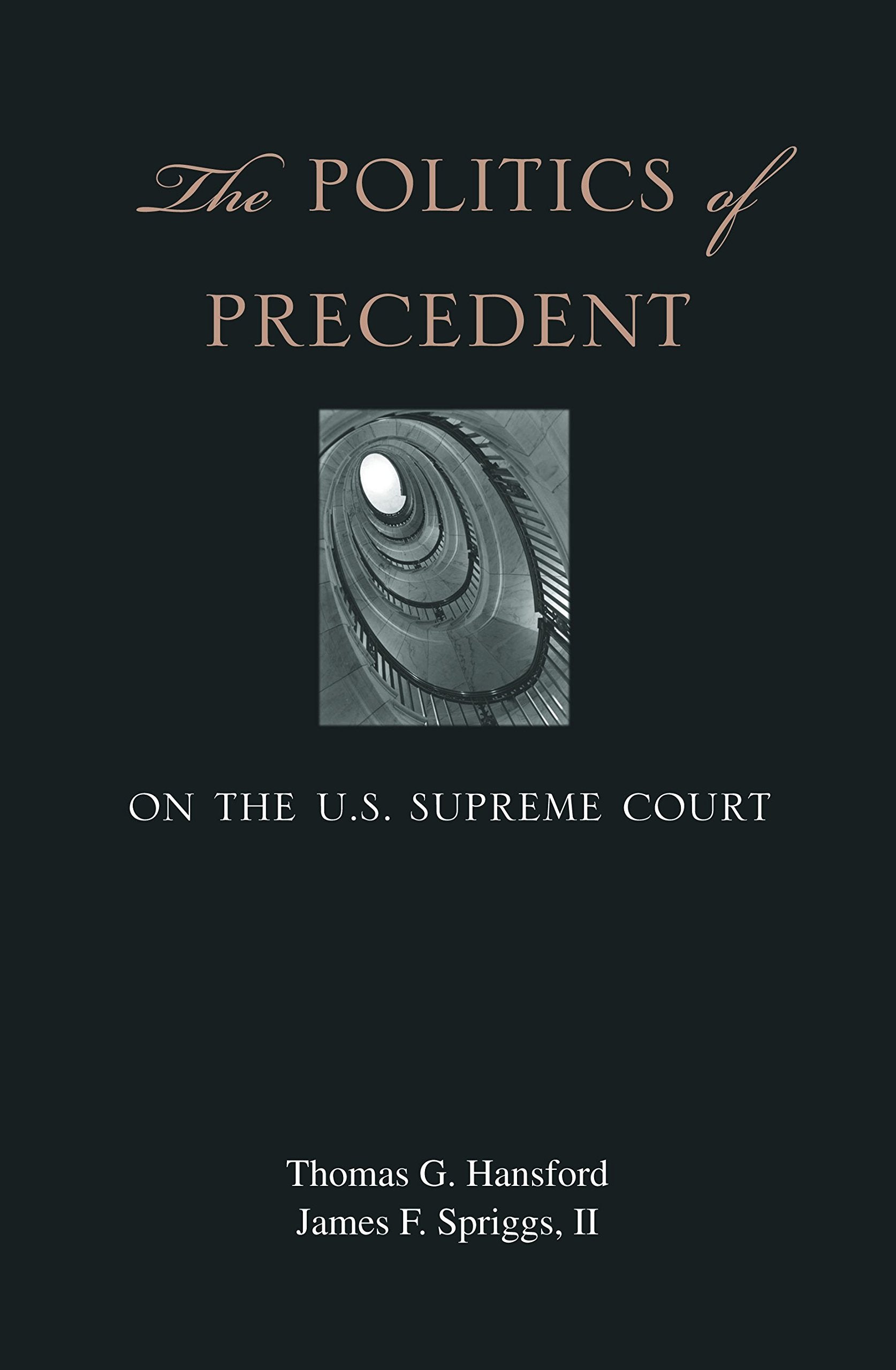
The Politics of Precedent on the U.S. Supreme Court offers an insightful and provocative analysis of the Supreme Court's most important taskshaping the law. Thomas Hansford and James Spriggs analyze a key aspect of legal change: the Court's interpretation or treatment of the precedents it has set in the past. Court decisions do not just resolve immediate disputes; they also set broader precedent. The meaning and scope of a precedent, however, can change significantly as the Court revisits it in future cases. The authors contend that these interpretations are driven by an interaction between policy goals and variations in the legal authoritativeness of precedent. From this premise, they build an explanation of the legal interpretation of precedent that yields novel predictions about the nature and timing of legal change.Hansford and Spriggs test their hypotheses by examining how the Court has interpreted the precedents it set between 1946 and 1999. This analysis provides compelling support for their argument, and demonstrates that the justices' ideological goals and the role of precedent are inextricably linked. The two prevailing, yet contradictory, views of precedentthat it acts either solely as a constraint, or as a "cloak" that never actually influences the Courtare incorrect. This book shows that while precedent can operate as a constraint on the justices' decisions, it also represents an opportunity to foster preferred societal outcomes.
⚠️ WARNING (California Proposition 65):
This product may contain chemicals known to the State of California to cause cancer,
birth defects, or other reproductive harm.
For MAP (Minimum Advertised Price) violations and Intellectual Property (IP) or Trademark concerns, please contact:
support@ergodebooks.com
⚠️ California Proposition 65 Warning: Some products sold on this website may expose you to chemicals known to the State of California to cause cancer, birth defects, or other reproductive harm. For more information, visit www.P65Warnings.ca.gov.