
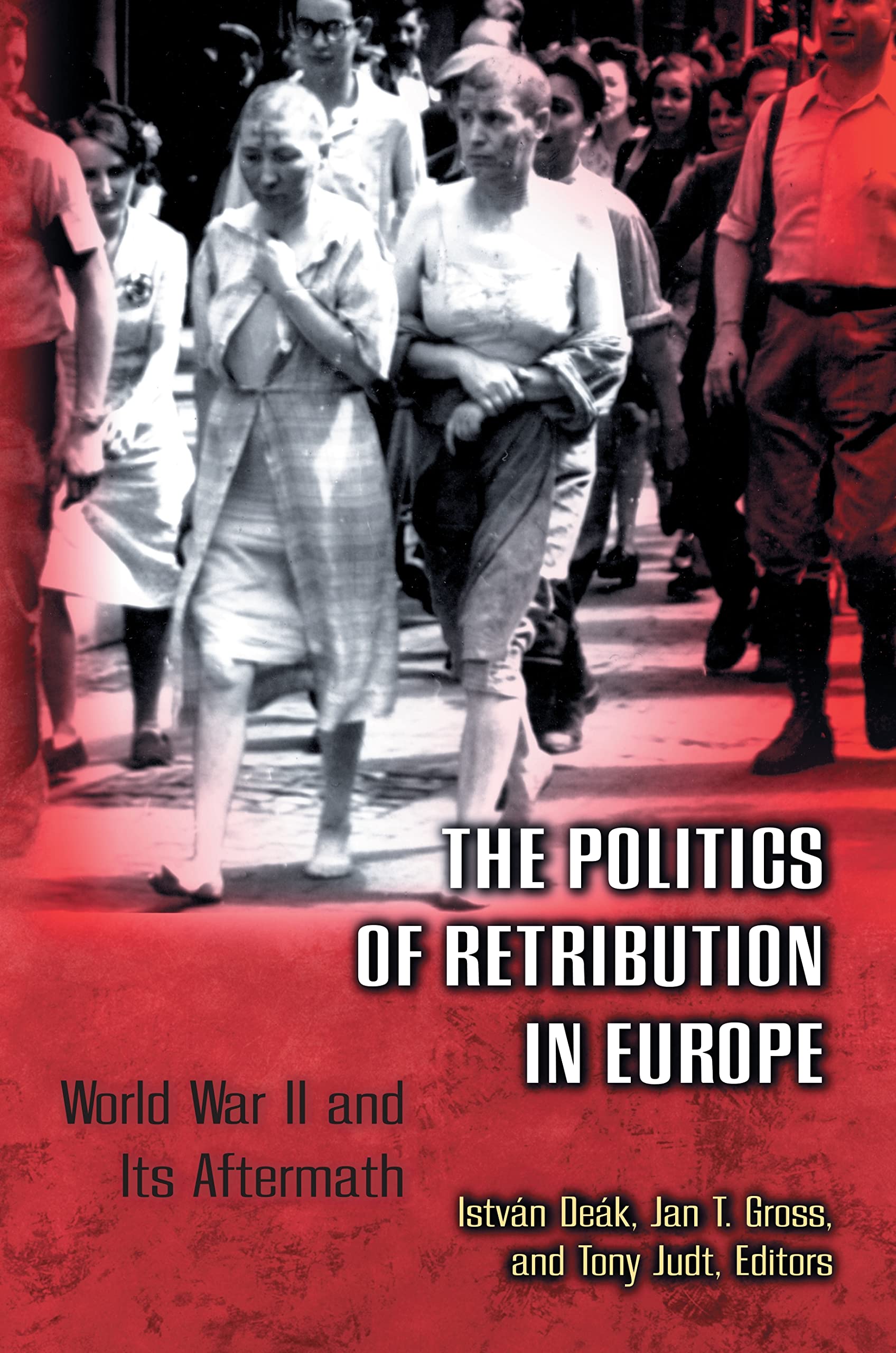
Title
The Politics Of Retribution In Europe,New
Sold by Ergodebooks, an authorized reseller.
Returns accepted within 30 days | support@ergodebooks.com
Shipping Information
- Free Standard Shipping — United States only
- Processing Time: 3–5 business days
- Estimated Delivery: 6–10 business days after dispatch
- Double-boxed, fully insured & discreetly packaged
- Tracking number sent via email once dispatched
Returns & Refund
Returns accepted within 30 days of delivery.
Damaged or Defective Item
Free return shipping + replacement or full refund
Wrong Item Received
Free return shipping + replacement or full refund
Change of Mind
Return shipping at customer's expense · 25% restocking fee applies
Payment Option

The Presentation Of Europe'S Immediate Historical Past Has Quite Dramatically Changed. Conventional Depictions Of Occupation And Collaboration In World War Ii, Of Wartime Resistance And Postwar Renewal, Provided The Familiar Backdrop Against Which The Chronicle Of Postwar Europe Has Mostly Been Told. Within These Often Ritualistic Presentations, It Was Possible To Conceal The Fact That Not Only Were The Majority Of People In Hitler'S Europe Not Resistance Fighters But Millions Actively Cooperated With And Many Millions More Rather Easily Accommodated To Nazi Rule. Moreover, After The War, Those Who Judged Former Collaborators Were Sometimes Themselves Former Collaborators. Many People Became Innocent Victims Of Retribution, While Othersamong Them Notorious War Criminalsescaped Punishment. Nonetheless, The Process Of Retribution Was Not Useless But Rather A Historically Unique Effort To Purify The Continent Of The Many Sins Europeans Had Committed. This Book Sheds Light On The Collective Amnesia That Overtook European Governments And Peoples Regarding Their Own Responsibility For War Crimes And Crimes Against Humanityan Amnesia That Has Only Recently Begun To Dissipate As A Result Of Often Painful Searching Across The Continent.In Inspiring Essays, A Group Of Internationally Renowned Scholars Unravels The Moral And Political Choices Facing European Governments In The War'S Aftermath: How To Punish The Guilty, How To Decide Who Was Guilty Of What, How To Convert Often Unspeakable And Conflicted War Experiences And Memories Into Serviceable, Even Uplifting Accounts Of National History. In Short, These Scholars Explore How The Drama Of The Immediate Past Was (And Was Not) Successfully 'Overcome.' Through Their Comparative And Transnational Emphasis, They Also Illuminate The Division Between Eastern And Western Europe, Locating Its Origins Both In The War And In Postwar Domestic And International Affairs. Here, As In Their Discussion Of Collaborators' Trials, The Authors Lay Bare The Roots Of The Many Unresolved And Painful Memories Clouding Presentday Europe.Contributors Are Brad Abrams, Martin Conway, Sarah Farmer, Luc Huyse, Lszl Karsai, Mark Mazower, And Peter Romijn, As Well As The Editors. Taken Separately, Their Essays Are Significant Contributions To The Contemporary History Of Several European Countries. Taken Together, They Represent An Original And Pathbreaking Account Of A Formative Moment In The Shaping Of Europe At The Dawn Of A New Millennium.
⚠️ WARNING (California Proposition 65):
This product may contain chemicals known to the State of California to cause cancer, birth defects, or other reproductive harm.
For more information, please visit www.P65Warnings.ca.gov.
- Q: How many pages does the book 'The Politics of Retribution in Europe' have? A: The book has three hundred sixty-eight pages. It offers a comprehensive examination of Europe's post-war historical narrative.
- Q: What is the binding type of this book? A: The book is paperback bound. This type of binding is lightweight and flexible, making it easy to handle.
- Q: What are the dimensions of 'The Politics of Retribution in Europe'? A: The book measures six point fourteen inches in length, zero point seventy-nine inches in width, and nine point twenty-one inches in height. These dimensions make it a manageable size for reading.
- Q: Who is the author of this book? A: The author is István Deák. He is recognized for his scholarly contributions to contemporary European history.
- Q: What is the main theme of 'The Politics of Retribution in Europe'? A: The main theme revolves around the moral and political choices faced by European governments after World War II. It highlights issues of accountability and collective memory.
- Q: Is this book suitable for academic study? A: Yes, it is suitable for academic study. The book features essays from renowned scholars, making it a valuable resource for students and researchers.
- Q: What topics does the book cover regarding post-war Europe? A: The book covers topics such as wartime collaboration, retribution processes, and the moral dilemmas faced by governments. It offers a comparative analysis of Eastern and Western Europe.
- Q: How does the book address the concept of amnesia in Europe? A: The book discusses the collective amnesia regarding war crimes and responsibilities in Europe. It emphasizes how this amnesia has only recently begun to dissipate.
- Q: Are there illustrations in the book? A: Yes, there are black and white illustrations throughout the book. These illustrations complement the text and enhance the reader's understanding.
- Q: What is the target audience for this book? A: The target audience includes scholars, students, and readers interested in European history. It is particularly relevant for those studying World War II and its aftermath.
- Q: What does the book reveal about war criminals after World War II? A: The book reveals that many notorious war criminals escaped punishment after World War II. It examines the complexities of post-war justice.
- Q: How does the book compare Eastern and Western Europe? A: The book compares Eastern and Western Europe by exploring the origins of their divisions during and after the war. It analyzes domestic and international factors influencing these differences.
- Q: Who are some contributors to this book? A: Contributors include Brad Abrams, Martin Conway, Sarah Farmer, and Mark Mazower. Their essays collectively provide insight into various aspects of post-war Europe.
- Q: What is the significance of the essays in this book? A: The essays are significant as they contribute to the contemporary history of several European countries. They present original and pathbreaking perspectives.
- Q: Does the book discuss the process of retribution in Europe? A: Yes, the book discusses the process of retribution in Europe as a unique effort to address the sins committed during the war. It examines the effectiveness and consequences of these actions.
- Q: Can this book help in understanding modern European identity? A: Yes, this book can help in understanding modern European identity. It explores how historical narratives shape contemporary views and national histories.