If you have any questions, you are always welcome to contact us. We'll get back to you as soon as possible, withing 24 hours on weekdays.
Customer service
All questions about your order, return and delivery must be sent to our customer service team by e-mail at yourstore@yourdomain.com
Sale & Press
If you are interested in selling our products, need more information about our brand or wish to make a collaboration, please contact us at press@yourdomain.com
Help
If you have any questions, you are always welcome to contact us. We'll get back to you as soon as possible, withing 24 hours on weekdays.
Customer service
All questions about your order, return and delivery must be sent to our customer service team by e-mail at yourstore@yourdomain.com
Sale & Press
If you are interested in selling our products, need more information about our brand or wish to make a collaboration, please contact us at press@yourdomain.com
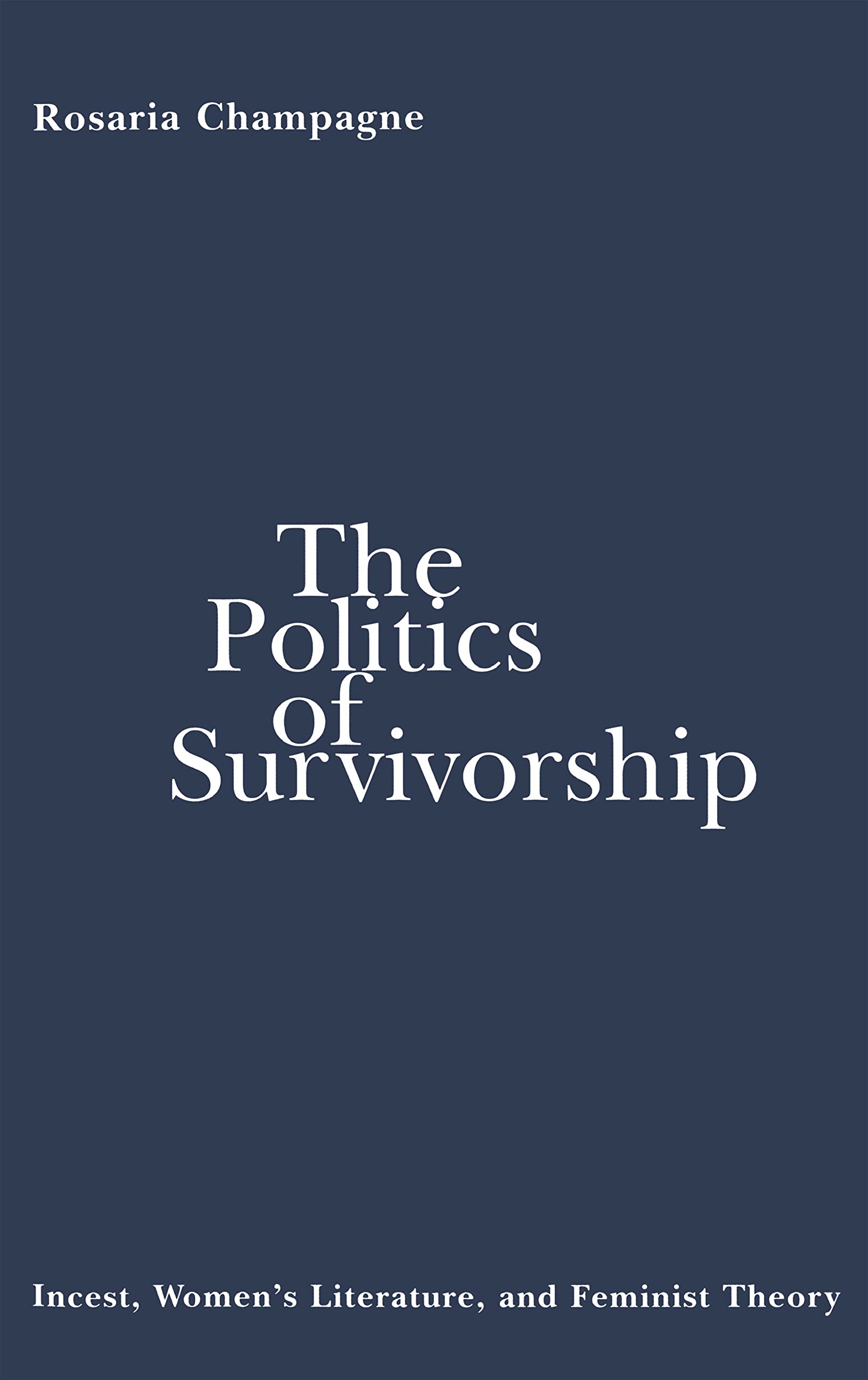
The topic of incest began to emerge in the early 1990s, producing a spate of television specials and providing the material for a surging industry of talk shows as well as an antifeminist campaign against incest survivors and their therapists. The validity, reality, and readability of recovered memories of incest has become a highly contested and difficult subject.This heightened interest has benefited incest survivors, according to Rosaria Champagne, by allowing them to speak up and make political their experiences. Victims, formerly entwined in their own abuse by remaining silent, have learned to voice their protest and to challenge the societal order that allows incest to occur.In The Politics of Survivorship Champagne explores a range of cultural representations of incest, from the writings of Mary Wollstonecraft Shelley to motherdaughter incest in contemporary true crime novels, to Oprah Winfrey's television special Scared Silent, in order to examine expressions of survivorship. In the process, Champagne attempts to level the disparity and the hierarchy of value among theory, literature, popular culture and social movements. Champagne makes a powerful argument that community and academic feminists should embrace survivorship as a potential site of feminist political intervention into patriarchy and heterosexism. She concludes with a critical look at the way in which the False Memory Syndrome Foundation has conducted an antifeminist campaign against incest survivors and their therapists.
⚠️ WARNING (California Proposition 65):
This product may contain chemicals known to the State of California to cause cancer,
birth defects, or other reproductive harm.
For MAP (Minimum Advertised Price) violations and Intellectual Property (IP) or Trademark concerns, please contact:
support@ergodebooks.com
⚠️ California Proposition 65 Warning: Some products sold on this website may expose you to chemicals known to the State of California to cause cancer, birth defects, or other reproductive harm. For more information, visit www.P65Warnings.ca.gov.