If you have any questions, you are always welcome to contact us. We'll get back to you as soon as possible, withing 24 hours on weekdays.
Customer service
All questions about your order, return and delivery must be sent to our customer service team by e-mail at yourstore@yourdomain.com
Sale & Press
If you are interested in selling our products, need more information about our brand or wish to make a collaboration, please contact us at press@yourdomain.com
Help
If you have any questions, you are always welcome to contact us. We'll get back to you as soon as possible, withing 24 hours on weekdays.
Customer service
All questions about your order, return and delivery must be sent to our customer service team by e-mail at yourstore@yourdomain.com
Sale & Press
If you are interested in selling our products, need more information about our brand or wish to make a collaboration, please contact us at press@yourdomain.com
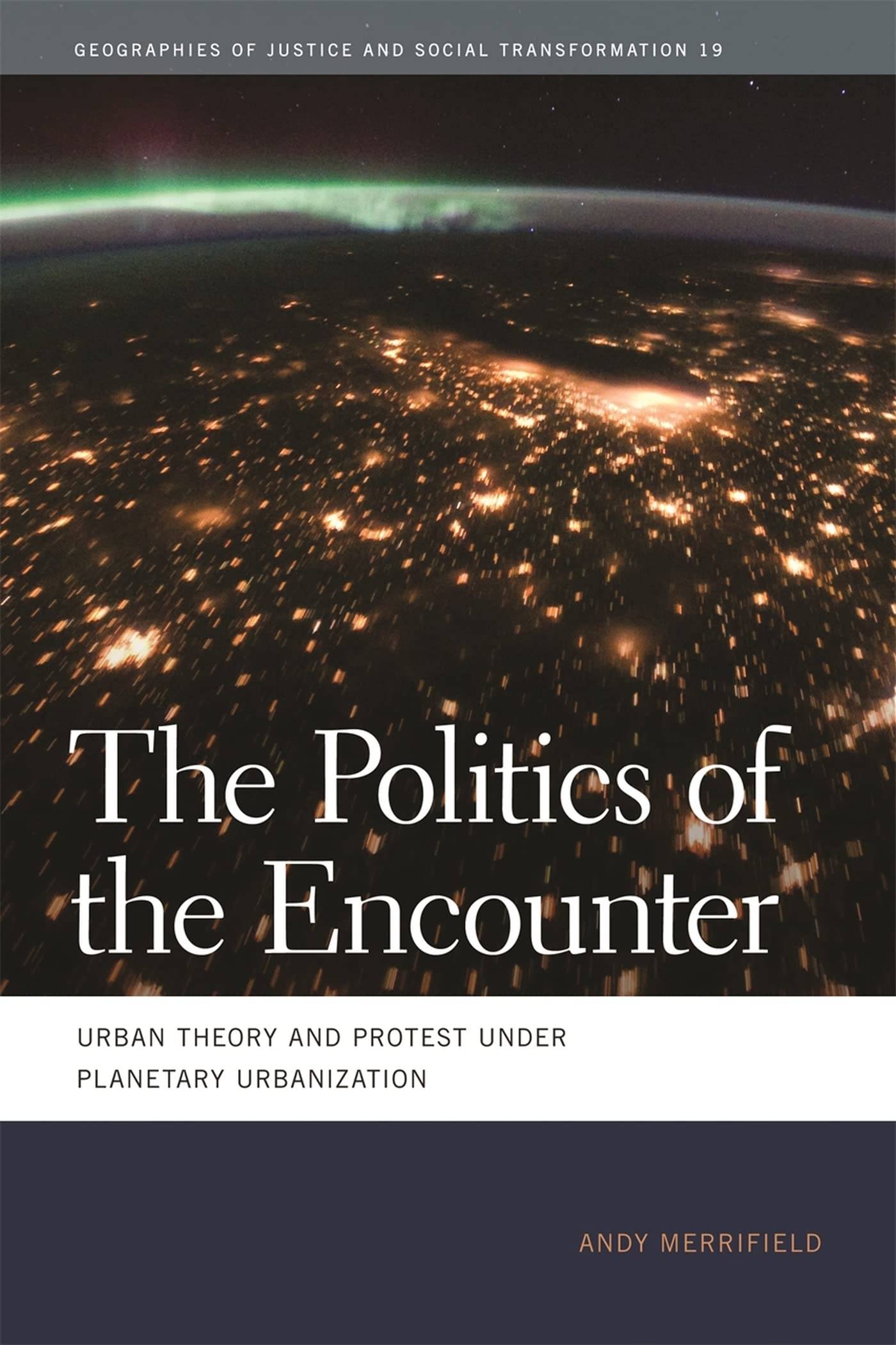
The Politics of the Encounter is a spirited interrogation of the city as a site of both theoretical inquiry and global social struggle. The city, writes Andy Merrifield, remains 'important, virtually and materially, for progressive politics.' And yet, he notes, more than forty years have passed since Henri Lefebvre advanced the powerful ideas that still undergird much of our thinking about urbanization and urban society. Merrifield rethinks the city in light of the vast changes to our planet since 1970, when Lefebvre's seminal Urban Revolution was first published. At the same time, he expands on Lefebvre's notion of 'the right to the city,' which was first conceived in the wake of the 1968 student uprising in Paris.We need to think less of cities as 'entities with borders and clear demarcations between what's inside and what's outside' and emphasize instead the effects of 'planetary urbanization,' a concept of Lefebvre's that Merrifield makes relevant for the ways we now experience the urban. The cityfrom Tahrir Square to Occupy Wall Streetseems to be the critical zone in which a new social protest is unfolding, yet dissenters' aspirations are transcending the scale of the city physically and philosophically. Consequently, we must shift our perspective from 'the right to the city' to 'the politics of the encounter,' says Merrifield. We must ask how revolutionary crowds form, where they draw their energies from, what kind of spaces they occur inand what kind of new spaces they produce.
⚠️ WARNING (California Proposition 65):
This product may contain chemicals known to the State of California to cause cancer,
birth defects, or other reproductive harm.
For MAP (Minimum Advertised Price) violations and Intellectual Property (IP) or Trademark concerns, please contact:
support@ergodebooks.com
⚠️ California Proposition 65 Warning: Some products sold on this website may expose you to chemicals known to the State of California to cause cancer, birth defects, or other reproductive harm. For more information, visit www.P65Warnings.ca.gov.