If you have any questions, you are always welcome to contact us. We'll get back to you as soon as possible, withing 24 hours on weekdays.
Customer service
All questions about your order, return and delivery must be sent to our customer service team by e-mail at yourstore@yourdomain.com
Sale & Press
If you are interested in selling our products, need more information about our brand or wish to make a collaboration, please contact us at press@yourdomain.com
Help
If you have any questions, you are always welcome to contact us. We'll get back to you as soon as possible, withing 24 hours on weekdays.
Customer service
All questions about your order, return and delivery must be sent to our customer service team by e-mail at yourstore@yourdomain.com
Sale & Press
If you are interested in selling our products, need more information about our brand or wish to make a collaboration, please contact us at press@yourdomain.com
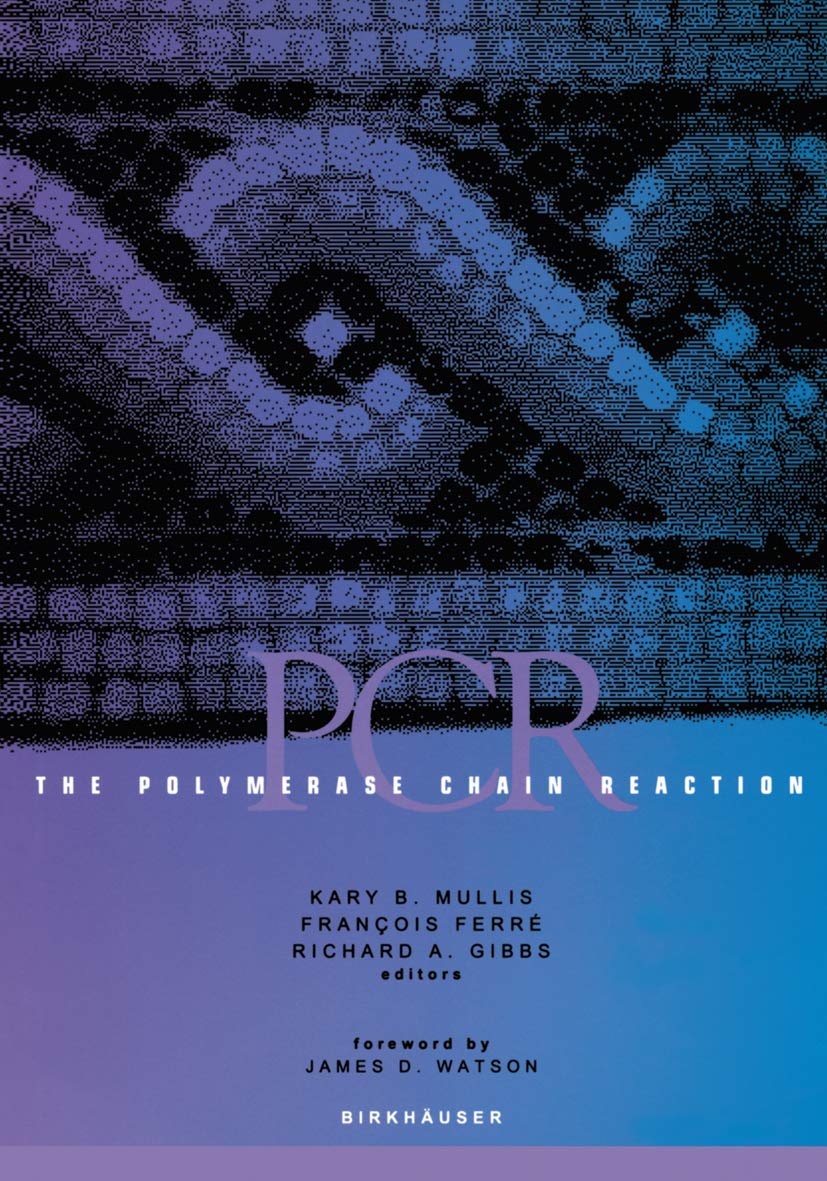
James D. Watson When, in late March of 1953, Francis Crick and I came to write the first Nature paper describing the double helical structure of the DNA molecule, Francis had wanted to include a lengthy discussion of the genetic implications of a molecule whose struc ture we had divined from a minimum of experimental data and on theoretical argu ments based on physical principles. But I felt that this might be tempting fate, given that we had not yet seen the detailed evidence from King's College. Nevertheless, we reached a compromise and decided to include a sentence that pointed to the biological significance of the molecule's key featurethe complementary pairing of the bases. 'It has not escaped our notice,' Francis wrote, 'that the specific pairing that we have postulated immediately suggests a possible copying mechanism for the genetic material.' By May, when we were writing the second Nature paper, I was more confident that the proposed structure was at the very least substantially correct, so that this second paper contains a discussion of molecular selfduplication using templates or molds. We pointed out that, as a consequence of base pairing, a DNA molecule has two chains that are complementary to each other. Each chain could then act '. . . as a template for the formation on itself of a new companion chain, so that eventually we shall have two pairs of chains, where we only had one before' and, moreover, ' ...
⚠️ WARNING (California Proposition 65):
This product may contain chemicals known to the State of California to cause cancer,
birth defects, or other reproductive harm.
For MAP (Minimum Advertised Price) violations and Intellectual Property (IP) or Trademark concerns, please contact:
support@ergodebooks.com
⚠️ California Proposition 65 Warning: Some products sold on this website may expose you to chemicals known to the State of California to cause cancer, birth defects, or other reproductive harm. For more information, visit www.P65Warnings.ca.gov.