
Title
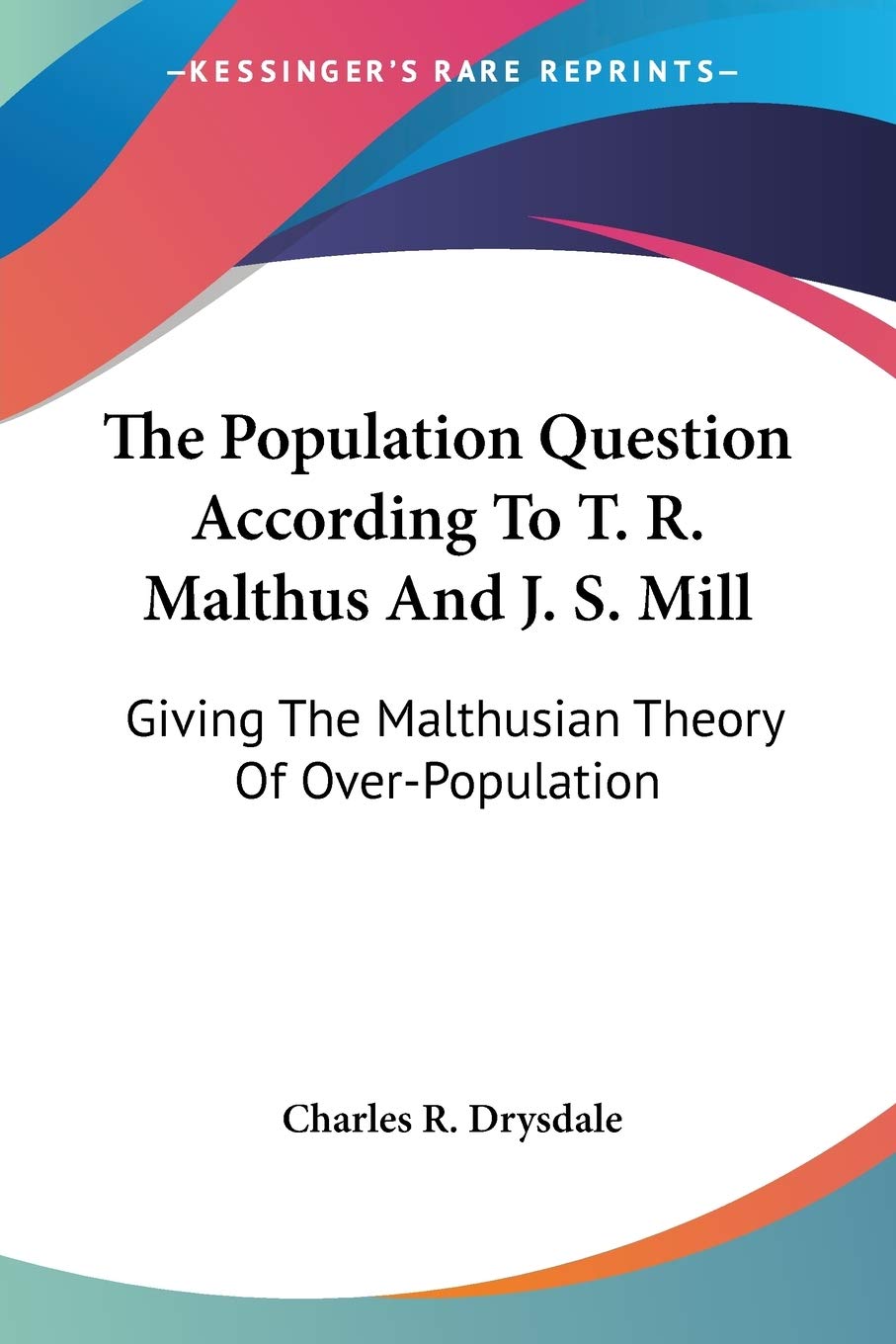
The Population Question According To T. R. Malthus And J. S. Mill: Giving The Malthusian Theory Of OverPopulation,Used
Sold by Ergodebooks, an authorized reseller.
Returns accepted within 30 days | support@ergodebooks.com
Shipping Information
- Free Standard Shipping — United States only
- Processing Time: 3–5 business days
- Estimated Delivery: 6–10 business days after dispatch
- Double-boxed, fully insured & discreetly packaged
- Tracking number sent via email once dispatched
Returns & Refund
Returns accepted within 30 days of delivery.
Damaged or Defective Item
Free return shipping + replacement or full refund
Wrong Item Received
Free return shipping + replacement or full refund
Change of Mind
Return shipping at customer's expense · 25% restocking fee applies
Payment Option

The book titled ""The Population Question According to T.R. Malthus and J.S. Mill: Giving the Malthusian Theory of OverPopulation"" is written by Charles R. Drysdale. The book is a detailed analysis of the population theories put forth by two influential economists of the 19th century, Thomas Robert Malthus and John Stuart Mill.The book is divided into two parts, the first part deals with the Malthusian theory of overpopulation, and the second part explores the views of John Stuart Mill on population growth. The author presents a comprehensive overview of the theories, including their historical context, the assumptions made by the economists, and the implications of their ideas.The Malthusian theory of overpopulation argues that population growth will eventually outstrip the resources available to sustain it, leading to famine, disease, and social unrest. Malthus believed that the only way to prevent such a catastrophe was to limit population growth through moral restraint, such as abstinence or delayed marriage.On the other hand, John Stuart Mill believed that population growth was not a problem in itself, but rather a symptom of deeper social and economic issues. Mill argued that increasing education, improving working conditions, and promoting gender equality would lead to a decline in birth rates and a more sustainable population growth.Overall, the book provides a fascinating insight into the population theories of two influential thinkers of the 19th century and their relevance to modernday debates on population growth and sustainability.This scarce antiquarian book is a facsimile reprint of the old original and may contain some imperfections such as library marks and notations. Because we believe this work is culturally important, we have made it available as part of our commitment for protecting, preserving, and promoting the world's literature in affordable, high quality, modern editions, that are true to their original work.
⚠️ WARNING (California Proposition 65):
This product may contain chemicals known to the State of California to cause cancer, birth defects, or other reproductive harm.
For more information, please visit www.P65Warnings.ca.gov.