
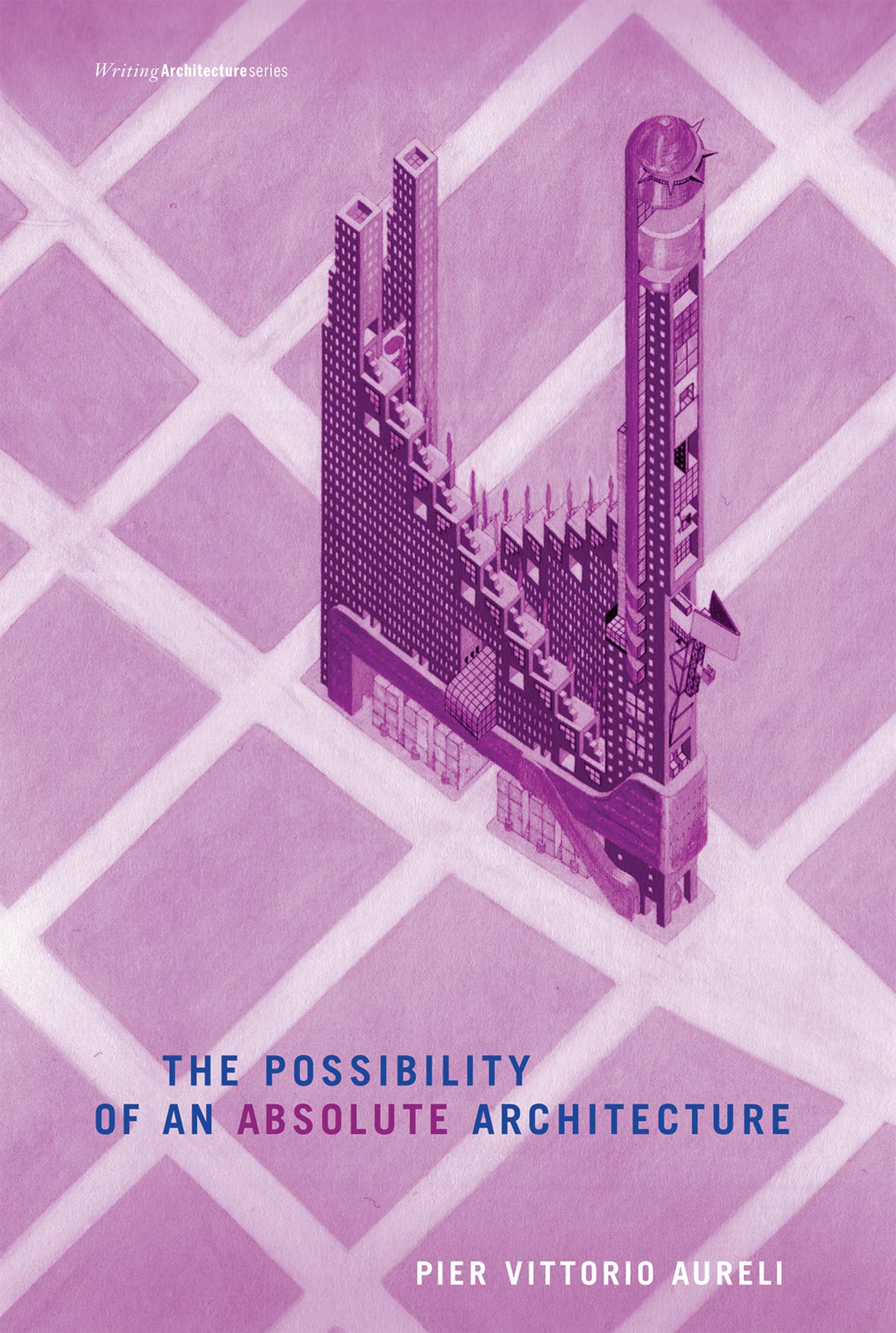
Title
The Possibility of an Absolute Architecture (Writing Architecture),New
Sold by Ergodebooks, an authorized reseller.
Returns accepted within 30 days | support@ergodebooks.com
Shipping Information
- Free Standard Shipping — United States only
- Processing Time: 3–5 business days
- Estimated Delivery: 6–10 business days after dispatch
- Double-boxed, fully insured & discreetly packaged
- Tracking number sent via email once dispatched
Returns & Refund
Returns accepted within 30 days of delivery.
Damaged or Defective Item
Free return shipping + replacement or full refund
Wrong Item Received
Free return shipping + replacement or full refund
Change of Mind
Return shipping at customer's expense · 25% restocking fee applies
Payment Option

Architectural form reconsidered in light of a unitary conception of architecture and the city.In The Possibility of an Absolute Architecture, Pier Vittorio Aureli proposes that a sharpened formal consciousness in architecture is a precondition for political, cultural, and social engagement with the city. Aureli uses the term absolute not in the conventional sense of pure, but to denote something that is resolutely itself after being separated from its other. In the pursuit of the possibility of an absolute architecture, the other is the space of the city, its extensive organization, and its government. Politics is agonism through separation and confrontation; the very condition of architectural form is to separate and be separated. Through its act of separation and being separated, architecture reveals at once the essence of the city and the essence of itself as political form: the city as the composition of (separate) parts. Aureli revisits the work of four architects whose projects were advanced through the making of architectural form but whose concern was the city at large: Andrea Palladio, Giovanni Battista Piranesi, tienne LouisBoulle, and Oswald Mathias Ungers. The work of these architects, Aureli argues, addressed the transformations of the modern city and its urban implications through the elaboration of specific and strategic architectural forms. Their projects for the city do not take the form of an overall plan but are expressed as an archipelago of sitespecific interventions.
⚠️ WARNING (California Proposition 65):
This product may contain chemicals known to the State of California to cause cancer, birth defects, or other reproductive harm.
For more information, please visit www.P65Warnings.ca.gov.
- Q: What is the page count of this book? A: This book has two hundred fifty-one pages. It is designed to provide an in-depth exploration of architectural concepts.
- Q: What are the dimensions of the book? A: The book measures seven point nine five inches in length, five point five six inches in width, and zero point six four inches in height.
- Q: What type of binding does this book have? A: This book is paperback bound. This binding style makes it lightweight and easy to handle.
- Q: Who is the author of this book? A: The author is Pier Vittorio Aureli. He is known for his contributions to architectural theory and criticism.
- Q: What is the genre of this book? A: The genre is Criticism. It critically examines architectural form and its relationship with urban spaces.
- Q: How do I approach reading this book? A: Read it as a theoretical exploration of architecture. It's suitable for those interested in urban studies and architectural form.
- Q: Is this book suitable for beginners in architecture? A: Yes, it can be suitable for beginners. However, it may be more beneficial for those with some prior knowledge of architectural theory.
- Q: What themes are explored in this book? A: The book explores themes such as architectural form, urban engagement, and the political implications of architecture.
- Q: Can this book be used for academic purposes? A: Yes, it is suitable for academic study. It provides insights into historical and theoretical aspects of architecture.
- Q: How should I store this book to keep it in good condition? A: Store it upright on a shelf away from direct sunlight. This will help preserve the book’s condition over time.
- Q: Are there any specific care instructions for this book? A: Keep it dry and avoid exposure to moisture. This will prevent any damage to the pages and binding.
- Q: What should I do if the book arrives damaged? A: Contact the seller immediately for a return or exchange. Most sellers provide options for damaged items.
- Q: Is there a warranty for this book? A: Typically, books do not come with a warranty. However, check with the seller for their return policy.
- Q: What if I have questions about the content of this book? A: Consider reaching out to academic forums or book clubs focused on architectural criticism. They can provide insights.
- Q: How does this book compare to others in architectural criticism? A: This book offers a unique perspective on the relationship between architecture and the city, distinguishing it from more general works.