
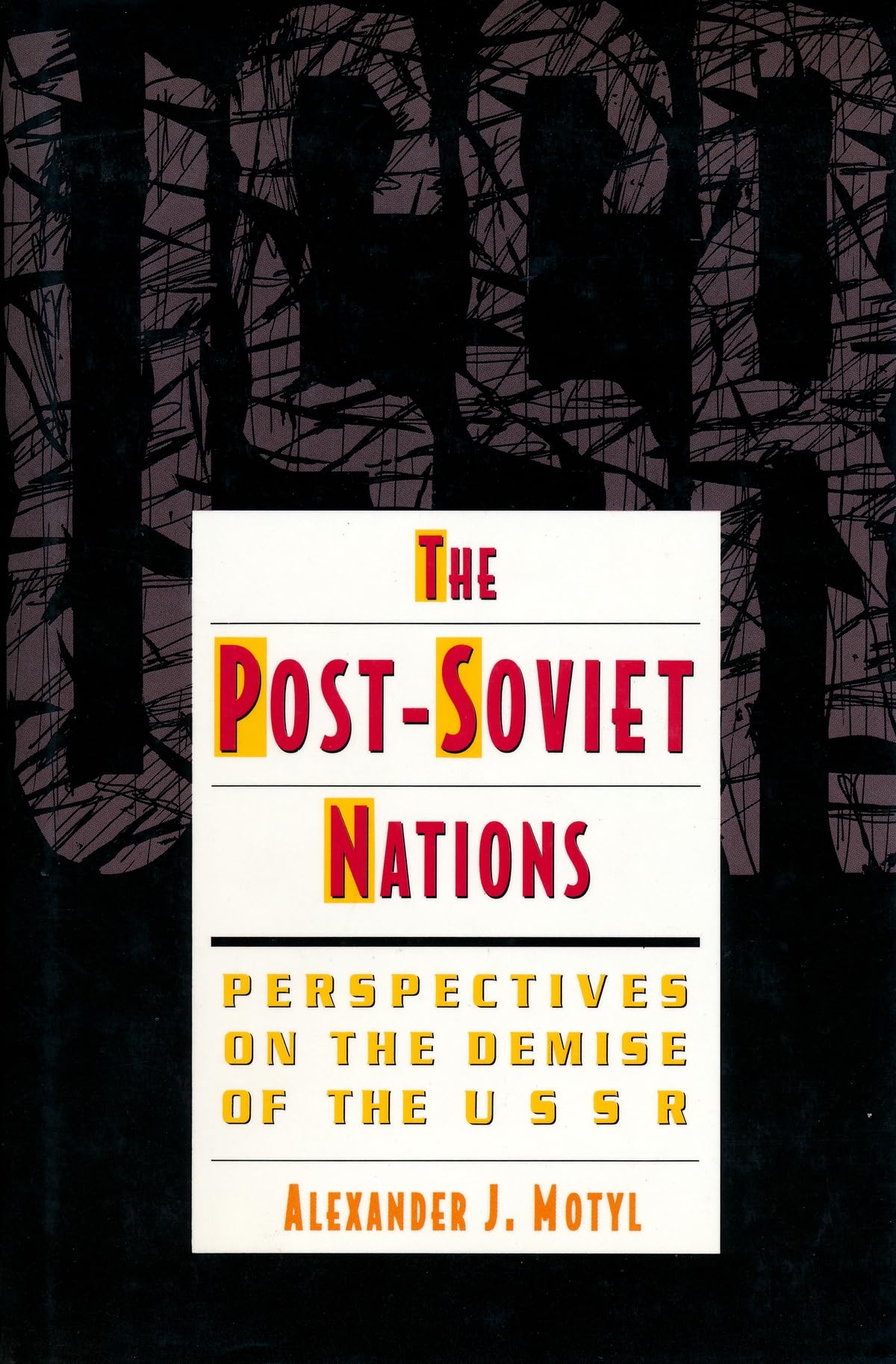
Title
The PostSoviet Nations,New
Sold by Ergodebooks, an authorized reseller.
Returns accepted within 30 days | support@ergodebooks.com
Shipping Information
- Free Standard Shipping — United States only
- Processing Time: 3–5 business days
- Estimated Delivery: 6–10 business days after dispatch
- Double-boxed, fully insured & discreetly packaged
- Tracking number sent via email once dispatched
Returns & Refund
Returns accepted within 30 days of delivery.
Damaged or Defective Item
Free return shipping + replacement or full refund
Wrong Item Received
Free return shipping + replacement or full refund
Change of Mind
Return shipping at customer's expense · 25% restocking fee applies
Payment Option

How must Sovietology change as a result of the Soviet Union's collapse? Motyl and his colleagues suggest that the first step in reorientation of the field must involve recognizing the nonRussians and their republics as central to both Soviet politics and to the postSoviet reality.The authors, all leading Sovietologists, illustrate how nationality interacted with and shaped ideology, law, elite recruitment, political repression, modernization, participation, political economy, and class.Each of the articles traces the relationship between nationality and aspects of the Soviet system up to the collapse of the USSR and the emergence in its stead of the Commonwealth of Independent States. The contributors not only provide a coherent interpretation of the demise of Soviet Communism, but they also sugest what dangers and opportunities lie in store for the Soviet Union's successor states.
⚠️ WARNING (California Proposition 65):
This product may contain chemicals known to the State of California to cause cancer, birth defects, or other reproductive harm.
For more information, please visit www.P65Warnings.ca.gov.
- Q: What is the main focus of 'The Post-Soviet Nations'? A: 'The Post-Soviet Nations' examines how Sovietology must evolve following the collapse of the Soviet Union, emphasizing the significance of non-Russian republics in Soviet politics and post-Soviet realities.
- Q: Who are the authors of this book? A: The book is authored by Alexander Motyl and a group of leading Sovietologists who contribute their insights on the interaction between nationality and the Soviet system.
- Q: What topics are covered in the book? A: The book covers various topics including ideology, law, political repression, modernization, and political economy, all in the context of nationality and the Soviet system.
- Q: How many pages does 'The Post-Soviet Nations' have? A: 'The Post-Soviet Nations' consists of 321 pages.
- Q: What is the publication date of this book? A: The book was published on November 15, 1992.
- Q: What type of binding does this book have? A: 'The Post-Soviet Nations' is available in a hardcover binding.
- Q: Is there any specific edition of the book? A: This book is listed as the first edition, denoted as edition '0'.
- Q: What can I learn from the contributors' perspectives? A: The contributors provide a coherent interpretation of the collapse of Soviet Communism and discuss potential dangers and opportunities for the successor states.
- Q: Who would benefit from reading this book? A: Students, researchers, and anyone interested in Soviet studies or post-Soviet politics would find valuable insights in this book.
- Q: Are there any notable themes discussed in the book? A: Notable themes include the relationship between nationality and various aspects of Soviet governance, particularly during the transition to the Commonwealth of Independent States.