
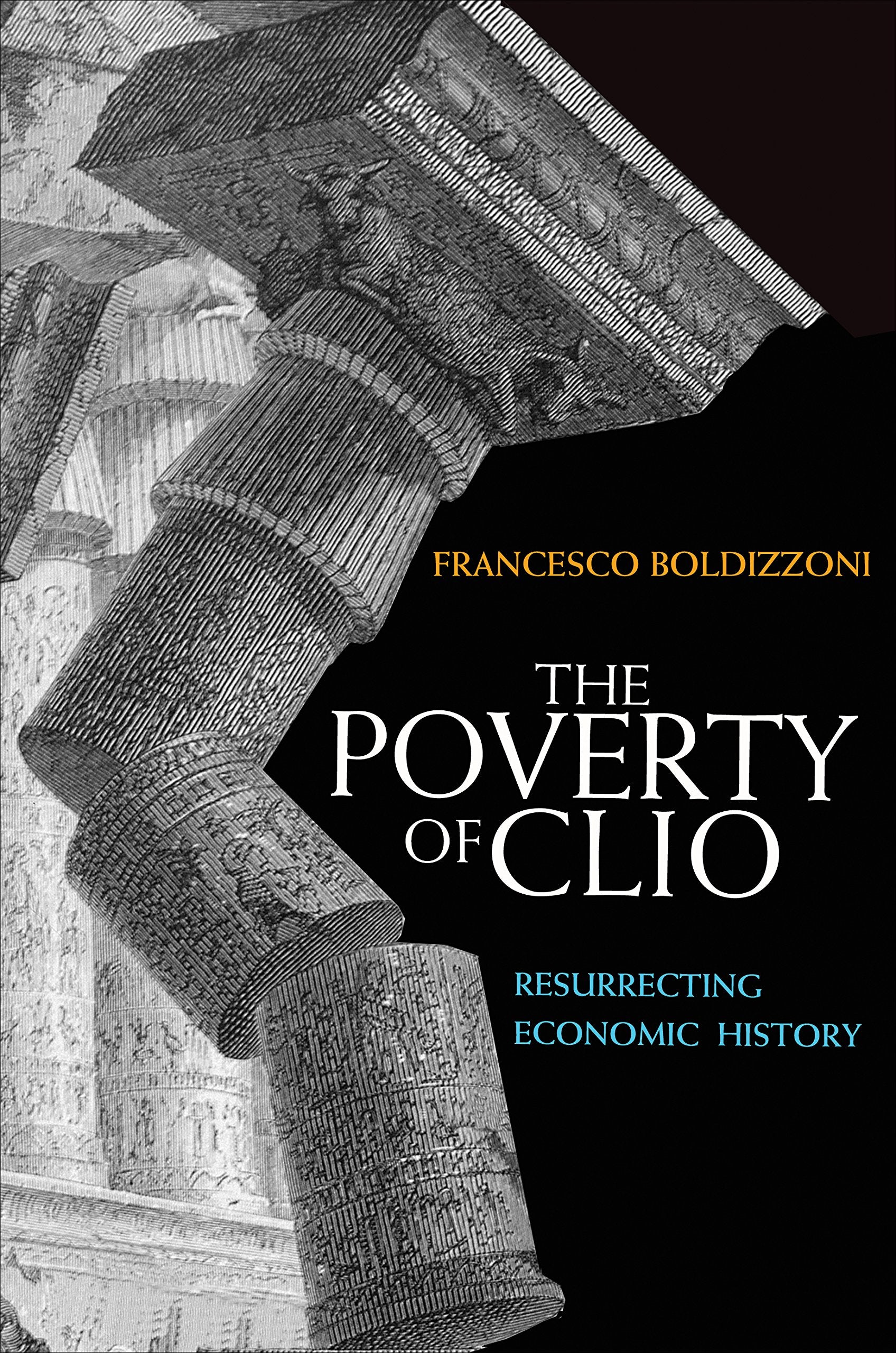
Title
The Poverty Of Clio: Resurrecting Economic History,Used
Sold by Ergodebooks, an authorized reseller.
Returns accepted within 30 days | support@ergodebooks.com
Shipping Information
- Free Standard Shipping — United States only
- Processing Time: 3–5 business days
- Estimated Delivery: 6–10 business days after dispatch
- Double-boxed, fully insured & discreetly packaged
- Tracking number sent via email once dispatched
Returns & Refund
Returns accepted within 30 days of delivery.
Damaged or Defective Item
Free return shipping + replacement or full refund
Wrong Item Received
Free return shipping + replacement or full refund
Change of Mind
Return shipping at customer's expense · 25% restocking fee applies
Payment Option

The Poverty of Clio challenges the hold that cliometricsan approach to economic history that employs the analytical tools of economistshas exerted on the study of our economic past. In this provocative book, Francesco Boldizzoni calls for the reconstruction of economic history, one in which history and the social sciences are brought to bear on economics, and not the other way around.Boldizzoni questions the appeal of economics over historywhich he identifies as a distinctly American attitudeexposing its errors and hidden ideologies, and revealing how it fails to explain economic behavior itself. He shows how the misguided reliance on economic reasoning to interpret history has come at the expense of insights from the humanities and has led to a rejection of valuable past historical research. Developing a better alternative to new institutional economics and the rational choice approach, Boldizzoni builds on the extraordinary accomplishments of twentiethcentury European historians and social thinkers to offer fresh ideas for the renewal of the field.Economic history needs to rediscover the true relationship between economy and culture, and promote an authentic alliance with the social sciences, starting with sociology and anthropology. It must resume its dialogue with the humanities, but without shrinking away from theory when constructing its models. The Poverty of Clio demonstrates why history must exert its own creative power on economics.
⚠️ WARNING (California Proposition 65):
This product may contain chemicals known to the State of California to cause cancer, birth defects, or other reproductive harm.
For more information, please visit www.P65Warnings.ca.gov.