
Title
The Presence of the Past,Used
Sold by Ergodebooks, an authorized reseller.
Returns accepted within 30 days | support@ergodebooks.com
Shipping Information
- Free Standard Shipping — United States only
- Processing Time: 3–5 business days
- Estimated Delivery: 6–10 business days after dispatch
- Double-boxed, fully insured & discreetly packaged
- Tracking number sent via email once dispatched
Returns & Refund
Returns accepted within 30 days of delivery.
Damaged or Defective Item
Free return shipping + replacement or full refund
Wrong Item Received
Free return shipping + replacement or full refund
Change of Mind
Return shipping at customer's expense · 25% restocking fee applies
Payment Option

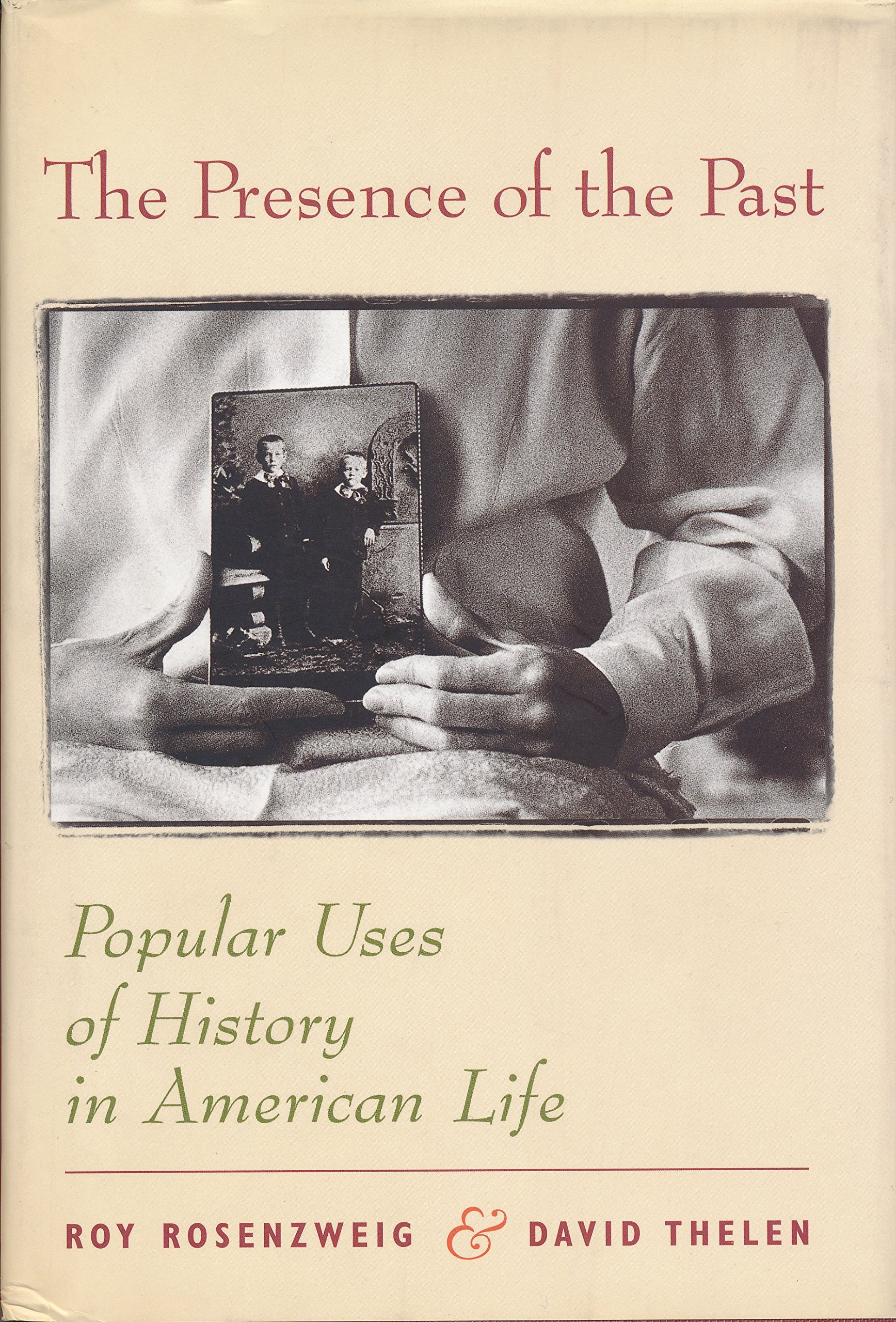
Some people make photo albums, collect antiques, or visit historic battlefields. Others keep diaries, plan annual family gatherings, or stitch together patchwork quilts in a tradition learned from grandparents. Each of us has ways of communing with the past, and our reasons for doing so are as varied as our memories. In a sweeping survey, Roy Rosenzweig and David Thelen asked 1,500 Americans about their connection to the past and how it influences their daily lives and hopes for the future. The result is a surprisingly candid series of conversations and reflections on how the past infuses the present with meaning.Rosenzweig and Thelen found that people assemble their experiences into narratives that allow them to make sense of their personal histories, set priorities, project what might happen next, and try to shape the future. By using these narratives to mark change and create continuity, people chart the courses of their lives. A young woman from Ohio speaks of giving birth to her first child, which caused her to reflect upon her parents and the ways that their example would help her to become a good mother. An African American man from Georgia tells how he and his wife were drawn to each other by their shared experiences and lessons learned from growing up in the South in the 1950s. Others reveal how they personalize historical events, as in the case of a Massachusetts woman who traces much of her guarded attitude toward life to witnessing the assassination of John F. Kennedy on television when she was a child.While the past is omnipresent to Americans, 'history' as it is usually defined in textbooks leaves many people cold. Rosenzweig and Thelen found that history as taught in school does not inspire a strong connection to the past. And they reveal how race and ethnicity affects how Americans perceive the past: while most white Americans tend to think of it as something personal, African Americans and American Indians are more likely to think in terms of broadly shared experienceslike slavery, the Civil Rights Movement, and the violation of Indian treaties.'Rosenzweig and Thelen's conclusions about the ways people use their personal, family, and national stories have profound implications for anyone involved in researching or presenting history, as well as for all those who struggle to engage with the past in a meaningful way.
⚠️ WARNING (California Proposition 65):
This product may contain chemicals known to the State of California to cause cancer, birth defects, or other reproductive harm.
For more information, please visit www.P65Warnings.ca.gov.