
Title
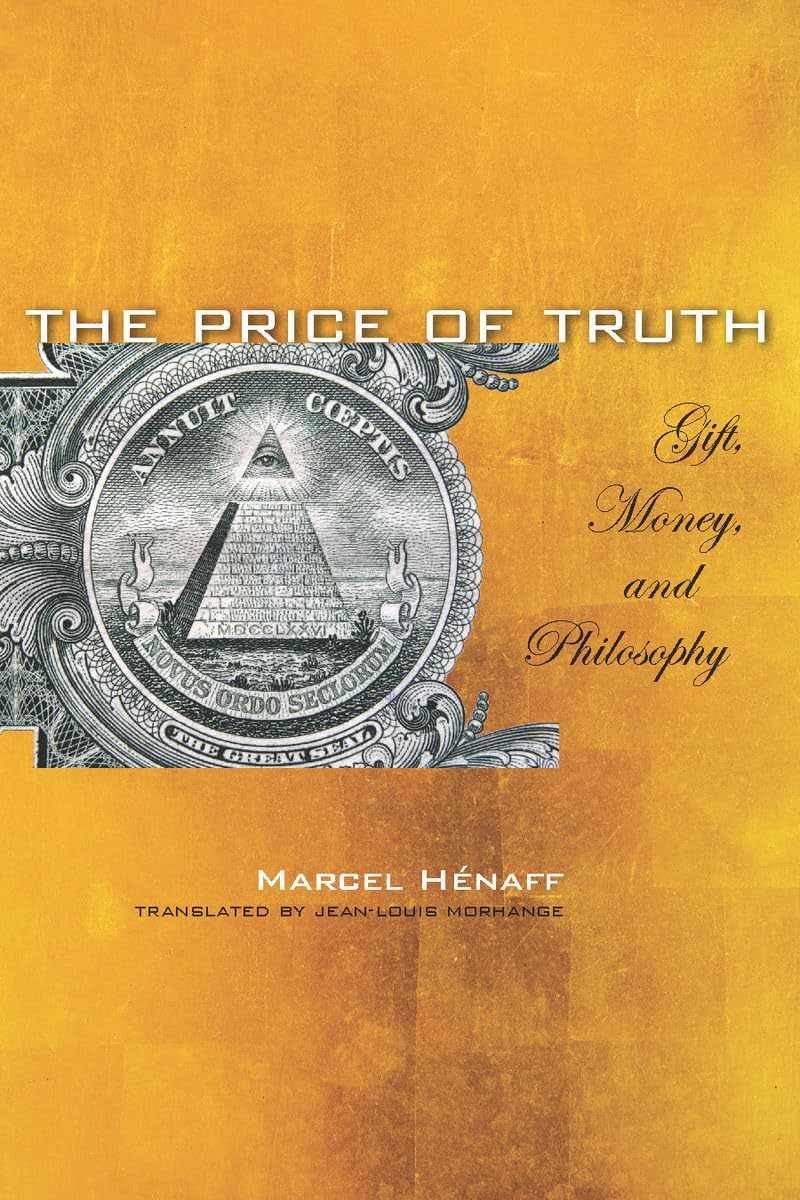
The Price Of Truth: Gift, Money, And Philosophy (Cultural Memory In The Present),New
Sold by Ergodebooks, an authorized reseller.
Returns accepted within 30 days | support@ergodebooks.com
Shipping Information
- Free Standard Shipping — United States only
- Processing Time: 3–5 business days
- Estimated Delivery: 6–10 business days after dispatch
- Double-boxed, fully insured & discreetly packaged
- Tracking number sent via email once dispatched
Returns & Refund
Returns accepted within 30 days of delivery.
Damaged or Defective Item
Free return shipping + replacement or full refund
Wrong Item Received
Free return shipping + replacement or full refund
Change of Mind
Return shipping at customer's expense · 25% restocking fee applies
Payment Option

Can exchange bring us together? Are there any physical or intangible goods that escape the logic of the marketplace? Is there a relationship between truththe very purpose of philosophyand money? Does truth have a price? Contrary to the Sophists, who demanded payment in return for their expertise, Socrates spoke for free. He had to do so, according to Aristotle, because knowledge cannot be measuredthough he could accept gifts in return. Today, we expect artists and intellectuals to be compensated for their labors. But is giving merely a form of exchange that was replaced by commerce? Anthropological investigation shows that the issue lies elsewhere: to give is to recognize in order to be recognized. It is to seal an alliance, to give oneself in what is given. Gifting raises further questions regarding the nature of sacrifice and the extent to which this last involves debt or grace. In The Price of Truth, Hnaff addresses these topics in turn, arguing that the relationship established by the gift lies at the core of the social bond. What emerges is a theory of culture and community formation that accounts for the structural patterns of traditional, political, and marketdominated societies. Crucial here is the idea that gifting and marketplace exchange are incommensurable. The latter, which involves money and contracts, has its own economic, political, and ethical necessity. The gift, though, always raises the ethical question of reciprocal recognition, a radical imperative to respect and be respected. Money has the power to threaten this requirement and break the bond that unites us. Why? To answer is to understand how thepricelessprice of truth is inseparable from that of dignity.
⚠️ WARNING (California Proposition 65):
This product may contain chemicals known to the State of California to cause cancer, birth defects, or other reproductive harm.
For more information, please visit www.P65Warnings.ca.gov.