
Title
The Private Abuse of the Public Interest: Market Myths and Policy Muddles (Chicago Studies in American Politics),New
Sold by Ergodebooks, an authorized reseller.
Returns accepted within 30 days | support@ergodebooks.com
Shipping Information
- Free Standard Shipping — United States only
- Processing Time: 3–5 business days
- Estimated Delivery: 6–10 business days after dispatch
- Double-boxed, fully insured & discreetly packaged
- Tracking number sent via email once dispatched
Returns & Refund
Returns accepted within 30 days of delivery.
Damaged or Defective Item
Free return shipping + replacement or full refund
Wrong Item Received
Free return shipping + replacement or full refund
Change of Mind
Return shipping at customer's expense · 25% restocking fee applies
Payment Option

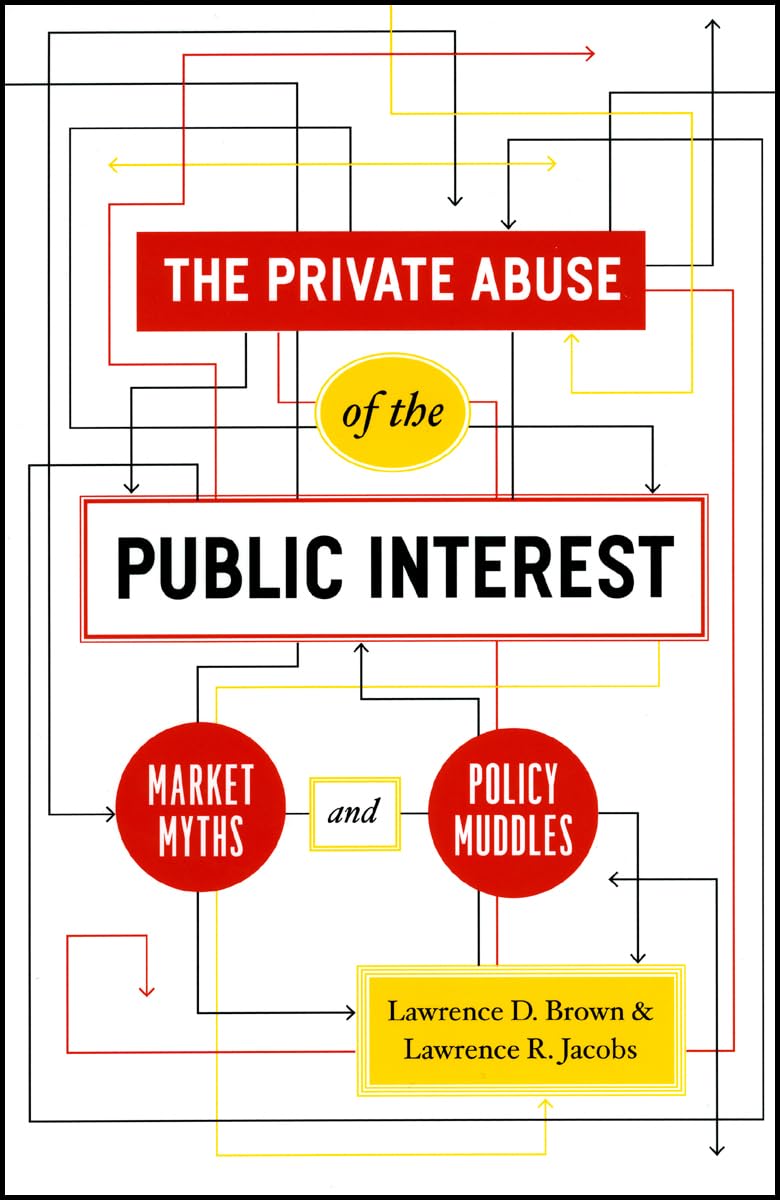
Despite George W. Bushs professed opposition to big government, federal spending has increased under his watch more quickly than it did during the Clinton administration, and demands on government have continued to grow. Why? Lawrence Brown and Lawrence Jacobs show that conservative efforts to expand markets and shrink government often have the ironic effect of expanding governments reach by creating problems that force legislators to enact new rules and regulations. Dismantling the flawed reasoning behind these attempts to cast markets and public power in opposing roles, The Private Abuse of the Public Interest urges citizens and policy makers to recognize that properly functioning markets presuppose the governments ability to create, sustain, and repair them over time.The authors support their pragmatic approach with evidence drawn from indepth analyses of education, transportation, and health care policies. In each policy area, initiatives such as school choice, deregulation of airlines and other carriers, and the promotion of managed care have introduced or enlarged the role of market forces with the aim of eliminating bureaucratic inefficiency. But in each case, the authors show, reality proved to be much more complex than market models predicted. This complexity has resulted in a political cyclestrikingly consistent across policy spheresthat culminates in public interventions to sustain markets while protecting citizens from their undesirable effects. Situating these case studies in the context of more than two hundred years of debate about the role of markets in society, Brown and Jacobs call for a renewed focus on publicprivate partnerships that recognize and respect each sectors vitaland fundamentally complementaryrole.
⚠️ WARNING (California Proposition 65):
This product may contain chemicals known to the State of California to cause cancer, birth defects, or other reproductive harm.
For more information, please visit www.P65Warnings.ca.gov.