
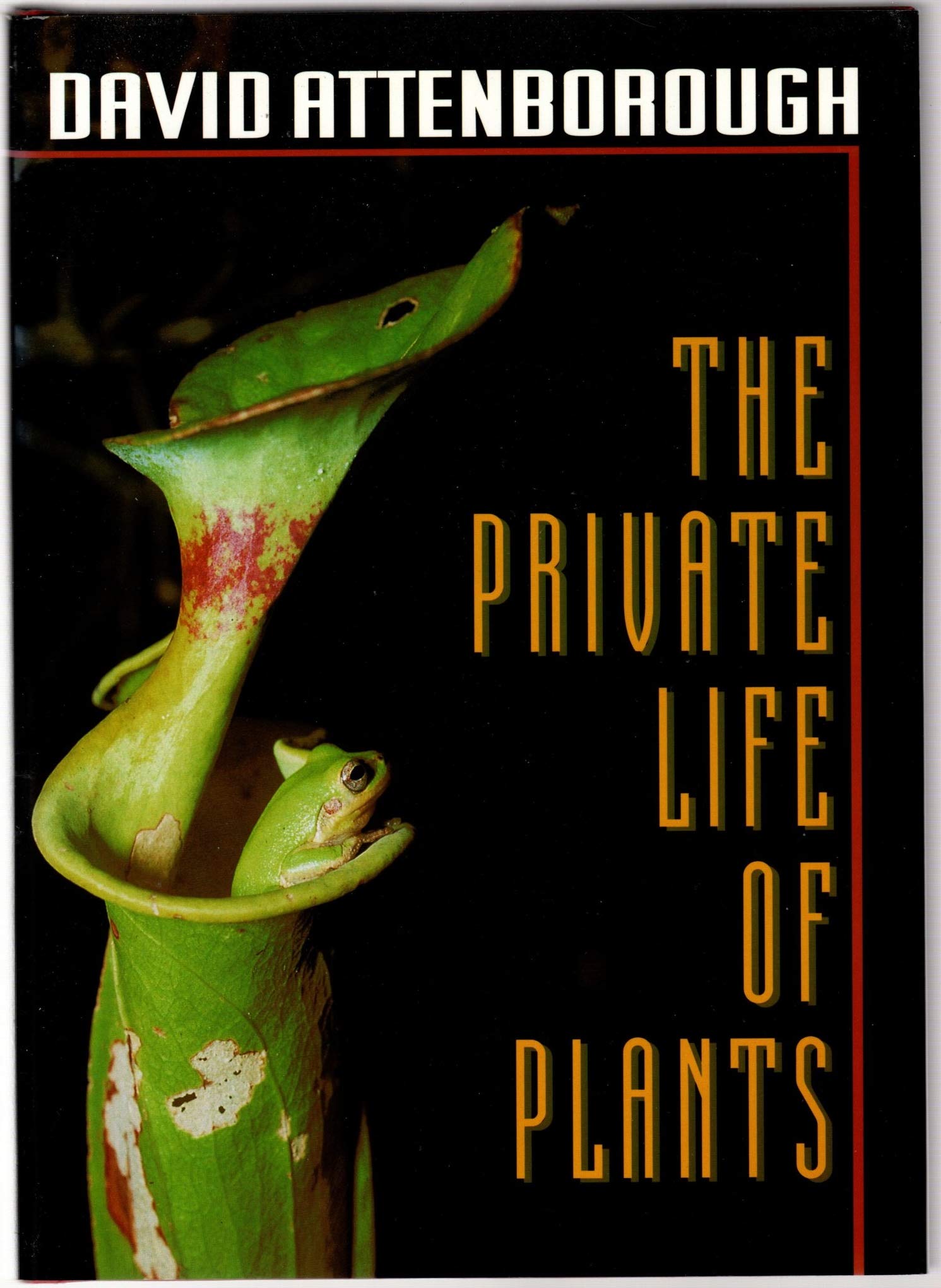
Title
The Private Life of Plants,Used
Sold by Ergodebooks, an authorized reseller.
Returns accepted within 30 days | support@ergodebooks.com
Shipping Information
- Free Standard Shipping — United States only
- Processing Time: 3–5 business days
- Estimated Delivery: 6–10 business days after dispatch
- Double-boxed, fully insured & discreetly packaged
- Tracking number sent via email once dispatched
Returns & Refund
Returns accepted within 30 days of delivery.
Damaged or Defective Item
Free return shipping + replacement or full refund
Wrong Item Received
Free return shipping + replacement or full refund
Change of Mind
Return shipping at customer's expense · 25% restocking fee applies
Payment Option

Based on the immensely popular sixpart BBC program that aired in the United States during the fall of 1995, this book offers what writer/filmmaker David Attenborough is best known for delivering: an intimate view of the natural world wherein a multitude of miniature dramas unfold. In the program and book, both titled The Private Life of Plants, Attenborough treks through rainforests, mountain ranges, deserts, beaches, and home gardens to show us things we might never have suspected about the vegetation that surrounds us. With their extraordinary sensibility, plants compete endlessly for survival and interact with animals and insects: they can see, count, communicate, adjust position, strike, and capture. Attenborough makes the plant world a vivid place for readers, who in this book can enjoy the tour at their own pace, taking in the lively descriptions and nearly 300 fullcolor photos showing plants in close detail.The author reveals to us the aspects of plants' lives that seem hidden from view, such as fighting, avoiding or exploiting predators or neighbors, and struggling to find food, increase their territories, reproduce themselves, and establish their place in the sun. Among the most amazing examples, the acacia can communicate with other acacias and repel enemies that might eat their leaves, the orchid can impersonate female wasps to attract males and ensure the spreading of its pollen, the Venus's flytrap can take other organisms captive and consume them. Covering this remarkable range of information with enthusiasm and clarity, Attenborough helps us to look anew at the vegetation on which all life depends and which has an intriguing life of its own. He has created a book sure to please the plant lover and any other reader interested in exploring the natural world.
⚠️ WARNING (California Proposition 65):
This product may contain chemicals known to the State of California to cause cancer, birth defects, or other reproductive harm.
For more information, please visit www.P65Warnings.ca.gov.
- Q: What is the main focus of 'The Private Life of Plants'? A: The book provides an intimate view of the natural world, showcasing how plants interact with their environment, animals, and insects, highlighting their behaviors and survival strategies.
- Q: Who is the author of 'The Private Life of Plants'? A: The author is David Attenborough, a renowned writer and filmmaker known for his work in nature documentaries.
- Q: How many pages does 'The Private Life of Plants' have? A: The book contains a total of 320 pages.
- Q: What type of binding does 'The Private Life of Plants' have? A: This edition of the book is bound in hardcover.
- Q: When was 'The Private Life of Plants' published? A: The book was published on August 21, 1995.
- Q: Is 'The Private Life of Plants' a new or used book? A: The item is listed as a new book.
- Q: What can readers expect to find inside 'The Private Life of Plants'? A: Readers can expect nearly 300 full-color photos and lively descriptions that explore the hidden aspects of plant life and their interactions with other organisms.
- Q: What edition of 'The Private Life of Plants' is being offered? A: This is the first edition of 'The Private Life of Plants'.
- Q: What is the condition of the book? A: The condition of the book is stated as 'Used Book in Good Condition'.
- Q: Does 'The Private Life of Plants' cover the communication abilities of plants? A: Yes, the book discusses how plants can communicate and interact with one another and their environment, including examples like acacias and orchids.