
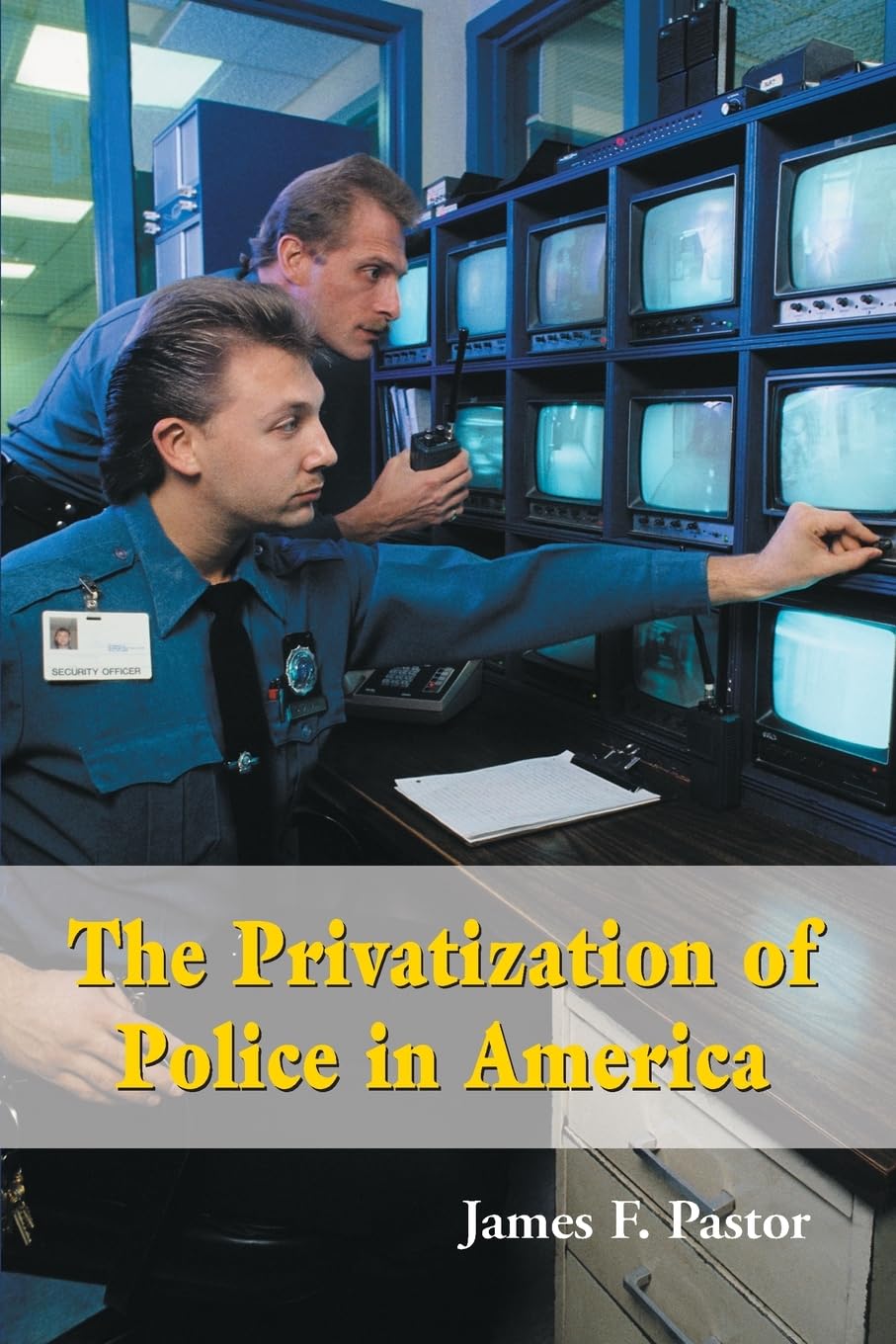
Title
The Privatization Of Police In America: An Analysis And Case Study,Used
Sold by Ergodebooks, an authorized reseller.
Returns accepted within 30 days | support@ergodebooks.com
Shipping Information
- Free Standard Shipping — United States only
- Processing Time: 3–5 business days
- Estimated Delivery: 6–10 business days after dispatch
- Double-boxed, fully insured & discreetly packaged
- Tracking number sent via email once dispatched
Returns & Refund
Returns accepted within 30 days of delivery.
Damaged or Defective Item
Free return shipping + replacement or full refund
Wrong Item Received
Free return shipping + replacement or full refund
Change of Mind
Return shipping at customer's expense · 25% restocking fee applies
Payment Option

Today The Private Security Industry Employs Approximately 1.5 Million People And Spends Over $52 Billion Annually. In Contrast, Public Police Forces Employ Approximately 600,000 People And Spend $30 Billion Annually. Private Policing Promises To Be A Big Part Of The Response To Today'S Increased Security Concerns, As Citizens Realize That Security Is Much More Than The Presence Of Guards And The Perception Of Safety.This Book Addresses The Impact And Implications Of Private Policing On Public Streets, And Begins With A Look At Private Policing From Conceptual, Historical, Economic, Legal And Functional Perspectives. These Approaches Provide The Background For The Text, Which Focuses On A Private Policing Patrol Program In A Community On The South Side Of Chicago. The Text Also Demonstrates A Number Of Substantive Legal And Public Policy Issues Which Directly Or Indirectly Relate To The Provision Of Security Services; Some People See The Need For A 'Dual System' Of Policingone For The Wealthy And One For The Poorand Others See The Provision Of Private Security As The Primary Protective Resource In Contemporary America. The Author Also Examines How Private Policing Is Different From And Similar To Public Policing.
⚠️ WARNING (California Proposition 65):
This product may contain chemicals known to the State of California to cause cancer, birth defects, or other reproductive harm.
For more information, please visit www.P65Warnings.ca.gov.
- Q: How many pages does this book have? A: This book contains two hundred twenty pages. It offers an in-depth analysis of the privatization of police in America.
- Q: What is the binding type of this book? A: The binding type is paperback. This makes it lightweight and easy to handle for readers.
- Q: Who is the author of this book? A: The author is James F. Pastor. He provides a detailed examination of private policing in America.
- Q: What genre does this book belong to? A: This book belongs to the Law Enforcement genre. It explores the implications of private policing in society.
- Q: Is this book suitable for all ages? A: Yes, it is suitable for older teens and adults. The content discusses serious themes surrounding policing and security.
- Q: How can I apply the concepts from this book? A: You can apply the concepts by understanding the roles of public versus private policing. This can inform discussions on community security.
- Q: Is there a specific audience for this book? A: This book is targeted towards students, policymakers, and anyone interested in law enforcement. It provides insights into private security's role.
- Q: What should I do if I don't understand a concept in the book? A: You can refer to additional resources or academic papers for clarification. Engaging in discussions with peers can also help.
- Q: How do I keep this book in good condition? A: To keep this book in good condition, store it in a cool, dry place away from direct sunlight. Avoid bending the cover.
- Q: Are there any safety concerns regarding this book? A: No, there are no safety concerns with this book. It contains academic content intended for educational purposes.
- Q: Can I return this book if I am not satisfied? A: Yes, you can return the book if you are not satisfied. Check the retailer's return policy for specific terms.
- Q: What if the book arrives damaged? A: If the book arrives damaged, you should contact the seller immediately for a replacement or refund.
- Q: Can I find this book in libraries? A: Yes, this book may be available in libraries. Check your local library's catalog for availability.
- Q: Is there a digital version of this book? A: Yes, a digital version may be available. Check online retailers or eBook platforms for options.
- Q: Does this book include case studies? A: Yes, it includes a case study that focuses on a private policing patrol program in Chicago. This illustrates key concepts discussed.