
Title
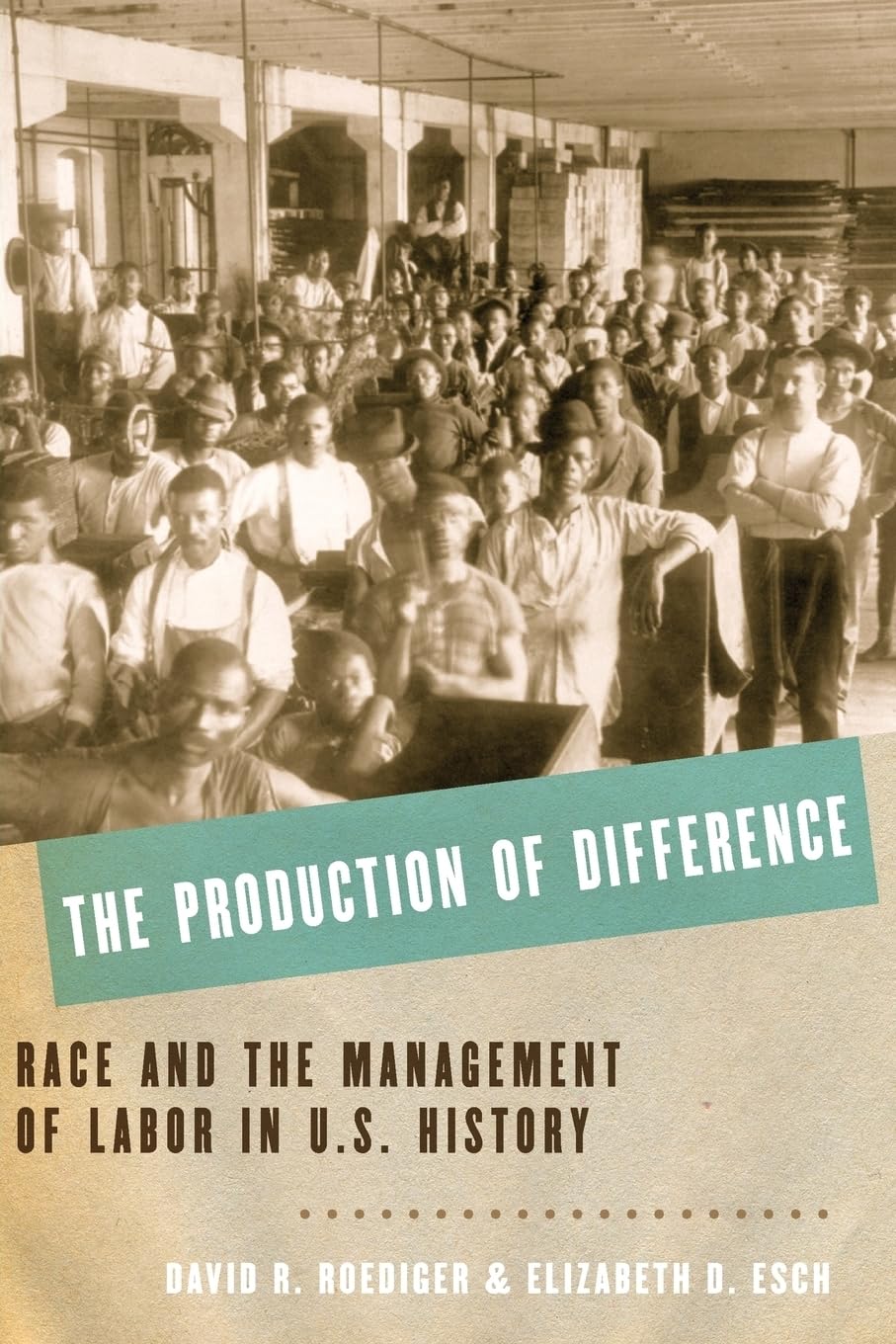
The Production of Difference: Race and the Management of Labor in U.S. History,Used
Sold by Ergodebooks, an authorized reseller.
Returns accepted within 30 days | support@ergodebooks.com
Shipping Information
- Free Standard Shipping — United States only
- Processing Time: 3–5 business days
- Estimated Delivery: 6–10 business days after dispatch
- Double-boxed, fully insured & discreetly packaged
- Tracking number sent via email once dispatched
Returns & Refund
Returns accepted within 30 days of delivery.
Damaged or Defective Item
Free return shipping + replacement or full refund
Wrong Item Received
Free return shipping + replacement or full refund
Change of Mind
Return shipping at customer's expense · 25% restocking fee applies
Payment Option

In 1907, pioneering labor historian and economist John Commons argued that U.S. management had shown just one 'symptom of originality,' namely 'playing one race against the other.'In this eyeopening book, David Roediger and Elizabeth Esch offer a radically new way of understanding the history of management in the United States, placing race, migration, and empire at the center of what has sometimes been narrowly seen as a search for efficiency and economy. Ranging from the antebellum period to the coming of the Great Depression, the book examines the extensive literature slave masters produced on how to manage and 'develop' slaves; explores what was perhaps the greatest managerial feat in U.S. history, the building of the transcontinental railroad, which pitted Chinese and Irish work gangs against each other; and concludes by looking at how these strategies survive today in the management of hard, lowpaying, dangerous jobs in agriculture, military support, and meatpacking. Roediger and Esch convey what slaves, immigrants, and all working people were up against as the objects of managerial control. Managers explicitly ranked racial groups, both in terms of which labor they were best suited for and their relative value compared to others. The authors show how whites relied on such alleged racial knowledge to manage and believed that the 'lesser races' could only benefit from their tutelage. These views wove together managerial strategies and white supremacy not only ideologically but practically, every day at workplaces. Even in factories governed by scientific management, the impulse to play races against each other, and to slot workers into jobs categorized by race, constituted powerful management tools used to enforce discipline, lower wages, keep workers on dangerous jobs, and undermine solidarity.Painstakingly researched and brilliantly argued, The Production of Difference will revolutionize the history of labor race in the United States.
⚠️ WARNING (California Proposition 65):
This product may contain chemicals known to the State of California to cause cancer, birth defects, or other reproductive harm.
For more information, please visit www.P65Warnings.ca.gov.