
Title
The Promise Of Politics,Used
Sold by Ergodebooks, an authorized reseller.
Returns accepted within 30 days | support@ergodebooks.com
Shipping Information
- Free Standard Shipping — United States only
- Processing Time: 3–5 business days
- Estimated Delivery: 6–10 business days after dispatch
- Double-boxed, fully insured & discreetly packaged
- Tracking number sent via email once dispatched
Returns & Refund
Returns accepted within 30 days of delivery.
Damaged or Defective Item
Free return shipping + replacement or full refund
Wrong Item Received
Free return shipping + replacement or full refund
Change of Mind
Return shipping at customer's expense · 25% restocking fee applies
Payment Option

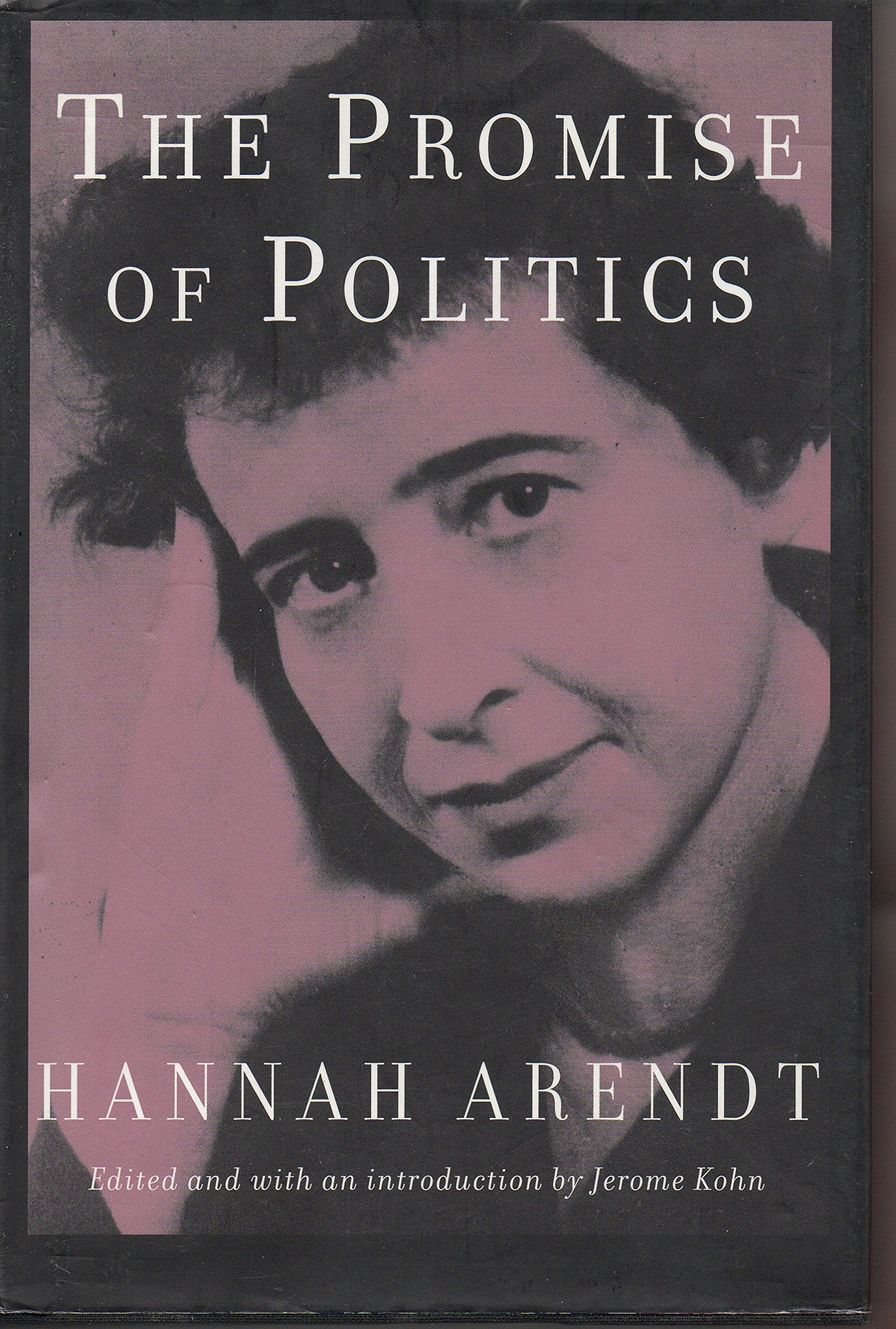
After the publication of The Origins of Totalitarianism in 1951, Hannah Arendt undertook an investigation of Marxism, a subject that she had deliberately left out of her earlier work. Her inquiry into Marxs philosophy led her to a critical examination of the entire tradition of Western political thought, from its origins in Plato and Aristotle to its culmination and conclusion in Marx. The Promise of Politics tells how Arendt came to understand the failure of that tradition to account for human action.From the time that Socrates was condemned to death by his fellow citizens, Arendt finds that philosophers have followed Plato in constructing political theories at the expense of political experiences, including the prephilosophic Greek experience of beginning, the Roman experience of founding, and the Christian experience of forgiving. It is a fascinating, subtle, and original story, which bridges Arendts work from The Origins of Totalitarianism to The Human Condition, published in 1958. These writings, which deal with the conflict between philosophy and politics, have never before been gathered and published.The final and longer section of The Promise of Politics, titled Introduction into Politics, was written in German and is published here for the first time in English. This remarkable meditation on the modern prejudice against politics asks whether politics has any meaning at all anymore. Although written in the latter half of the 1950s, what Arendt says about the relation of politics to human freedom could hardly have greater relevance for our own time. When politics is considered as a means to an end that lies outside of itself, when force is used to create freedom, political principles vanish from the face of the earth. For Arendt, politics has no end; instead, it has at times beenand perhaps can be againthe neverending endeavor of the great plurality of human beings to live together and share the earth in mutually guaranteed freedom. That is the promise of politics.
⚠️ WARNING (California Proposition 65):
This product may contain chemicals known to the State of California to cause cancer, birth defects, or other reproductive harm.
For more information, please visit www.P65Warnings.ca.gov.