
Title
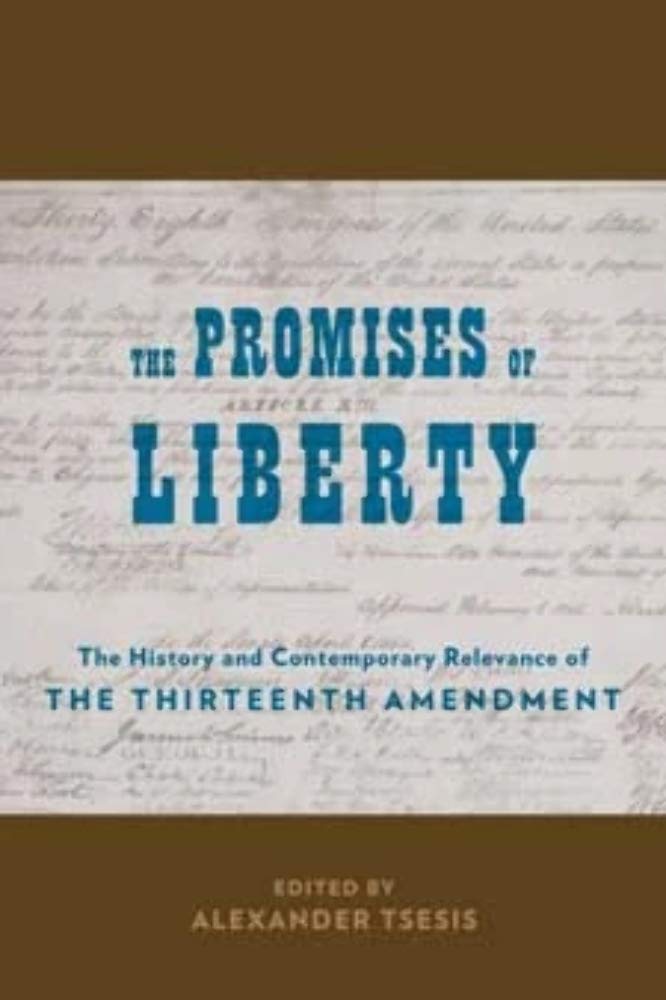
The Promises of Liberty: The History and Contemporary Relevance of the Thirteenth Amendment,New
Sold by Ergodebooks, an authorized reseller.
Returns accepted within 30 days | support@ergodebooks.com
Shipping Information
- Free Standard Shipping — United States only
- Processing Time: 3–5 business days
- Estimated Delivery: 6–10 business days after dispatch
- Double-boxed, fully insured & discreetly packaged
- Tracking number sent via email once dispatched
Returns & Refund
Returns accepted within 30 days of delivery.
Damaged or Defective Item
Free return shipping + replacement or full refund
Wrong Item Received
Free return shipping + replacement or full refund
Change of Mind
Return shipping at customer's expense · 25% restocking fee applies
Payment Option

In these original essays, America's leading historians and legal scholars reassess the ratification of the Thirteenth Amendment and its relevance to issues of liberty, justice, and equality. The Thirteenth Amendment abolished slavery in the United States, reasserting the radical, egalitarian dimensions of the Constitution. It also laid the foundations for future civil rights and social justice legislation. Yet subsequent reinterpretation and misappropriation have curbed more substantive change. With constitutional jurisprudence undergoing a revival, The Promises of Liberty provides a full portrait of the Thirteenth Amendment and its potential for ensuring liberty.The collection begins with Pulitzer Prizewinning historian David Brion Davis, who discusses the failure of the Thirteenth Amendment to achieve its framers' objectives. The next piece, by Alexander Tsesis, provides a detailed account of the Amendment's revolutionary character. James M. McPherson, another Pulitzer recipient, recounts the influence of abolitionists on the ratification process, and Paul Finkelman focuses on who freed the slaves and President Lincoln's commitment to ending slavery. Michael Vorenberg revisits the nineteenth century's understanding of freedom and citizenship and the Amendment's surprisingly small role in the Reconstruction and postReconstruction periods. William M. Wiecek shows how the Supreme Court's narrow interpretation once rendered the guarantee of freedom nearly illusory, and the collection's third Pulitzer Prize winner, David M. Oshinsky, explains how peonage undermined the prohibition against compulsory service.Subsequent essays relate the Thirteenth Amendment to congressional authority, hate crimes legislation, the labor movement, and immigrant rights. These chapters analyze unique features of the amendment along with its elusive meanings and affirm its power to reform criminal and immigration law, affirmative action policies, and the protection of civil liberties.
⚠️ WARNING (California Proposition 65):
This product may contain chemicals known to the State of California to cause cancer, birth defects, or other reproductive harm.
For more information, please visit www.P65Warnings.ca.gov.