If you have any questions, you are always welcome to contact us. We'll get back to you as soon as possible, withing 24 hours on weekdays.
Customer service
All questions about your order, return and delivery must be sent to our customer service team by e-mail at yourstore@yourdomain.com
Sale & Press
If you are interested in selling our products, need more information about our brand or wish to make a collaboration, please contact us at press@yourdomain.com
Help
If you have any questions, you are always welcome to contact us. We'll get back to you as soon as possible, withing 24 hours on weekdays.
Customer service
All questions about your order, return and delivery must be sent to our customer service team by e-mail at yourstore@yourdomain.com
Sale & Press
If you are interested in selling our products, need more information about our brand or wish to make a collaboration, please contact us at press@yourdomain.com
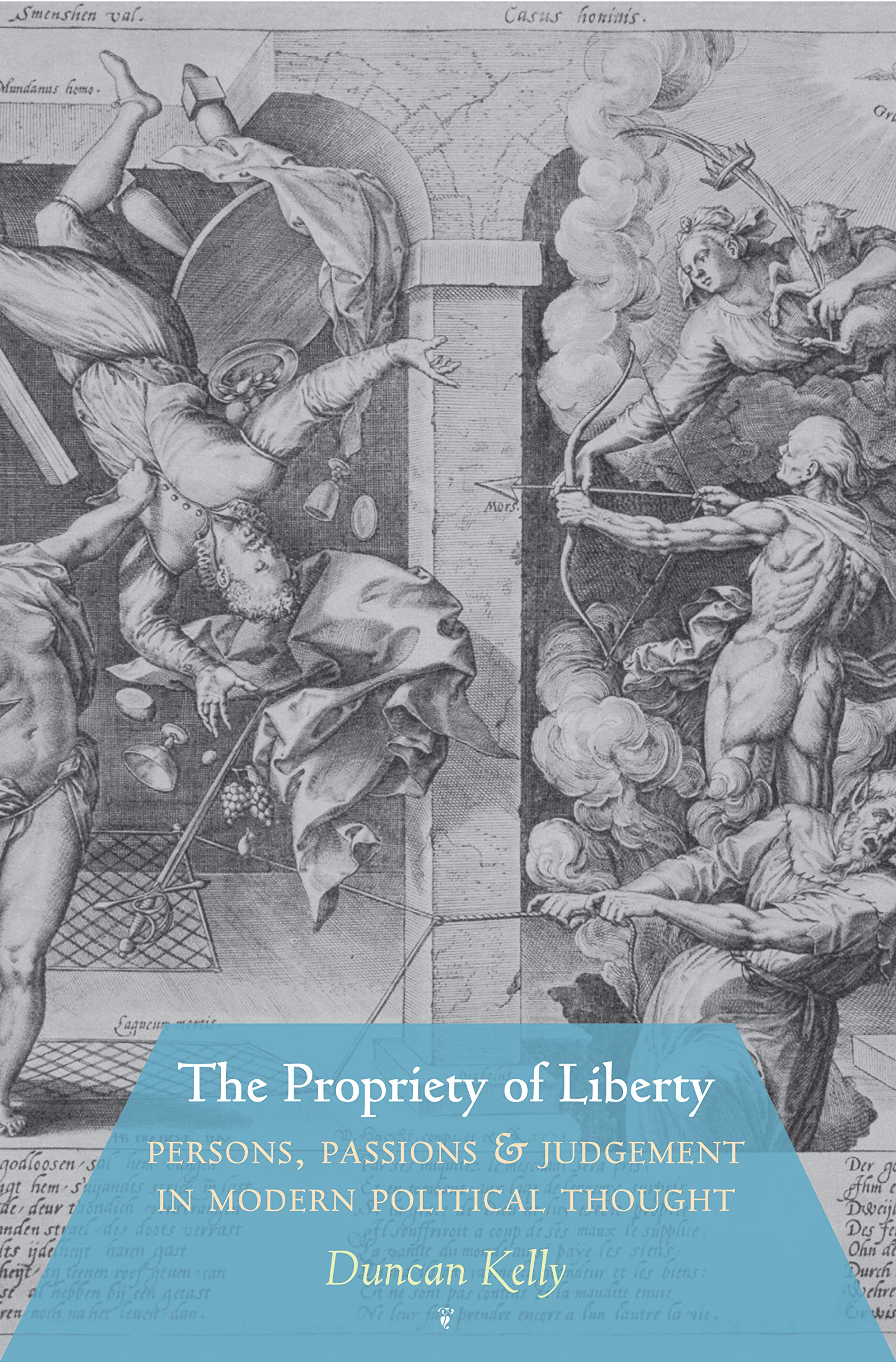
In this book, Duncan Kelly excavates, from the history of modern political thought, a largely forgotten claim about liberty as a form of propriety. By rethinking the intellectual and historical foundations of modern accounts of freedom, he brings into focus how this major vision of liberty developed between the seventeenth and the nineteenth centuries.In his framework, celebrated political writers, including John Locke, Montesquieu, Adam Smith, John Stuart Mill, and Thomas Hill Green pursue the claim that freedom is best understood as a form of responsible agency or propriety, and they do so by reconciling key moral and philosophical claims with classical and contemporary political theory. Their approach broadly assumes that only those persons who appropriately regulate their conduct can be thought of as free and responsible. At the same time, however, they recognize that such internal forms of selfpropriety must be judged within the wider context of social and political life. Kelly shows how the intellectual and practical demands of such a synthesis require these great writers to consider freedom as part of a broader set of arguments about the nature of personhood, the potentially irrational impact of the passions, and the obstinate problems of individual and political judgement. By exploring these relationships, The Propriety of Liberty not only revises the intellectual history of modern political thought, but also sheds light on contemporary debates about freedom and agency.
⚠️ WARNING (California Proposition 65):
This product may contain chemicals known to the State of California to cause cancer,
birth defects, or other reproductive harm.
For MAP (Minimum Advertised Price) violations and Intellectual Property (IP) or Trademark concerns, please contact:
support@ergodebooks.com
⚠️ California Proposition 65 Warning: Some products sold on this website may expose you to chemicals known to the State of California to cause cancer, birth defects, or other reproductive harm. For more information, visit www.P65Warnings.ca.gov.