
Title
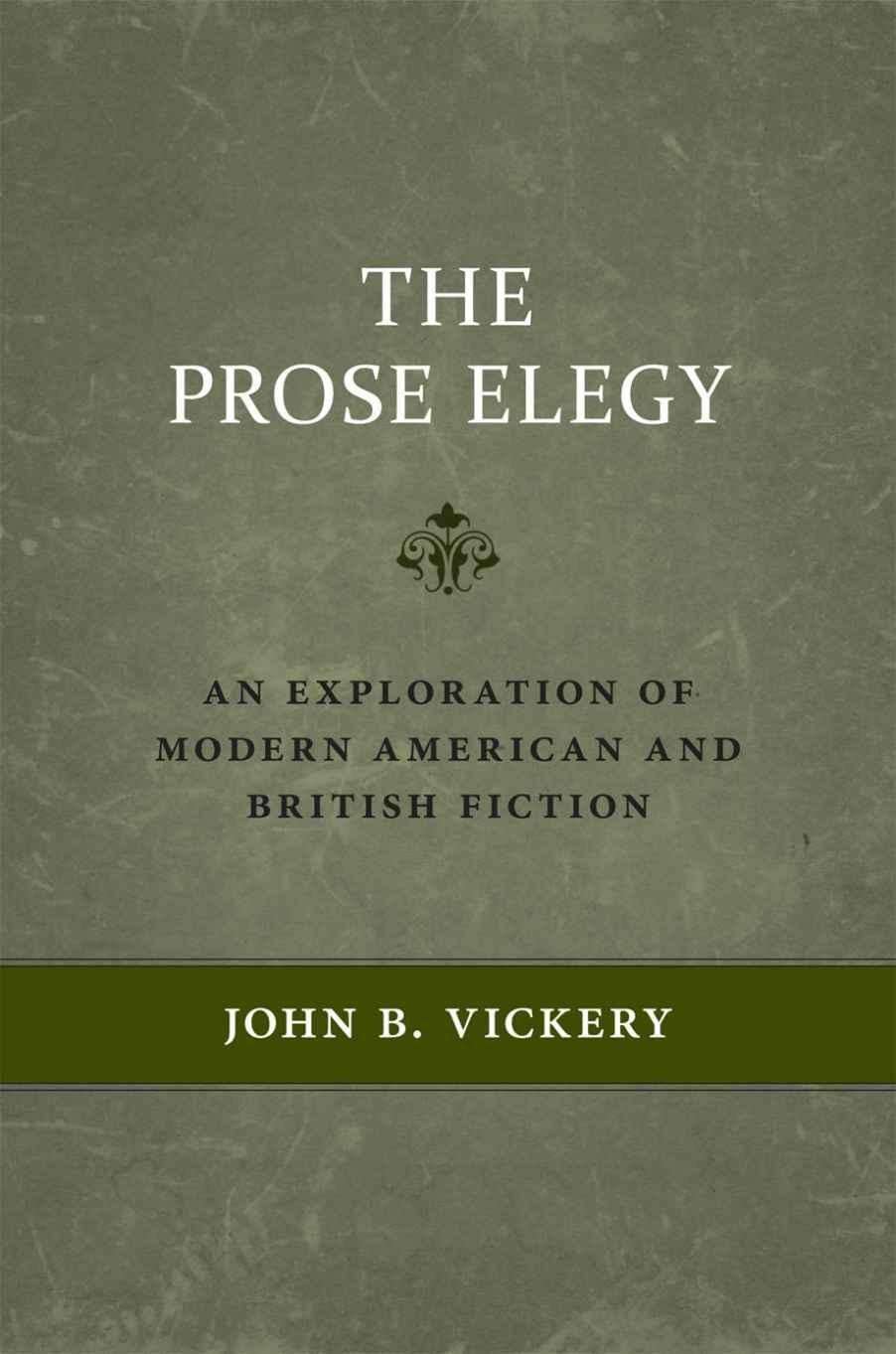
The Prose Elegy: An Exploration of Modern American and British Fiction,Used
Sold by Ergodebooks, an authorized reseller.
Returns accepted within 30 days | support@ergodebooks.com
Shipping Information
- Free Standard Shipping — United States only
- Processing Time: 3–5 business days
- Estimated Delivery: 6–10 business days after dispatch
- Double-boxed, fully insured & discreetly packaged
- Tracking number sent via email once dispatched
Returns & Refund
Returns accepted within 30 days of delivery.
Damaged or Defective Item
Free return shipping + replacement or full refund
Wrong Item Received
Free return shipping + replacement or full refund
Change of Mind
Return shipping at customer's expense · 25% restocking fee applies
Payment Option

Traditional English poetic elegists offer both writers and readers hope. After lamenting an individual's death and confronting the mortality of all living things, these poets seek consolation from religion, philosophy, or culture for the inevitability of death. The modern prose elegy, however, follows a different path one that determinedly questions all possible resolutions. In The Prose Elegy, John B. Vickery continues the work he began in The Modern Elegiac Temper, which examined the form in British and American poetry. He now considers the works of American and British fiction writers from Henry James to Joan Didion and reveals how the elegy expanded into prose and why it evolved so as to deal not only with death but also with other forms of loss.Focusing on individual works, Vickery explores both the forms the elegy takes throughout the twentieth century and the skeptical and uncertain attitudes of writers struggling to confront the trauma of loss. He offers detailed interpretations of the elegiac components in the works of novelists James Joyce, William Faulkner, Virginia Woolf, and Ernest Hemingway, each of whom forged a distinctive style, as well as chroniclers of a pervasive stoicism, such as Malcolm Lowry and Joan Didion, and writers as nuanced as Sherwood Anderson, F. Scott Fitzgerald, James Agee, and Ford Madox Ford.For these writers, Vickery shows, sorrow intrudes upon the personal, intellectual, and cultural aspects of daily living. By exploring how loss touches each of these areas, their books probe intellectual boundaries and discover new elegiac themes. Truman Capote and John Updike, for example, view memory which can disappear quickly as inherently sad. They therefore elegize memory. What consoles writers of the modern elegy changes too. In place of Milton's religion or Shelley's philosophy, twentiethcentury writers also seek comfort from what also saddens them: family, marriage, and ideas of the self.In The Prose Elegy, Vickery convincingly demonstrates that the elegy remains a dominant mode throughout British and American literature with perhaps greater pertinence to our lives than ever before.
⚠️ WARNING (California Proposition 65):
This product may contain chemicals known to the State of California to cause cancer, birth defects, or other reproductive harm.
For more information, please visit www.P65Warnings.ca.gov.