If you have any questions, you are always welcome to contact us. We'll get back to you as soon as possible, withing 24 hours on weekdays.
Customer service
All questions about your order, return and delivery must be sent to our customer service team by e-mail at yourstore@yourdomain.com
Sale & Press
If you are interested in selling our products, need more information about our brand or wish to make a collaboration, please contact us at press@yourdomain.com
Help
If you have any questions, you are always welcome to contact us. We'll get back to you as soon as possible, withing 24 hours on weekdays.
Customer service
All questions about your order, return and delivery must be sent to our customer service team by e-mail at yourstore@yourdomain.com
Sale & Press
If you are interested in selling our products, need more information about our brand or wish to make a collaboration, please contact us at press@yourdomain.com
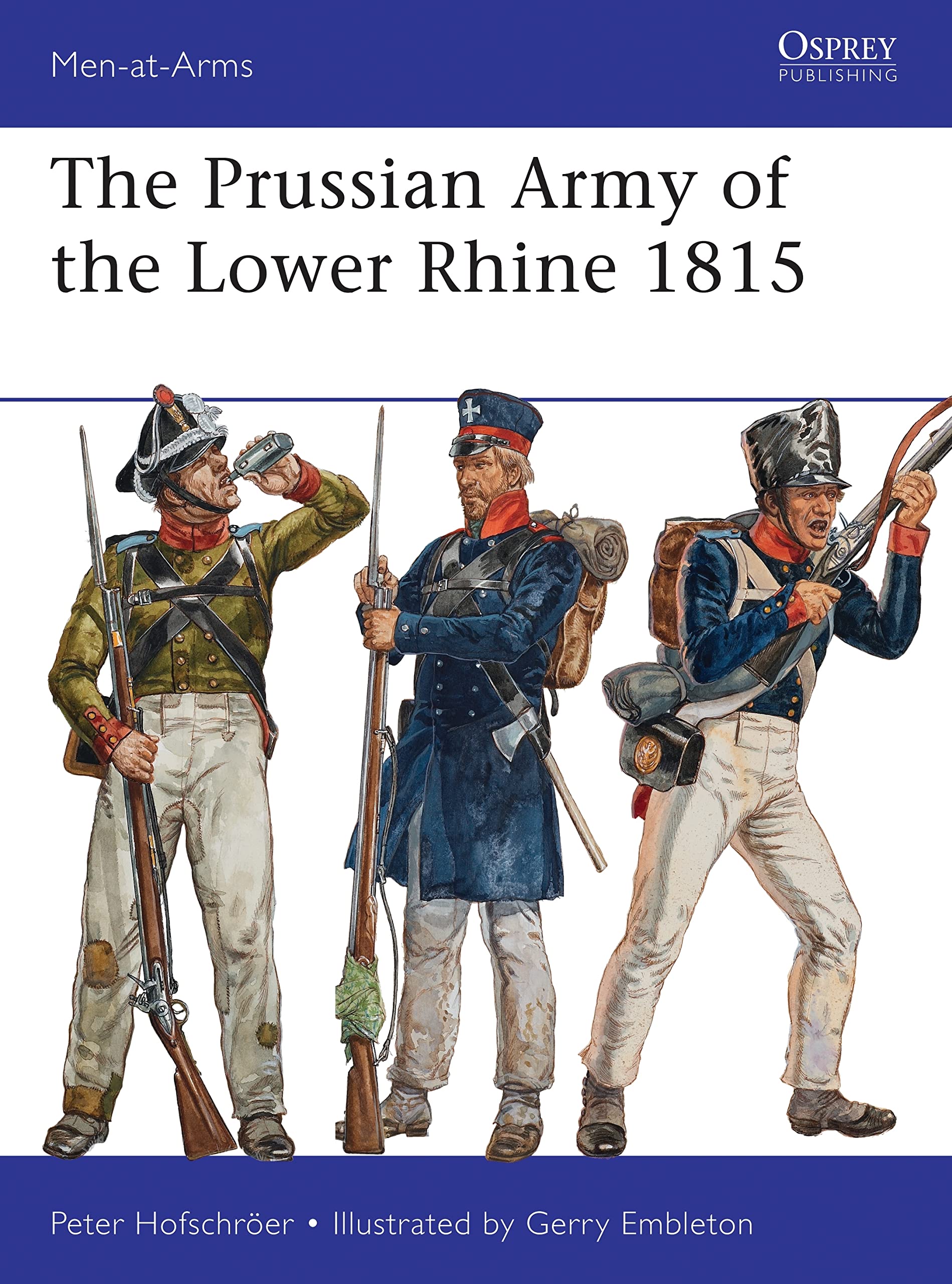
For those interested in the actual appearance of the Prussian soldiers who fought at Ligny, Wavre and Waterloo in 1815, this colorful study combines the latest findings and expert analysis to cast new light on the fateful Waterloo campaign.The Prussian Army of the Lower Rhine, led by Generalfeldmarschall Gebhard Leberecht von Blcher in 1815, played a possibly the vital part in the Allied victory at Waterloo, forcing Napoleon to divide his forces when Blcher's leading elements arrived to offer Wellington crucial support at a time when his AngloNetherlands army was doing no more than holding its own on the defensive. During this campaign Blcher's army presented an enormously diverse appearance, since its units had been issued clothing and equipment from many sources, and many of them were still wearing the distinctly hardworn kit they had been issued over two years before at the start of the 1813 Wars of Liberation.Written by a leading authority, this book delves deeply into original sources including eyewitness accounts, and regimental histories known only to German scholars to recreate the actual appearance of specific units, rather than simply copying generic uniform regulations. The text details who the men that served in these units were, how they were organised and drilled, and their previous service; what specific elements of the army looked like in 1815; their march to the battlefield; and what they did when they got there.
⚠️ WARNING (California Proposition 65):
This product may contain chemicals known to the State of California to cause cancer,
birth defects, or other reproductive harm.
For MAP (Minimum Advertised Price) violations and Intellectual Property (IP) or Trademark concerns, please contact:
support@ergodebooks.com
⚠️ California Proposition 65 Warning: Some products sold on this website may expose you to chemicals known to the State of California to cause cancer, birth defects, or other reproductive harm. For more information, visit www.P65Warnings.ca.gov.