
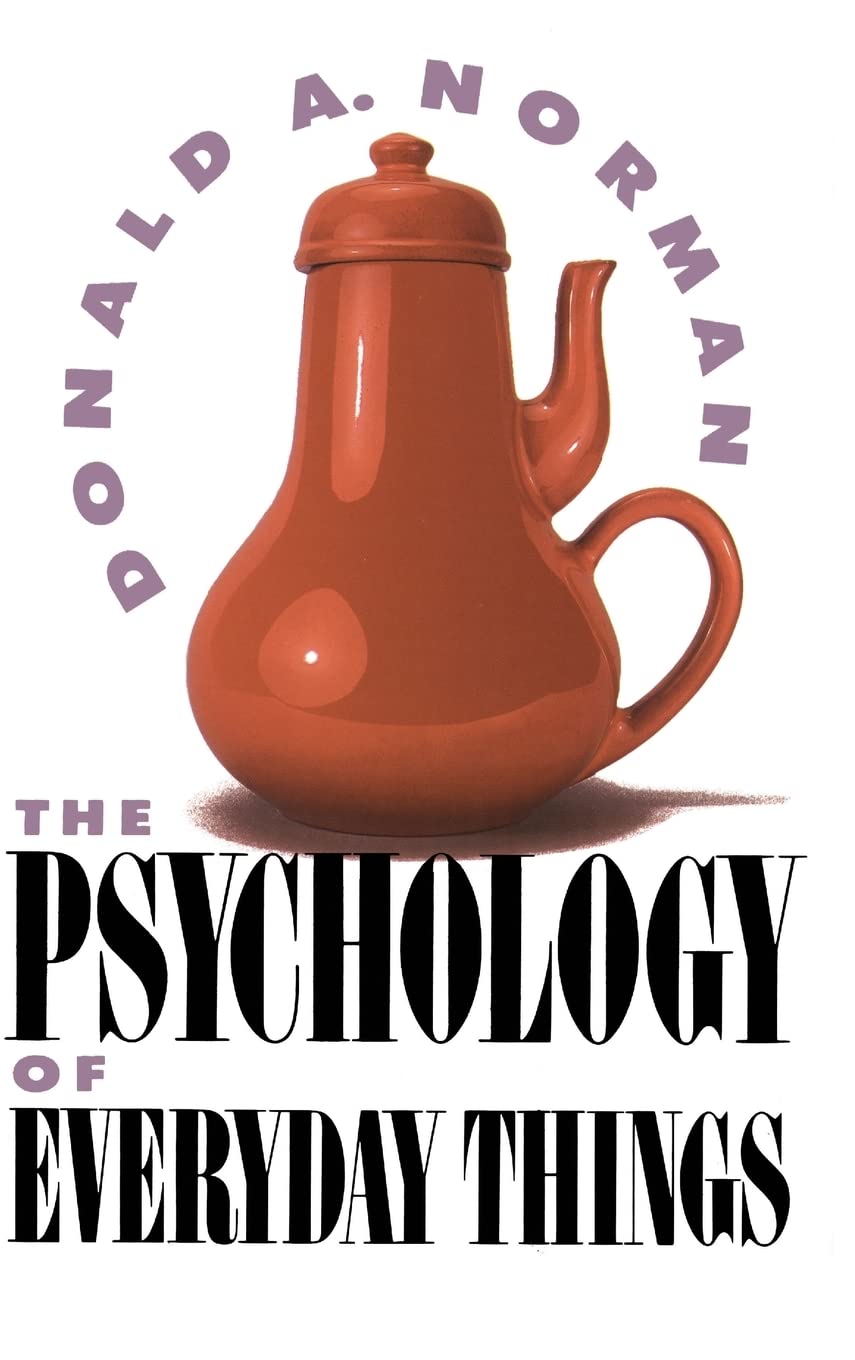
Title
The Psychology Of Everyday Things,Used
Sold by Ergodebooks, an authorized reseller.
Returns accepted within 30 days | support@ergodebooks.com
Shipping Information
- Free Standard Shipping — United States only
- Processing Time: 3–5 business days
- Estimated Delivery: 6–10 business days after dispatch
- Double-boxed, fully insured & discreetly packaged
- Tracking number sent via email once dispatched
Returns & Refund
Returns accepted within 30 days of delivery.
Damaged or Defective Item
Free return shipping + replacement or full refund
Wrong Item Received
Free return shipping + replacement or full refund
Change of Mind
Return shipping at customer's expense · 25% restocking fee applies
Payment Option

Even The Smartest Among Us Can Feel Inept As We Fail To Figure Our Which Light Switch Or Oven Burner To Turn On, Or Whether To Push, Pull, Or Slide A Door. The Fault, Argues This Fascinating, Ingeniouseven Liberatingbook, Lies Not In Ourselves, But In Product Design That Ignores The Needs Of Users And The Principles Of Cognitive Psychology.The Problems Range From Ambiguous And Hidden Controls To Arbitrary Relationships Between Controls And Functions, Coupled With A Lack Of Feedback Or Other Assistance And Unreasonable Demands On Memorization. The Book Presents Examples Aplentyamong Them, The Vcr, Computer, And Office Telephone, All Models Of How Not To Design For People.But Good, Usable Design Is Possible. The Rules Are Simple: Make Things Visible, Exploit Natural Relationships That Couple Function And Control, And Make Intelligent Use Of Constraints. The Goal: Guide The User Effortlessly To The Right Action On The Right Control At The Right Time. But The Designer Must Care.The Author Is A Worldfamous Psychologist And Pioneer In The Application Of Cognitive Science. His Aim Is To Raise The Consciousness Of Both Consumers And Designers To The Delights Of Products That Are Easy To Use And Understand.
⚠️ WARNING (California Proposition 65):
This product may contain chemicals known to the State of California to cause cancer, birth defects, or other reproductive harm.
For more information, please visit www.P65Warnings.ca.gov.
- Q: How many pages does this book have? A: This book has two hundred seventy-two pages. It provides detailed insights into the psychology of design and usability.
- Q: What are the dimensions of the book? A: The book measures nine point one inches in length, six point two inches in height, and one inch in width. These dimensions make it easy to handle and store.
- Q: What type of binding does this book have? A: This book features hardcover binding. Hardcover offers durability and a more premium feel compared to paperback.
- Q: Who is the author of 'The Psychology Of Everyday Things'? A: The author is Don Norman, a renowned psychologist known for his work in cognitive science and product design.
- Q: What genre does this book belong to? A: This book falls under the category of Decorative Arts & Design. It explores usability and design principles.
- Q: Is this book suitable for beginners? A: Yes, this book is suitable for beginners. It explains design principles in an accessible manner, making it easy to understand.
- Q: How can I apply the concepts from this book? A: You can apply the concepts by evaluating everyday products based on usability principles. This can help improve design and user experience.
- Q: Is this book appropriate for all ages? A: Yes, this book is appropriate for all ages. It is written in a way that is engaging for a broad audience.
- Q: How do I keep this book in good condition? A: To keep this book in good condition, store it in a dry place and avoid exposing it to direct sunlight. This helps preserve the cover and pages.
- Q: Can I clean the book if it gets dirty? A: Yes, if the book gets dirty, you can gently wipe the cover with a slightly damp cloth. Avoid using harsh chemicals.
- Q: What if I receive a damaged copy of the book? A: If you receive a damaged copy, you should contact the seller for a return or replacement. Most sellers have policies to address such issues.
- Q: Does this book have any illustrations? A: Yes, the book includes illustrations that complement the text. These visuals help clarify design concepts.
- Q: Is the book based on real-life examples? A: Yes, the book is based on real-life examples of poor design and usability failures. These examples provide practical insights.
- Q: What can I learn from this book? A: You can learn about the principles of user-centered design, cognitive psychology, and how to create more usable products.
- Q: Is there a glossary or index in the book? A: Yes, the book includes an index to help you locate specific topics or concepts quickly. This enhances the usability of the book.
- Q: Can this book help in product design careers? A: Yes, this book can be beneficial for careers in product design. It teaches valuable principles that enhance user experience.