
Title
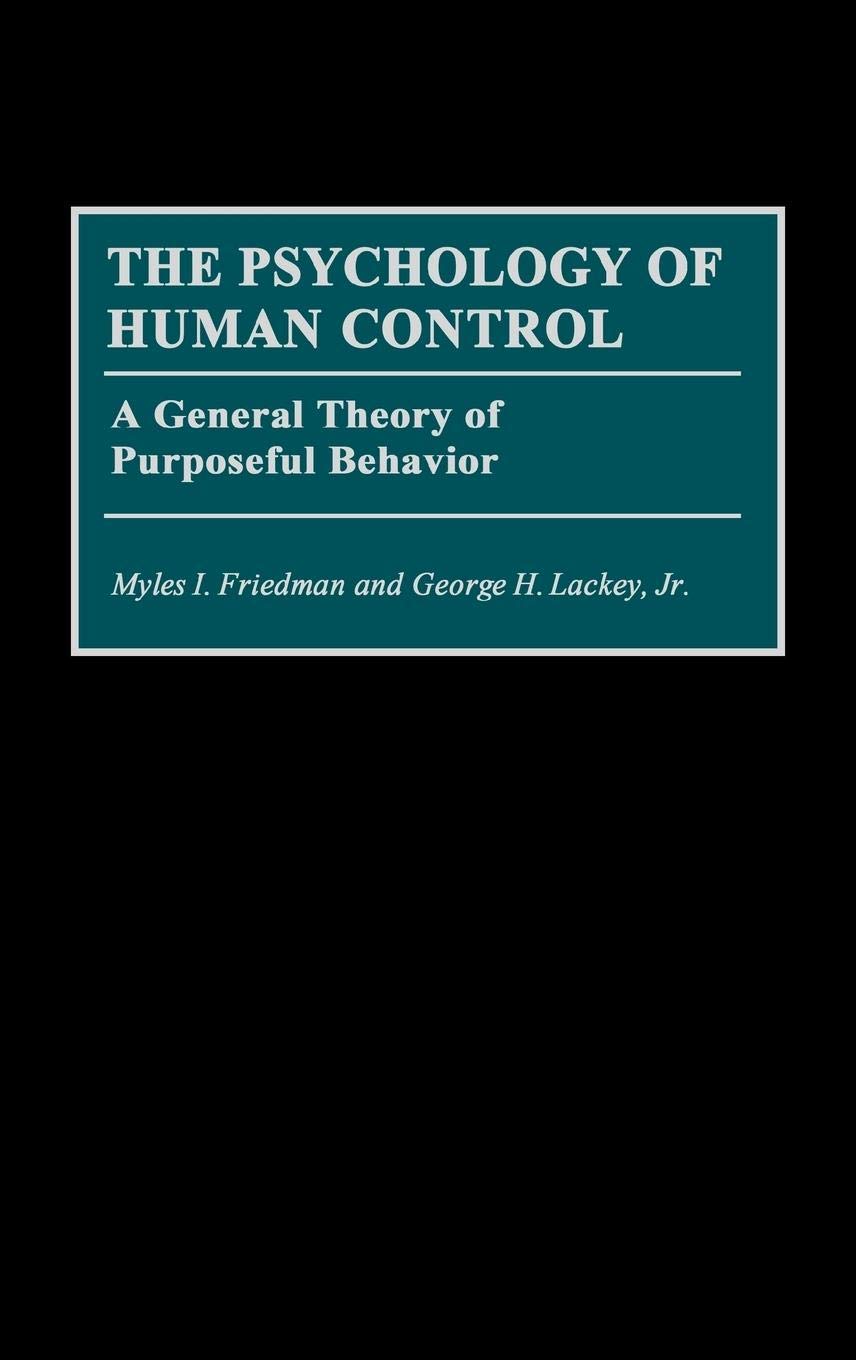
The Psychology of Human Control: A General Theory of Purposeful Behavior,Used
Sold by Ergodebooks, an authorized reseller.
Returns accepted within 30 days | support@ergodebooks.com
Shipping Information
- Free Standard Shipping — United States only
- Processing Time: 3–5 business days
- Estimated Delivery: 6–10 business days after dispatch
- Double-boxed, fully insured & discreetly packaged
- Tracking number sent via email once dispatched
Returns & Refund
Returns accepted within 30 days of delivery.
Damaged or Defective Item
Free return shipping + replacement or full refund
Wrong Item Received
Free return shipping + replacement or full refund
Change of Mind
Return shipping at customer's expense · 25% restocking fee applies
Payment Option

Departing from Myles Friedman's previous versions of prediction theory, this study contends that people seek control as an end in itself. The ability to make accurate predictions is the primary means to that end. When people make accurate predictions, we call them intelligent; when they act on those predictions and control results, we call them successful. Seeking an explanation for human superiority, Friedman and Lackey present a tight formal theory that defines the dynamic relationship between and among predictive processes responsible for human control and success. This new and general theory of purposeful behavior provides a sound basis for relating leading theoretical views to each other. Directed toward psychologists and psychiatristseducational psychologists, industrial psychologists, and psychotherapists will each discover chapters of specific interest to their areas of expertise.Friedman and Lackey offer a new controloriented motivational system for human beings and a distinctly different view of intelligence. Their presentation is divided into three major parts. The first describes prediction theory in a general way including sufficient detail and examples for the reader to excerpt major ideas: Human Motivation, Gaining Control, Maximizing Control, and Impediments to Control. Part II explains important implications of the theory: Achieving Success, Working Effectively, Educating for Control, The Pursuit of Happiness. Part III is a formal presentation of the theory, its basic assumptions, one corollary, and five propositions. Emphasis is placed on the logical integration of contructs and propositions into a general theory of purposeful behavior. Recommendations are made for improving the quality of life. The reader will also derive new insights into leadership, learning, retirement, recreation, defensiveness, intelligence, and psychological disturbance.
⚠️ WARNING (California Proposition 65):
This product may contain chemicals known to the State of California to cause cancer, birth defects, or other reproductive harm.
For more information, please visit www.P65Warnings.ca.gov.