If you have any questions, you are always welcome to contact us. We'll get back to you as soon as possible, withing 24 hours on weekdays.
Customer service
All questions about your order, return and delivery must be sent to our customer service team by e-mail at yourstore@yourdomain.com
Sale & Press
If you are interested in selling our products, need more information about our brand or wish to make a collaboration, please contact us at press@yourdomain.com
Help
If you have any questions, you are always welcome to contact us. We'll get back to you as soon as possible, withing 24 hours on weekdays.
Customer service
All questions about your order, return and delivery must be sent to our customer service team by e-mail at yourstore@yourdomain.com
Sale & Press
If you are interested in selling our products, need more information about our brand or wish to make a collaboration, please contact us at press@yourdomain.com
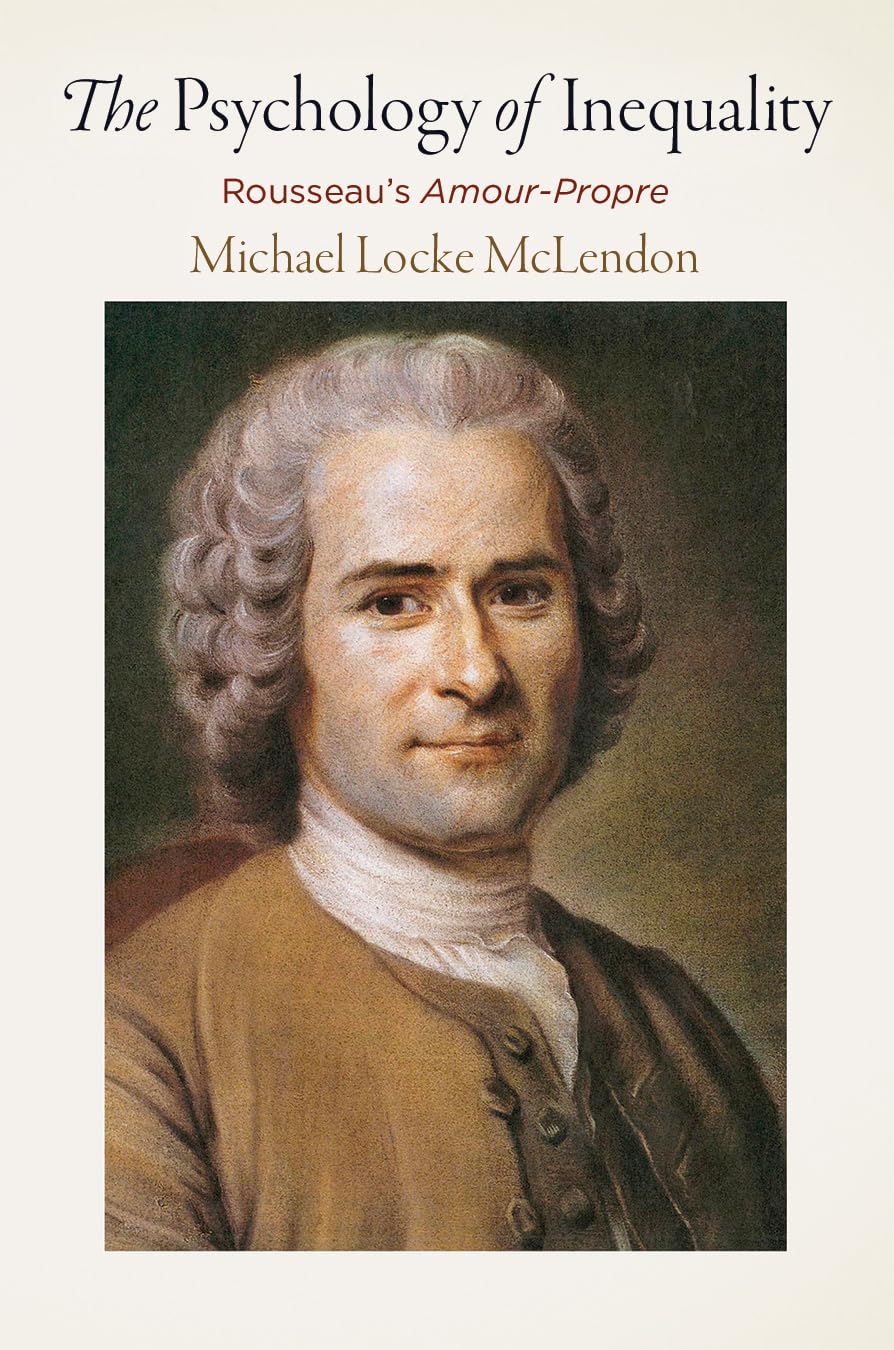
In The Psychology of Inequality, Michael Locke McLendon looks to JeanJacques Rousseau's thought for insight into the personal and social pathologies that plague commercial and democratic societies. He emphasizes the way Rousseau appropriated and modified the notion of selflove, or amourpropre, found in Augustine and various early modern thinkers. McLendon traces the concept in Rousseau's work and reveals it to be a form of selfish vanity that mimics aspects of Homeric honor culture and, in the modern world, shapes the outlook of the wealthy and powerful as well as the underlying assumptions of meritocratic ideals.According to McLendon, Rousseau's elucidation of amourpropre describes a desire for glory and preeminence that can be dangerously antisocial, as those who believe themselves superior derive pleasure from dominating and even harming those they consider beneath them. Drawing on Rousseau's insights, McLendon asserts that certain forms of inequality, especially those associated with classical aristocracy and modernday meritocracy, can corrupt the mindsets and personalities of people in socially disruptive ways.The Psychology of Inequality shows how amourpropre can be transformed into the demand for praise, whether or not one displays praiseworthy qualities, and demonstrates the ways in which this pathology continues to play a leading role in the psychology and politics of modern liberal democracies.
⚠️ WARNING (California Proposition 65):
This product may contain chemicals known to the State of California to cause cancer,
birth defects, or other reproductive harm.
For MAP (Minimum Advertised Price) violations and Intellectual Property (IP) or Trademark concerns, please contact:
support@ergodebooks.com
⚠️ California Proposition 65 Warning: Some products sold on this website may expose you to chemicals known to the State of California to cause cancer, birth defects, or other reproductive harm. For more information, visit www.P65Warnings.ca.gov.