If you have any questions, you are always welcome to contact us. We'll get back to you as soon as possible, withing 24 hours on weekdays.
Customer service
All questions about your order, return and delivery must be sent to our customer service team by e-mail at yourstore@yourdomain.com
Sale & Press
If you are interested in selling our products, need more information about our brand or wish to make a collaboration, please contact us at press@yourdomain.com
Help
If you have any questions, you are always welcome to contact us. We'll get back to you as soon as possible, withing 24 hours on weekdays.
Customer service
All questions about your order, return and delivery must be sent to our customer service team by e-mail at yourstore@yourdomain.com
Sale & Press
If you are interested in selling our products, need more information about our brand or wish to make a collaboration, please contact us at press@yourdomain.com
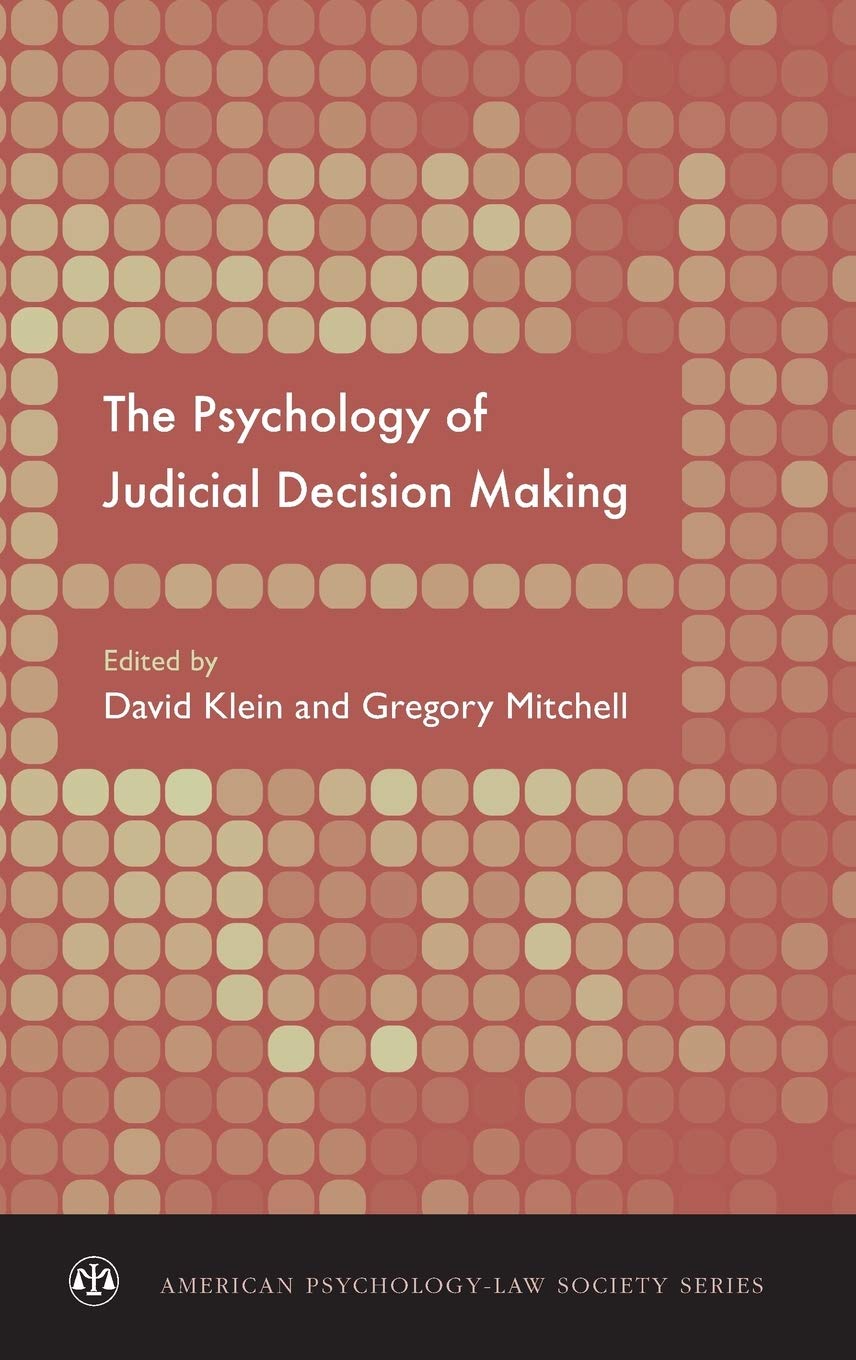
While scholars in the past several decades have made great progress in explaining what judges do, there remains a certain lack of depth to our understanding. This volume grew from a belief that close examination of the psychological processes underlying judicial decision making can greatly enrich this understanding. The collected essays map ways of incorporating key concepts and findings from psychology into the study of judging.The first section of the book takes as its starting point the fact that judges make many of the same judgments and decisions that ordinary people make and considers how our knowledge about judgment and decisionmaking in general applies to the case of legal judges. In the second section, chapters focus on the specific tasks that judges perform within a unique social setting and examine the expertise and particular modes of reasoning that judges develop to deal with their tasks in this unique setting. Finally, the third section raises questions about whether and how we can evaluate judicial performance, with implications for the possibility of improving judging through the selection and training of judges and structuring of judicial institutions. Together the essays will foster a better understand how judges make decisions, and open new avenues of inquiry into influences on judicial behavior.
⚠️ WARNING (California Proposition 65):
This product may contain chemicals known to the State of California to cause cancer,
birth defects, or other reproductive harm.
For MAP (Minimum Advertised Price) violations and Intellectual Property (IP) or Trademark concerns, please contact:
support@ergodebooks.com
⚠️ California Proposition 65 Warning: Some products sold on this website may expose you to chemicals known to the State of California to cause cancer, birth defects, or other reproductive harm. For more information, visit www.P65Warnings.ca.gov.