If you have any questions, you are always welcome to contact us. We'll get back to you as soon as possible, withing 24 hours on weekdays.
Customer service
All questions about your order, return and delivery must be sent to our customer service team by e-mail at yourstore@yourdomain.com
Sale & Press
If you are interested in selling our products, need more information about our brand or wish to make a collaboration, please contact us at press@yourdomain.com
Help
If you have any questions, you are always welcome to contact us. We'll get back to you as soon as possible, withing 24 hours on weekdays.
Customer service
All questions about your order, return and delivery must be sent to our customer service team by e-mail at yourstore@yourdomain.com
Sale & Press
If you are interested in selling our products, need more information about our brand or wish to make a collaboration, please contact us at press@yourdomain.com
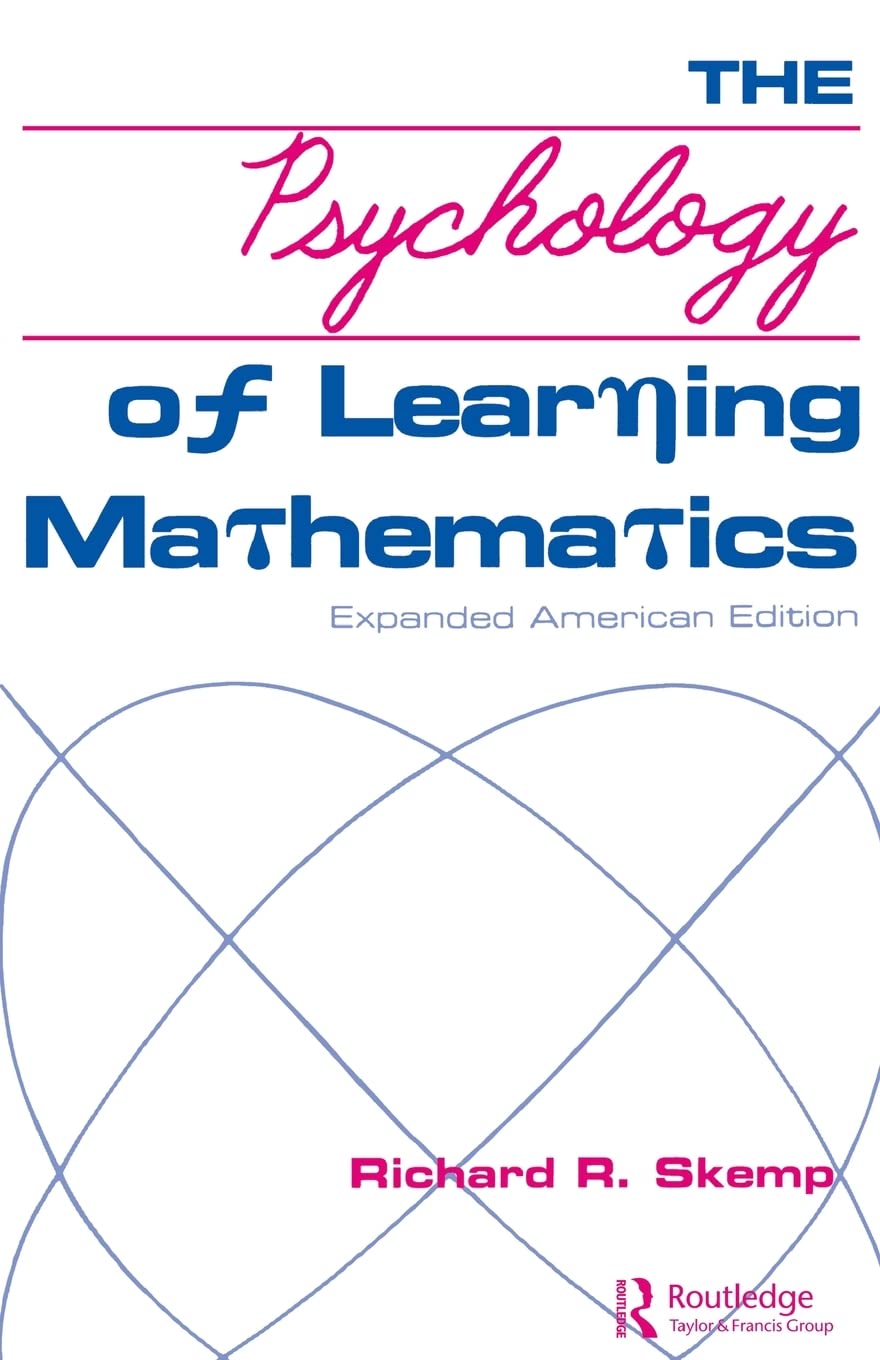
This classic text presents problems of learning and teaching mathematics from both a psychological and mathematical perspective. The Psychology of Learning Mathematics, already translated into six languages (including Chinese and Japanese), has been revised for this American Edition to include the author's most recent findings on the formation of mathematical concepts, different kinds of imagery, interpersonal and emotional factors, and a new model of intelligence. The author contends that progress in the areas of learning and teaching mathematics can only be made when such factors as the abstract and hierarchical nature of mathematics, the relation to mathematical symbolism and the distinction between intelligent learning and rote memorization are taken into account and instituted in the classroom.
⚠️ WARNING (California Proposition 65):
This product may contain chemicals known to the State of California to cause cancer,
birth defects, or other reproductive harm.
For MAP (Minimum Advertised Price) violations and Intellectual Property (IP) or Trademark concerns, please contact:
support@ergodebooks.com
⚠️ California Proposition 65 Warning: Some products sold on this website may expose you to chemicals known to the State of California to cause cancer, birth defects, or other reproductive harm. For more information, visit www.P65Warnings.ca.gov.