
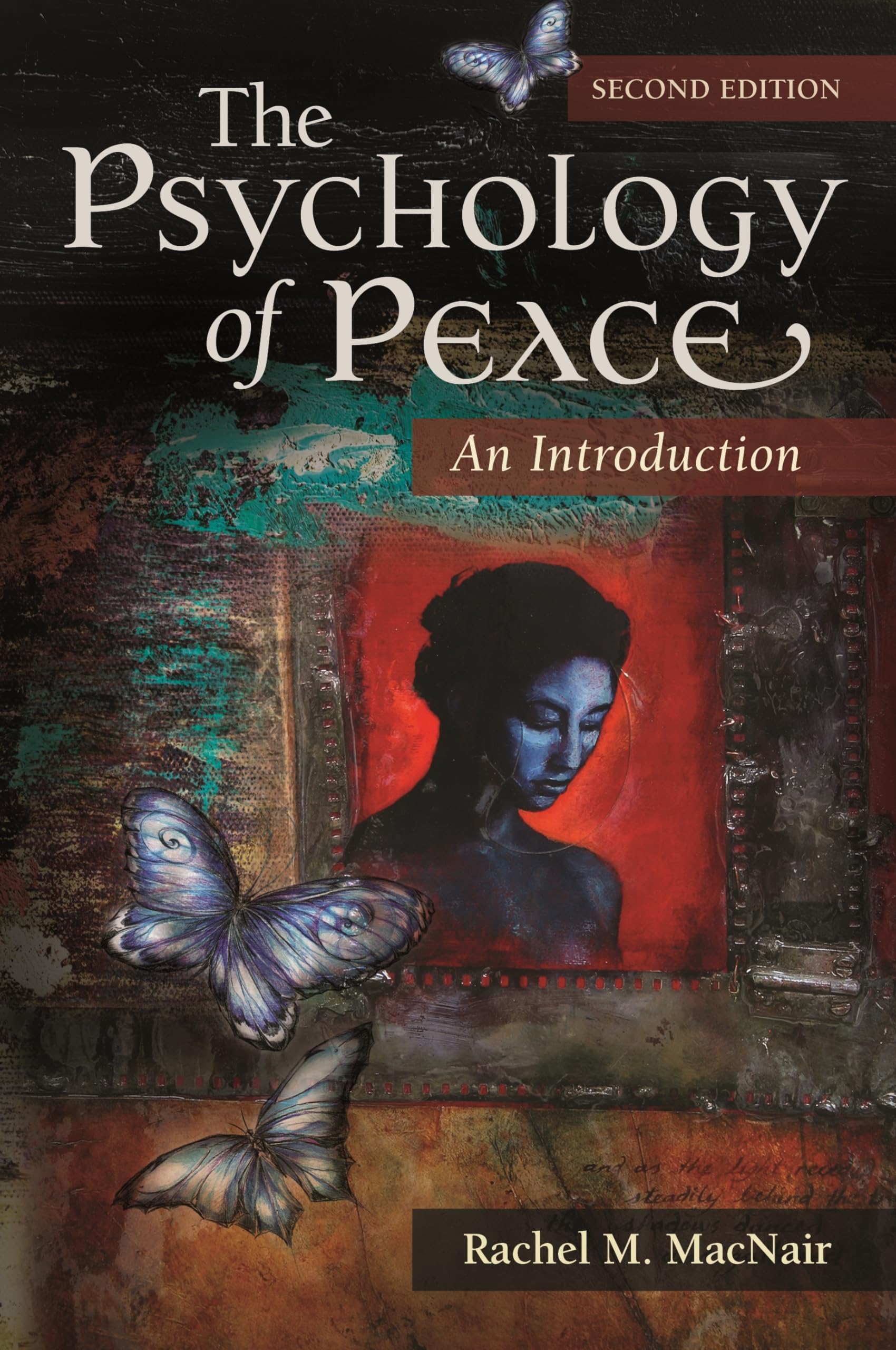
Title
The Psychology Of Peace: An Introduction,New
Sold by Ergodebooks, an authorized reseller.
Returns accepted within 30 days | support@ergodebooks.com
Shipping Information
- Free Standard Shipping — United States only
- Processing Time: 3–5 business days
- Estimated Delivery: 6–10 business days after dispatch
- Double-boxed, fully insured & discreetly packaged
- Tracking number sent via email once dispatched
Returns & Refund
Returns accepted within 30 days of delivery.
Damaged or Defective Item
Free return shipping + replacement or full refund
Wrong Item Received
Free return shipping + replacement or full refund
Change of Mind
Return shipping at customer's expense · 25% restocking fee applies
Payment Option

Despite Our Advances In Technology And Education, We Still Live In A World Permeated By Violence. This Introductory Textbook In The Field Of Peace Psychology Addresses The Psychological Causes Of Violence And Nonviolence, Conflict Resolution, Nonviolent Struggle, And The Confluence Of Public Policy And Private Lifestyles.Just As Health Providers Study Disease And Its Prevention, Understanding The Causes Of Violent Behavior And How To Prevent Such Behavior Is A Basic Cornerstone For Those Who Are Working Towards A Healthy Society. Another Parallel: Maintaining Physical Health Involves Positive Practices; Similarly, Positive Nonviolent Approaches Need To Be Psychologically Understood And Encouraged. The Second Edition Of The Psychology Of Peace: An Introduction Demonstrates What Can Be Learned Through The Lens Of Peace Psychology, Providing A Solid Foundation In The Psychological Theories Needed For Building And Maintaining A Peaceful Society And Peaceful Individuals.This Second Edition Incorporates The Tremendous Amount Of New Research And Subsequent Events Since 2003, Including Post2003 Violent And Nonviolent Revolutions, Such As The Ongoing War In Iraq And Afghanistan, And The Nonviolent Overthrowing Of Dictators In Tunisia And Egypt. Author Macnair Again Outlines Why Application Of Psychological Study To The Soundness Of Decisionmaking For Public Policyand To The Policies Themselvesis Crucial Knowledge, And How Applying The Study To Private Practices And Even Art Can Help Build Up A Peaceful Society.
⚠️ WARNING (California Proposition 65):
This product may contain chemicals known to the State of California to cause cancer, birth defects, or other reproductive harm.
For more information, please visit www.P65Warnings.ca.gov.
- Q: What is the page count of 'The Psychology of Peace: An Introduction'? A: The book has two hundred eighty pages. This comprehensive coverage offers an in-depth exploration of peace psychology.
- Q: What type of binding does this book have? A: This book is hardcover bound. Hardcover bindings provide durability and a more premium feel compared to paperback.
- Q: What are the dimensions of this book? A: The book measures six point fourteen inches in length, zero point seventy-one inches in width, and nine point twenty-one inches in height. These dimensions make it a standard size for textbooks.
- Q: Who is the author of 'The Psychology of Peace: An Introduction'? A: The author is Rachel M. MacNair. She provides insights based on extensive research in peace psychology.
- Q: What is the primary focus of this textbook? A: The textbook focuses on the psychological causes of violence and nonviolence. It also covers conflict resolution and nonviolent struggle.
- Q: How can I apply the concepts learned in this book? A: You can apply the concepts by promoting nonviolent approaches in your community. Understanding these psychological theories can help foster a peaceful society.
- Q: Is this book suitable for beginners in psychology? A: Yes, this book is suitable for beginners. It serves as an introductory textbook, making complex ideas accessible to new learners.
- Q: What age group is this book appropriate for? A: The book is appropriate for adults and older teens. Its content is designed for those interested in psychology, sociology, and peace studies.
- Q: How should I store this book to keep it in good condition? A: Store the book in a cool, dry place. Avoid direct sunlight to prevent fading and ensure it remains in good condition.
- Q: Can I clean the cover of this book? A: Yes, you can clean the cover gently with a soft, damp cloth. Avoid using harsh chemicals that may damage the material.
- Q: What if the book arrives damaged? A: If the book arrives damaged, contact the seller for a return or exchange. Most sellers have policies in place for damaged items.
- Q: Is there a warranty or guarantee on this book? A: Typically, books do not come with a warranty. However, check the seller's return policy for any guarantees.
- Q: How does this book compare to other psychology textbooks? A: This book uniquely focuses on peace psychology, unlike many textbooks that cover broader psychological topics. It’s specialized for those interested in nonviolence.
- Q: Is this book appropriate for a college course? A: Yes, it is appropriate for college courses in psychology and peace studies. It provides foundational knowledge for students.
- Q: What are the key themes covered in this book? A: The key themes include the causes of violence, conflict resolution, and the importance of nonviolent practices in society. These themes are critical for understanding peace psychology.
- Q: Are there recent updates in the second edition of this book? A: Yes, the second edition includes updates on research and events since two thousand three. This ensures the content is current and relevant.