
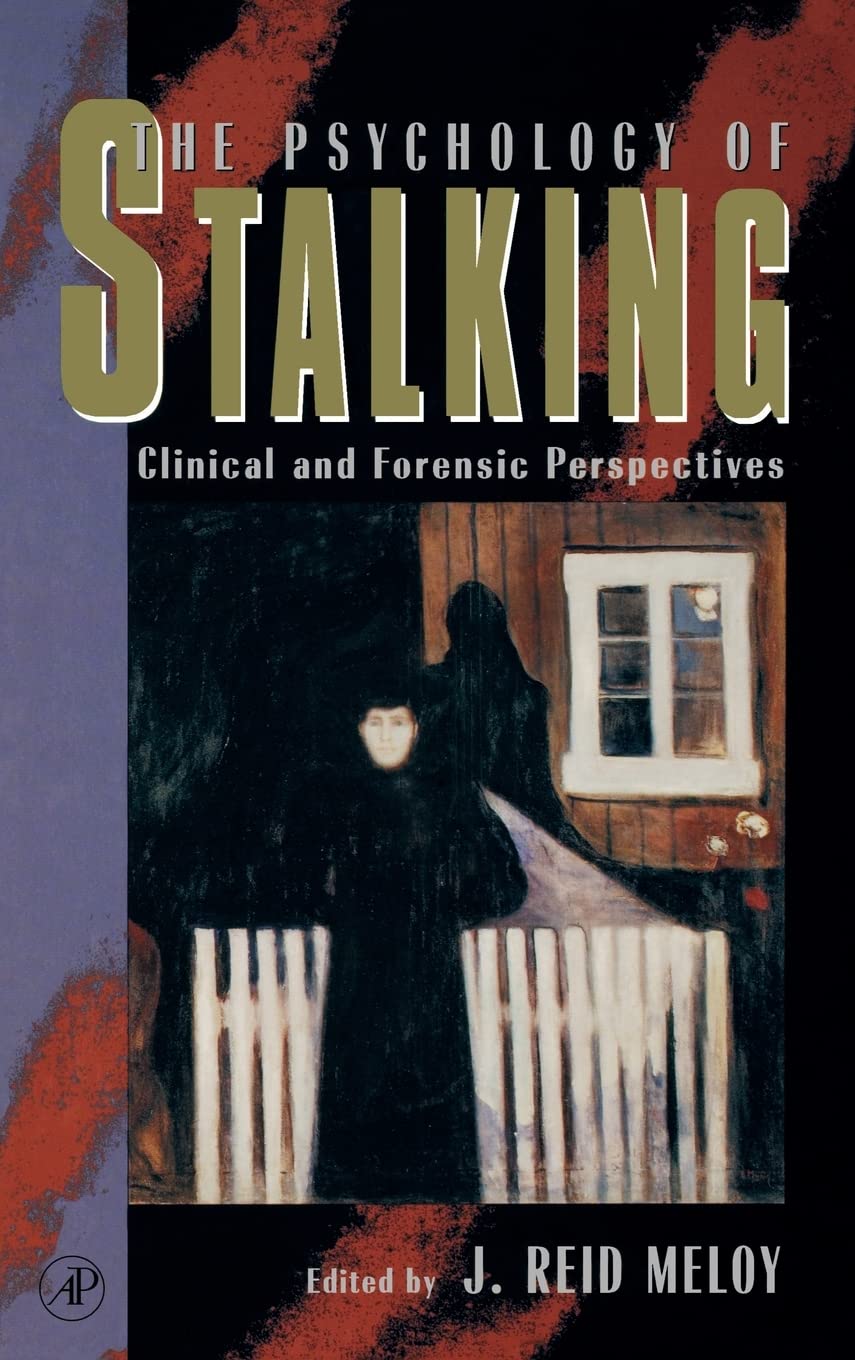
Title
The Psychology Of Stalking: Clinical And Forensic Perspectives,New
Sold by Ergodebooks, an authorized reseller.
Returns accepted within 30 days | support@ergodebooks.com
Shipping Information
- Free Standard Shipping — United States only
- Processing Time: 3–5 business days
- Estimated Delivery: 6–10 business days after dispatch
- Double-boxed, fully insured & discreetly packaged
- Tracking number sent via email once dispatched
Returns & Refund
Returns accepted within 30 days of delivery.
Damaged or Defective Item
Free return shipping + replacement or full refund
Wrong Item Received
Free return shipping + replacement or full refund
Change of Mind
Return shipping at customer's expense · 25% restocking fee applies
Payment Option

The Psychology Of Stalking Is The First Scholarly Book On Stalking Ever Published. Virtually Every Serious Writer And Researcher In This Area Of Criminal Psychopathology Has Contributed A Chapter. These Chapters Explore Stalking From Social, Psychiatric, Psychological And Behavioral Perspectives. New Thinking And Data Are Presented On Threats, Pursuit Characteristics, Psychiatric Diagnoses, Offendervictim Typologies, Cyberstalking, False Victimization Syndrome, Erotomania, Stalking And Domestic Violence, The Stalking Of Public Figures, And Many Other Aspects Of Stalking, As Well As Legal Issues. This Landmark Text Is Of Interest To Both Professionals And Other Thoughtful Individuals Who Recognize The Serious Nature Of This Ominous Social Behavior. First Scholarly Book On Stalking Ever Published Contributions From Virtually All Major Researchers In Field Discussion Of What To Do When Being Stalked Uses Examples From Recent Publicized Cases
⚠️ WARNING (California Proposition 65):
This product may contain chemicals known to the State of California to cause cancer, birth defects, or other reproductive harm.
For more information, please visit www.P65Warnings.ca.gov.
- Q: What is the page count of the book? A: This book has three hundred twenty-seven pages. It provides extensive insights into the psychology of stalking.
- Q: What is the binding type of this book? A: The book is bound in hardcover. This ensures durability and a professional appearance.
- Q: Who is the author of 'The Psychology of Stalking'? A: The author is Meloy, J. Reid. He is a recognized expert in the field of clinical and forensic psychology.
- Q: What dimensions does the book have? A: The book measures six and a half inches in length, one inch in width, and nine point seven six inches in height. These dimensions make it a manageable size for reading.
- Q: Is this book appropriate for all ages? A: This book is intended for adults and professionals. It discusses sensitive topics related to stalking that may not be suitable for younger readers.
- Q: What topics are covered in this book? A: The book explores various topics related to stalking, including psychiatric diagnoses, offender-victim typologies, and cyberstalking. It provides a comprehensive overview of the subject.
- Q: How should I store this book? A: Store the book in a cool, dry place, upright on a shelf. This helps prevent damage to the binding and pages.
- Q: How can I keep the book in good condition? A: To maintain the book's condition, avoid exposing it to direct sunlight and excessive moisture. Handle it gently to prevent spine damage.
- Q: Is there a warranty on this book? A: Books typically do not come with a warranty. However, you can check with the retailer for their return policy.
- Q: What if the book arrives damaged? A: If the book arrives damaged, contact the seller to inquire about their return or exchange policy. Most sellers offer solutions for damaged items.
- Q: Is this book suitable for professionals in psychology? A: Yes, this book is suitable for professionals in psychology. It offers in-depth discussions and research on stalking, making it a valuable resource.
- Q: Does the book include recent case studies? A: Yes, the book uses examples from recent publicized cases. This provides context and real-world applications of the discussed theories.
- Q: Can this book help someone who is being stalked? A: Yes, the book discusses strategies for dealing with stalking situations. It provides helpful insights for understanding and addressing the issue.
- Q: Is this book a scholarly text? A: Yes, 'The Psychology of Stalking' is a scholarly text. It includes contributions from major researchers in the field of criminal psychopathology.
- Q: What genre does this book belong to? A: This book falls under the genre of psychology and criminal justice. It delves into the psychological aspects of stalking behavior.