
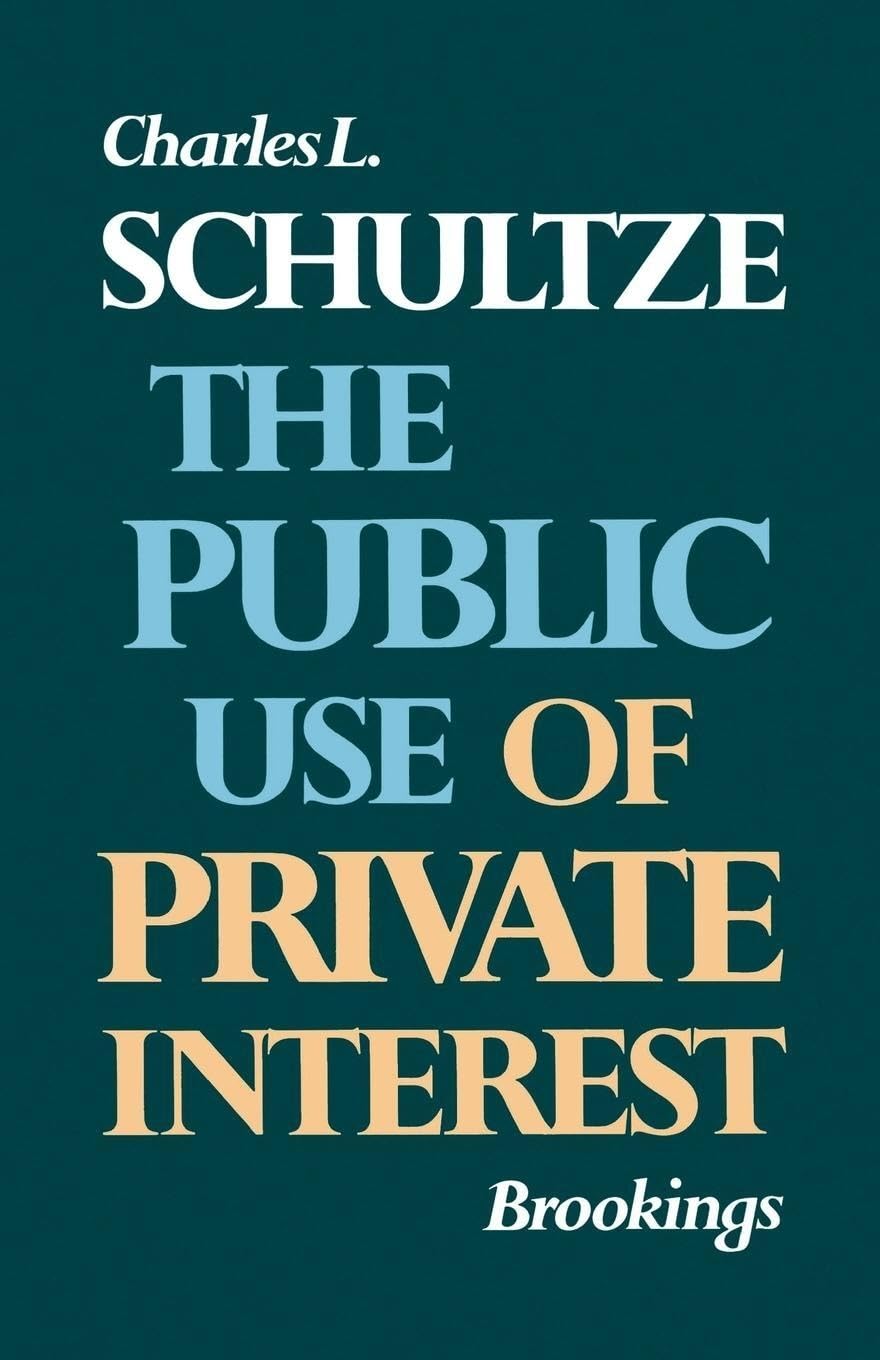
Title
The Public Use Of Private Interest (Miscellany Of History No. 5),Used
Sold by Ergodebooks, an authorized reseller.
Returns accepted within 30 days | support@ergodebooks.com
Shipping Information
- Free Standard Shipping — United States only
- Processing Time: 3–5 business days
- Estimated Delivery: 6–10 business days after dispatch
- Double-boxed, fully insured & discreetly packaged
- Tracking number sent via email once dispatched
Returns & Refund
Returns accepted within 30 days of delivery.
Damaged or Defective Item
Free return shipping + replacement or full refund
Wrong Item Received
Free return shipping + replacement or full refund
Change of Mind
Return shipping at customer's expense · 25% restocking fee applies
Payment Option

According to conventional wisdom, government may intervene when private markets fail to provide goods and services that society values. This view has led to the passage of much legislation and the creation of a host of agencies that have attempted, by exquisitely detailed regulations, to compel legislatively defined behavior in a broad range of activities affecting society as a wholehealth care, housing, pollution abatement, transportation, to name only a few. Far from achieving the goals of the legislators and regulators, these efforts have been largely ineffective; worse, they have spawned endless litigation and countless administrative proceedings as the individuals and firms on who the regulations fall seek to avoid, or at least soften, their impact. The result has been long delays in determining whether government programs work at all, thwarting of agreedupon societal aims, and deep skepticism about the power of government to make any difference. Strangely enough in a nation that since its inception has valued both the means and the ends of the private market system, the United States has rarely tried to harness private interests to public goals. Whenever private markets fail to produce some desired good or service (or fail to deter undesirable activity), the remedies proposed have hardly ever involved creating a system of incentives similar to those of the market place so as to make private choice consonant with public virtue. In this revision of the Godkin Lectures presented at Harvard University in November and December 1976, Charles L. Schultze examines the sources of this paradox. He outlines a plan for government intervention that would turn away from the direct ''command and control'' regulating techniques of the past and rely instead on marketlike incentives to encourage people indirectly to take publicly desired actions.'
⚠️ WARNING (California Proposition 65):
This product may contain chemicals known to the State of California to cause cancer, birth defects, or other reproductive harm.
For more information, please visit www.P65Warnings.ca.gov.