If you have any questions, you are always welcome to contact us. We'll get back to you as soon as possible, withing 24 hours on weekdays.
Customer service
All questions about your order, return and delivery must be sent to our customer service team by e-mail at yourstore@yourdomain.com
Sale & Press
If you are interested in selling our products, need more information about our brand or wish to make a collaboration, please contact us at press@yourdomain.com
Help
If you have any questions, you are always welcome to contact us. We'll get back to you as soon as possible, withing 24 hours on weekdays.
Customer service
All questions about your order, return and delivery must be sent to our customer service team by e-mail at yourstore@yourdomain.com
Sale & Press
If you are interested in selling our products, need more information about our brand or wish to make a collaboration, please contact us at press@yourdomain.com
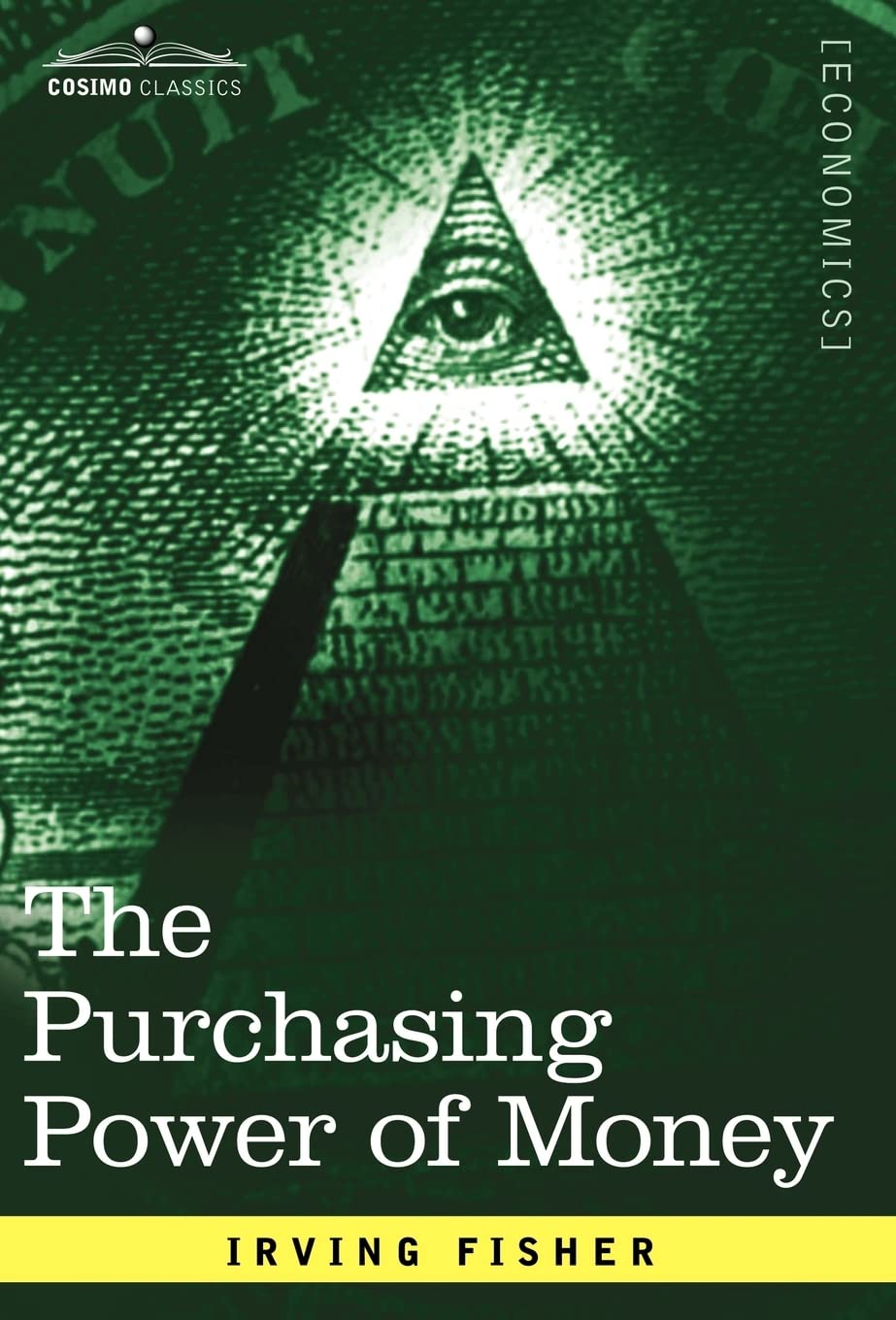
Perhaps America's first celebrated economist, Irving Fisherfor whom the Fisher equation, the Fisher hypothesis, and the Fisher separation theorem are namedstaked an early claim to fame with his revival, in this 1912 book, of the "quantity theory of money." An important work of 20thcentury economics, this work explores: the circulation of money against goods the various circulating media the mystery of circulating credit how a rise in prices generates a further rise influence of foreign trade on the quantity of money the problem of monetary reform and much more. American economist IRVING FISHER (18671947) was professor of political economy at Yale University. Among his many books are Mathematical Investigations in the Theory of Value and Prices (1892), The Rate of Interest (1907), Why Is the Dollar Shrinking? A Study in the High Cost of Living (1914), and Booms and Depressions (1932).
⚠️ WARNING (California Proposition 65):
This product may contain chemicals known to the State of California to cause cancer,
birth defects, or other reproductive harm.
For MAP (Minimum Advertised Price) violations and Intellectual Property (IP) or Trademark concerns, please contact:
support@ergodebooks.com
⚠️ California Proposition 65 Warning: Some products sold on this website may expose you to chemicals known to the State of California to cause cancer, birth defects, or other reproductive harm. For more information, visit www.P65Warnings.ca.gov.