If you have any questions, you are always welcome to contact us. We'll get back to you as soon as possible, withing 24 hours on weekdays.
Customer service
All questions about your order, return and delivery must be sent to our customer service team by e-mail at yourstore@yourdomain.com
Sale & Press
If you are interested in selling our products, need more information about our brand or wish to make a collaboration, please contact us at press@yourdomain.com
Help
If you have any questions, you are always welcome to contact us. We'll get back to you as soon as possible, withing 24 hours on weekdays.
Customer service
All questions about your order, return and delivery must be sent to our customer service team by e-mail at yourstore@yourdomain.com
Sale & Press
If you are interested in selling our products, need more information about our brand or wish to make a collaboration, please contact us at press@yourdomain.com
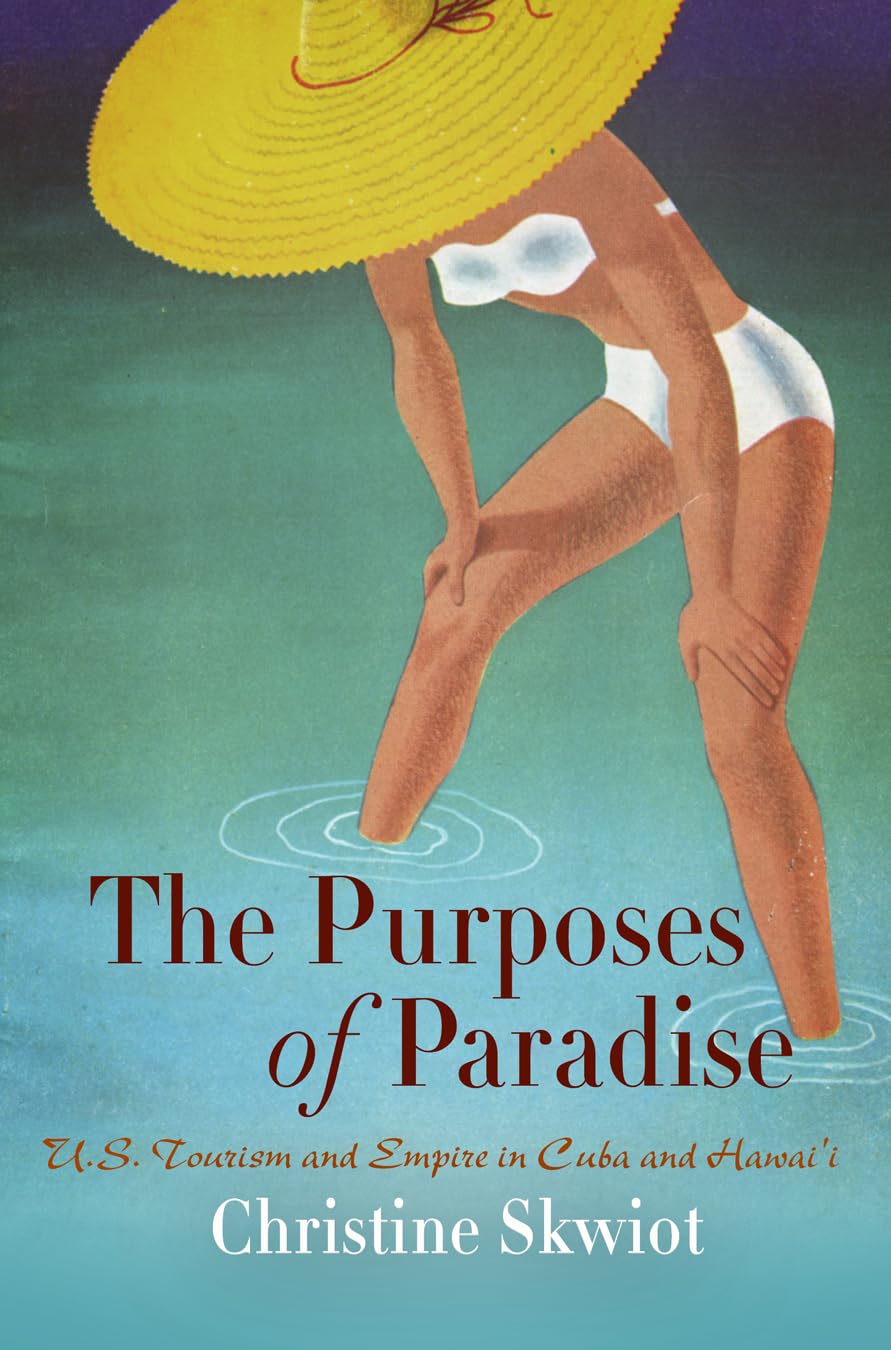
For half a century, the United States has treated Cuba and Hawai'i as polar opposites: despised nation and beloved state. But for more than a century before the Cuban revolution and Hawaiian statehood of 1959, Cuba and Hawai'i figured as twin objects of U.S. imperial desire and as possessions whose tropical island locales might support all manner of fantasy fulfillmentcultural, financial, and geopolitical.Using travel and tourism as sites where the pleasures of imperialism met the politics of empire, Christine Skwiot untangles the histories of Cuba and Hawai'i as integral parts of the Union and keys to U.S. global power, as occupied territories with violent pasts, and as fantasy islands ripe with seduction and reward. Grounded in a wide array of primary materials that range from government sources and tourist industry records to promotional items and travel narratives, The Purposes of Paradise explores the ways travel and tourism shaped U.S. imperialism in Cuba and Hawai'i. More broadly, Skwiot's comparative approach underscores continuity, as well as change, in U.S. imperial thought and practice across the nineteenth and twentieth centuries and across the Atlantic and Pacific oceans. Comparing the relationships of Cuba and Hawai'i with the United States, Skwiot argues, offers a way to revisit assumptions about formal versus informal empire, territorial versus commercial imperialism, and direct versus indirect rule.
⚠️ WARNING (California Proposition 65):
This product may contain chemicals known to the State of California to cause cancer,
birth defects, or other reproductive harm.
For MAP (Minimum Advertised Price) violations and Intellectual Property (IP) or Trademark concerns, please contact:
support@ergodebooks.com
⚠️ California Proposition 65 Warning: Some products sold on this website may expose you to chemicals known to the State of California to cause cancer, birth defects, or other reproductive harm. For more information, visit www.P65Warnings.ca.gov.