
Title
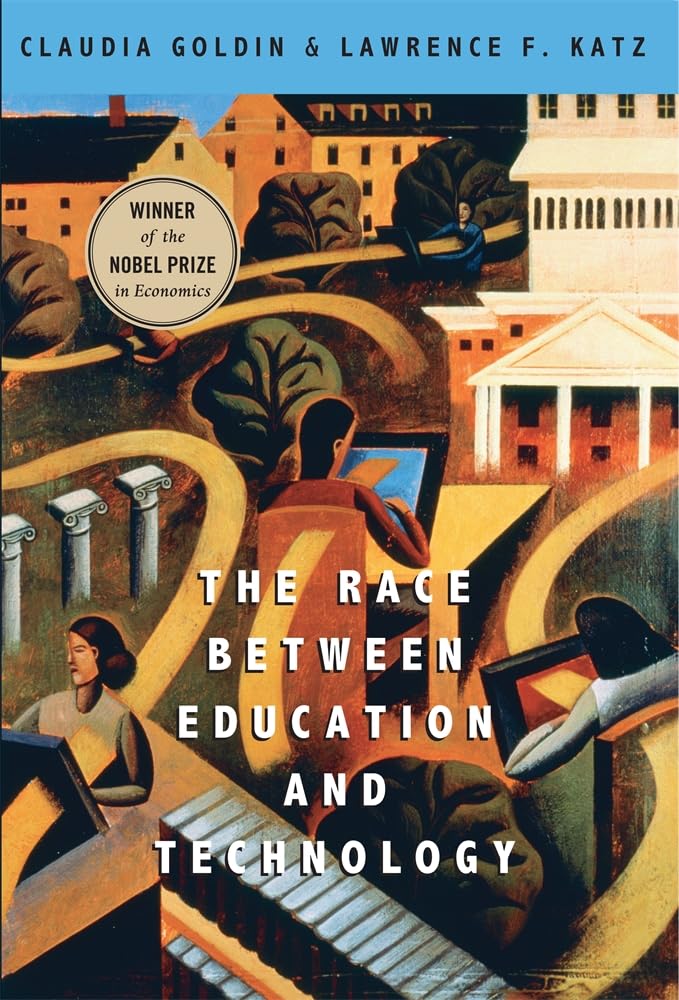
The Race Between Education And Technology
Sold by Ergodebooks, an authorized reseller.
Returns accepted within 30 days | support@ergodebooks.com
Shipping Information
- Free Standard Shipping — United States only
- Processing Time: 3–5 business days
- Estimated Delivery: 6–10 business days after dispatch
- Double-boxed, fully insured & discreetly packaged
- Tracking number sent via email once dispatched
Returns & Refund
Returns accepted within 30 days of delivery.
Damaged or Defective Item
Free return shipping + replacement or full refund
Wrong Item Received
Free return shipping + replacement or full refund
Change of Mind
Return shipping at customer's expense · 25% restocking fee applies
Payment Option

An Incisive History Of American Educationits Great Success In Creating Prosperity And Equality During The Twentieth Century And Its Relative Decline Since The 1970S.As Goldin And Katz Have Argued, The 20Th Century Was The American Century In Large Part Because It Was The Humancapital Century. Educationknowledgecan Help People Live Better By Allowing Them To Learn From Past Errors And Make New Discoveries. David Leonhardt, New York Timesthis Book Provides A Careful Historical Analysis Of The Coevolution Of Educational Attainment And The Wage Structure In The United States Through The Twentieth Century. The Authors Propose That The Twentieth Century Was Not Only The American Century But Also The Human Capital Century. That Is, The American Educational System Is What Made America The Richest Nation In The World. Its Educational System Had Always Been Less Elite Than That Of Most European Nations. By 1900 The U.S. Had Begun To Educate Its Masses At The Secondary Level, Not Just In The Primary Schools That Had Remarkable Success In The Nineteenth Century.The Book Argues That Technological Change, Education, And Inequality Have Been Involved In A Kind Of Race. During The First Eight Decades Of The Twentieth Century, The Increase Of Educated Workers Was Higher Than The Demand For Them. This Had The Effect Of Boosting Income For Most People And Lowering Inequality. However, The Reverse Has Been True Since About 1980. This Educational Slowdown Was Accompanied By Rising Inequality. The Authors Discuss The Complex Reasons For This, And What Might Be Done To Ameliorate It.
⚠️ WARNING (California Proposition 65):
This product may contain chemicals known to the State of California to cause cancer, birth defects, or other reproductive harm.
For more information, please visit www.P65Warnings.ca.gov.
- Q: How many pages does this book have? A: This book has four hundred ninety-six pages. It provides a comprehensive historical analysis of American education and its evolution.
- Q: What are the dimensions of this book? A: The book measures six point fourteen inches in length, one point twenty-four inches in width, and nine point twenty-five inches in height. These dimensions make it a suitable size for most bookshelves.
- Q: What is the binding type of this book? A: This book is paperback bound. It offers flexibility and comfort for reading while being lightweight.
- Q: What is the main theme of 'The Race between Education and Technology'? A: The main theme explores the historical relationship between education, technology, and economic inequality. It argues that education played a crucial role in America's prosperity.
- Q: Who is the author of this book? A: The author of this book is Claudia Goldin. She is a renowned economist known for her work on the history of education and labor.
- Q: What genre does this book belong to? A: This book belongs to the genre of Economic History. It examines the interplay between education and economics throughout the twentieth century.
- Q: Is this book suitable for all ages? A: Yes, this book is suitable for adults and older teens interested in economic history. It contains complex themes best understood by those with a higher education level.
- Q: How should I read this book for best understanding? A: To understand this book fully, it's best to read it slowly, taking notes on key arguments. Engaging with its historical context will enhance comprehension.
- Q: Can I read this book as a beginner in economics? A: Yes, beginners can read this book but may find some concepts challenging. It is advisable to have a basic understanding of economic principles.
- Q: How should I care for this book to keep it in good condition? A: To keep this book in good condition, store it upright in a dry place and avoid exposing it to direct sunlight. Handle it gently to prevent spine damage.
- Q: Is there a recommended way to clean this book? A: No, it is not advisable to clean the pages of this book. Instead, keep it dust-free by using a soft brush or cloth on the cover.
- Q: What should I do if my book arrives damaged? A: If your book arrives damaged, you should contact the seller for a return or exchange. Most sellers have policies in place for such situations.
- Q: Does this book come with a warranty? A: No, books typically do not come with warranties. However, check the seller's return policy for options if you are unsatisfied.
- Q: Is this book available in other formats? A: No, this specific listing is for the paperback version only. Digital formats may be available elsewhere.
- Q: Can I return this book if I don't like it? A: Yes, you can return the book if it is within the return period set by the seller. Check the return policy for specific details.