
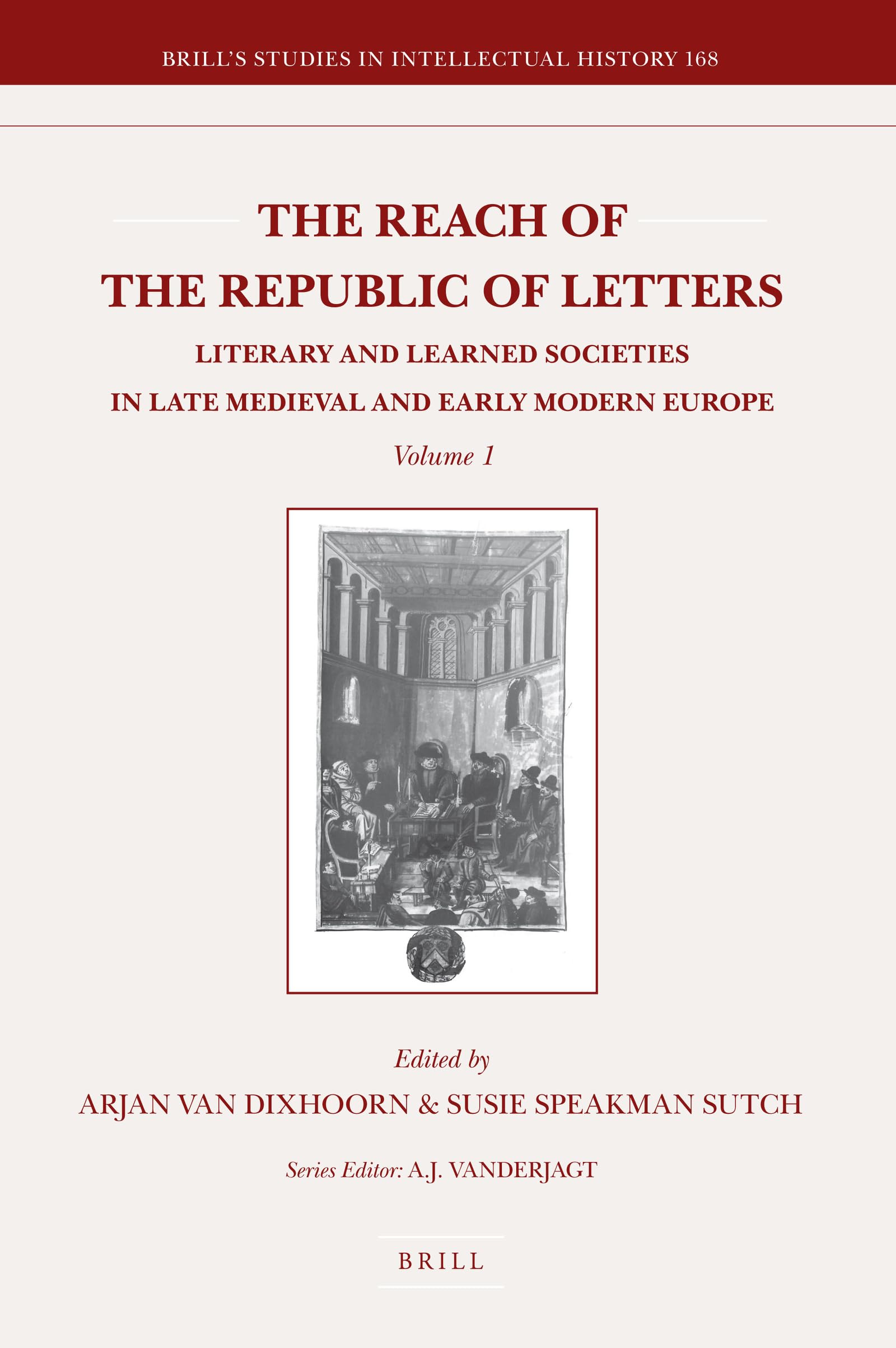
Title
The Reach of the Republic of Letters: Literary and Learned Societies in Late Medieval and Early Modern Europe (2 Vols.) (Brill's,Used
Sold by Ergodebooks, an authorized reseller.
Returns accepted within 30 days | support@ergodebooks.com
Shipping Information
- Free Standard Shipping — United States only
- Processing Time: 3–5 business days
- Estimated Delivery: 6–10 business days after dispatch
- Double-boxed, fully insured & discreetly packaged
- Tracking number sent via email once dispatched
Returns & Refund
Returns accepted within 30 days of delivery.
Damaged or Defective Item
Free return shipping + replacement or full refund
Wrong Item Received
Free return shipping + replacement or full refund
Change of Mind
Return shipping at customer's expense · 25% restocking fee applies
Payment Option

Review (...) Taken as a formal aid to confine the period of time and social group the notion 'Republic of Letters' is very helpful to allude to the learned as a main group and actors in all the research papers. The papers (...) reveal, throught example, individuall diverse and highly complex interconnectivities, qualities that would be lost in a mere collection of dataAnjaSilvia Goeing, Studium, Vol 3, No 1 (2010) 4849 Product Description This volume questions the presentday assumption holding the Italian academies to be the model for the European literary and learned society, by juxtaposing them to other types of contemporary literary and learned associations in several Western European countries. From the Back Cover Presentday scholarship holds that the Italian academies were the model for the European literary and learned society. This volume questions the a ~Italian paradigma (TM) and discusses the literary and learned associations in Italy and Spain a ' explicitly called academies a ' as well as others in Germany, France, and the Netherlands. The flourishing of these organizations from the fifteenth century onwards coincided chronologically with the growth of performative literary culture, the technological innovation of the printing press, the establishment of early humanist networks, and the growing impact of classical and humanist ideas, concepts, and forms on vernacular culture. One of the questions this volume raises is whether and how these societies related to these developments and to the world of Learning and the Republic of Letters. About the Author Arjan van Dixhoorn received a PhD in History from the Free University of Amsterdam (2004). He is a postdoctoral research fellow at Antwerp University in a FlemishDutch research project on public opinion making in the early modern Netherlands.Susie Speakman Sutch, Ph.D. (1983) in Comparative Literature, University of California, Berkeley, is a postdoctoral researcher in the Department of Early Modern History at Ghent University. She has published on late fifteenth and early sixteenthcentury literature and civic culture in the Southern Low Countries.
⚠️ WARNING (California Proposition 65):
This product may contain chemicals known to the State of California to cause cancer, birth defects, or other reproductive harm.
For more information, please visit www.P65Warnings.ca.gov.