
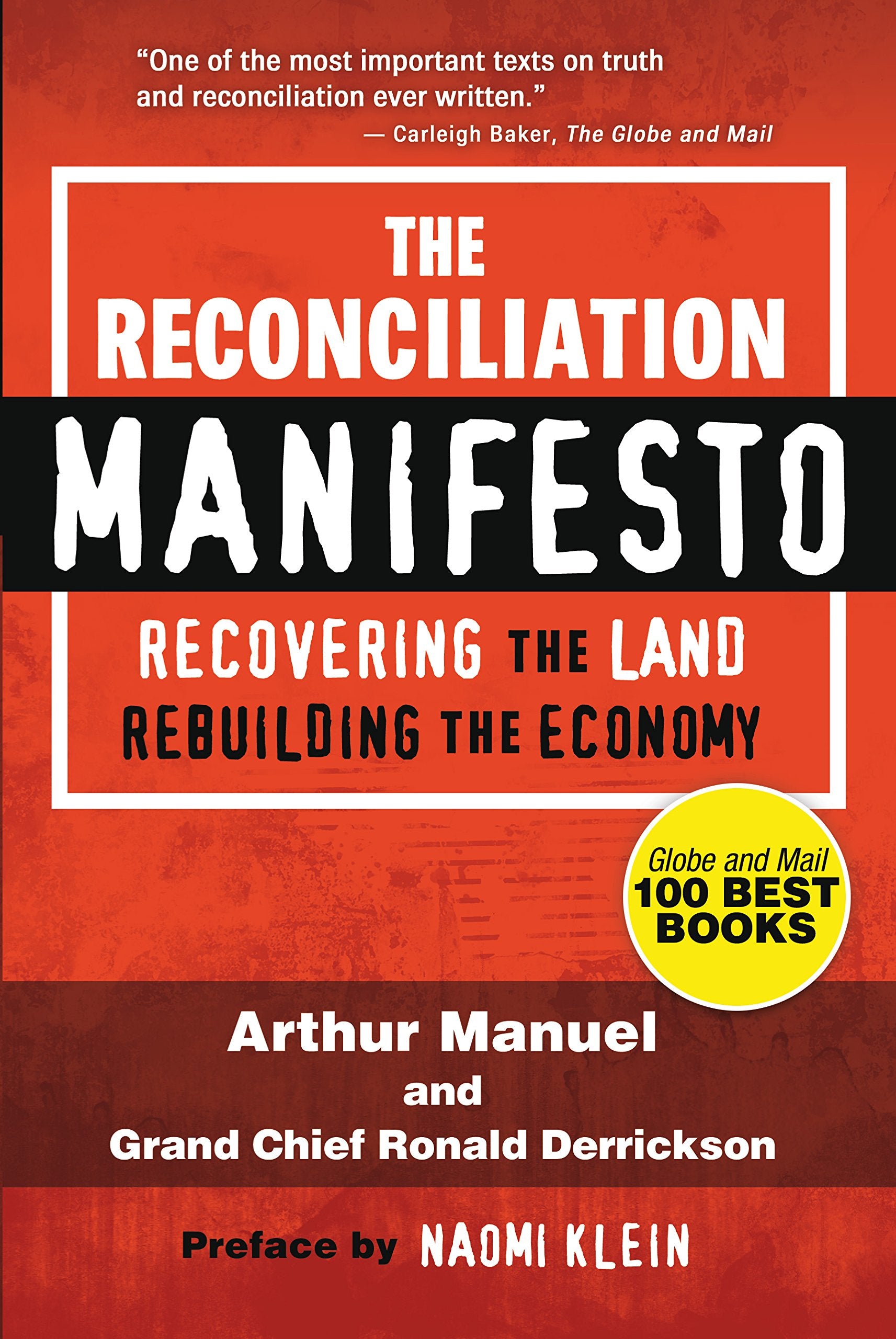
Title
The Reconciliation Manifesto: Recovering The Land, Rebuilding The Economy
Sold by Ergodebooks, an authorized reseller.
Returns accepted within 30 days | support@ergodebooks.com
Shipping Information
- Free Standard Shipping — United States only
- Processing Time: 3–5 business days
- Estimated Delivery: 6–10 business days after dispatch
- Double-boxed, fully insured & discreetly packaged
- Tracking number sent via email once dispatched
Returns & Refund
Returns accepted within 30 days of delivery.
Damaged or Defective Item
Free return shipping + replacement or full refund
Wrong Item Received
Free return shipping + replacement or full refund
Change of Mind
Return shipping at customer's expense · 25% restocking fee applies
Payment Option

In This Book, Leading Indigenous Rights Activist Arthur Manuel Offers A Radical Challenge To Canada And Canadians. He Questions Virtually Everything Nonindigenous Canadians Believe About Their Relationship With Indigenous Peoples.The Reconciliation Manifesto Documents How Governments Are Attempting To Reconcile With Indigenous Peoples Without Touching The Basic Colonial Structures That Dominate And Distort The Relationship. Manuel Reviews The Current State Of Land Claims, Tackles The Persistence Of Racism Among Nonindigenous People And Institutions, Decries The Role Of Governmentfunded Organizations Like The Assembly Of First Nations, And Highlights The Federal Government'S Disregard For The Substance Of The United Nations Declaration On The Rights Of Indigenous Peoples While Claiming To Implement It. Together, These Circumstances Amount To A False Reconciliation Between Indigenous People And Canada.Manuel Sets Out The Steps That Are Needed To Place This Relationship On A Healthy And Honourable Setting. As He Explains, Recovering The Land And Rebuilding The Economy Are Key.Completed Just Months Before Manuel'S Death In January 2017, This Book Offers An Illuminating Vision Of What Is Needed For True Reconciliation. Expressed With Quiet But Firm Resolve, Humour, And Piercing Intellect, The Reconciliation Manifesto Is For Both Indigenous And Nonindigenous People Who Are Willing To Look At The Real Problems And Find Real Solutions.
⚠️ WARNING (California Proposition 65):
This product may contain chemicals known to the State of California to cause cancer, birth defects, or other reproductive harm.
For more information, please visit www.P65Warnings.ca.gov.
- Q: How many pages are in The Reconciliation Manifesto? A: The book contains three hundred twelve pages. This length provides a comprehensive exploration of Indigenous rights and reconciliation in Canada.
- Q: What is the binding type of The Reconciliation Manifesto? A: The binding type is paperback. This makes the book flexible and lightweight, ideal for carrying and reading on the go.
- Q: Who is the author of The Reconciliation Manifesto? A: The author is Arthur Manuel. He was a leading Indigenous rights activist and his insights are deeply rooted in personal and historical context.
- Q: What is the primary focus of The Reconciliation Manifesto? A: The book focuses on the relationship between Indigenous peoples and Canada. It critically examines colonial structures and advocates for true reconciliation.
- Q: Is The Reconciliation Manifesto suitable for all readers? A: Yes, it is suitable for both Indigenous and non-Indigenous readers. The book encourages everyone to engage with pressing issues surrounding reconciliation.
- Q: What themes are explored in The Reconciliation Manifesto? A: The themes include land rights, colonialism, racism, and economic rebuilding. Manuel emphasizes the need for genuine dialogue and action regarding these issues.
- Q: How does The Reconciliation Manifesto address racism? A: The book tackles the persistence of racism among non-Indigenous people and institutions. Manuel highlights the need for acknowledgment and change in these attitudes.
- Q: What vision does The Reconciliation Manifesto offer for the future? A: It offers a vision for recovering land and rebuilding the economy. Manuel outlines steps needed for a healthier relationship between Indigenous peoples and Canada.
- Q: What kind of activism does The Reconciliation Manifesto discuss? A: It discusses grassroots activism and movements like Idle No More. The book highlights the importance of community-led efforts in the fight for Indigenous rights.
- Q: Does The Reconciliation Manifesto include letters or additional commentary? A: Yes, it includes open letters to various figures, providing further context to Manuel's arguments. These letters enhance the book's message about reconciliation.
- Q: What is the significance of the title 'The Reconciliation Manifesto'? A: The title signifies a bold call to action for true reconciliation between Indigenous peoples and Canada. It reflects Manuel's passionate advocacy for change.
- Q: What does The Reconciliation Manifesto say about the United Nations Declaration on the Rights of Indigenous Peoples? A: The book critiques the federal government's approach to implementing the declaration. Manuel argues that it often falls short of true adherence to its principles.
- Q: Are there any notable endorsements for The Reconciliation Manifesto? A: Yes, it features a preface by Naomi Klein. Her endorsement highlights the book's relevance in contemporary discussions on Indigenous rights.
- Q: What is the overall message of The Reconciliation Manifesto? A: The overall message is that true reconciliation requires dismantling colonial structures and addressing historical injustices. Manuel advocates for actionable steps toward this goal.
- Q: How does The Reconciliation Manifesto relate to current events? A: It relates by addressing ongoing struggles for Indigenous rights in Canada. Manuel's insights remain pertinent as discussions on reconciliation continue to evolve.