If you have any questions, you are always welcome to contact us. We'll get back to you as soon as possible, withing 24 hours on weekdays.
Customer service
All questions about your order, return and delivery must be sent to our customer service team by e-mail at yourstore@yourdomain.com
Sale & Press
If you are interested in selling our products, need more information about our brand or wish to make a collaboration, please contact us at press@yourdomain.com
Help
If you have any questions, you are always welcome to contact us. We'll get back to you as soon as possible, withing 24 hours on weekdays.
Customer service
All questions about your order, return and delivery must be sent to our customer service team by e-mail at yourstore@yourdomain.com
Sale & Press
If you are interested in selling our products, need more information about our brand or wish to make a collaboration, please contact us at press@yourdomain.com
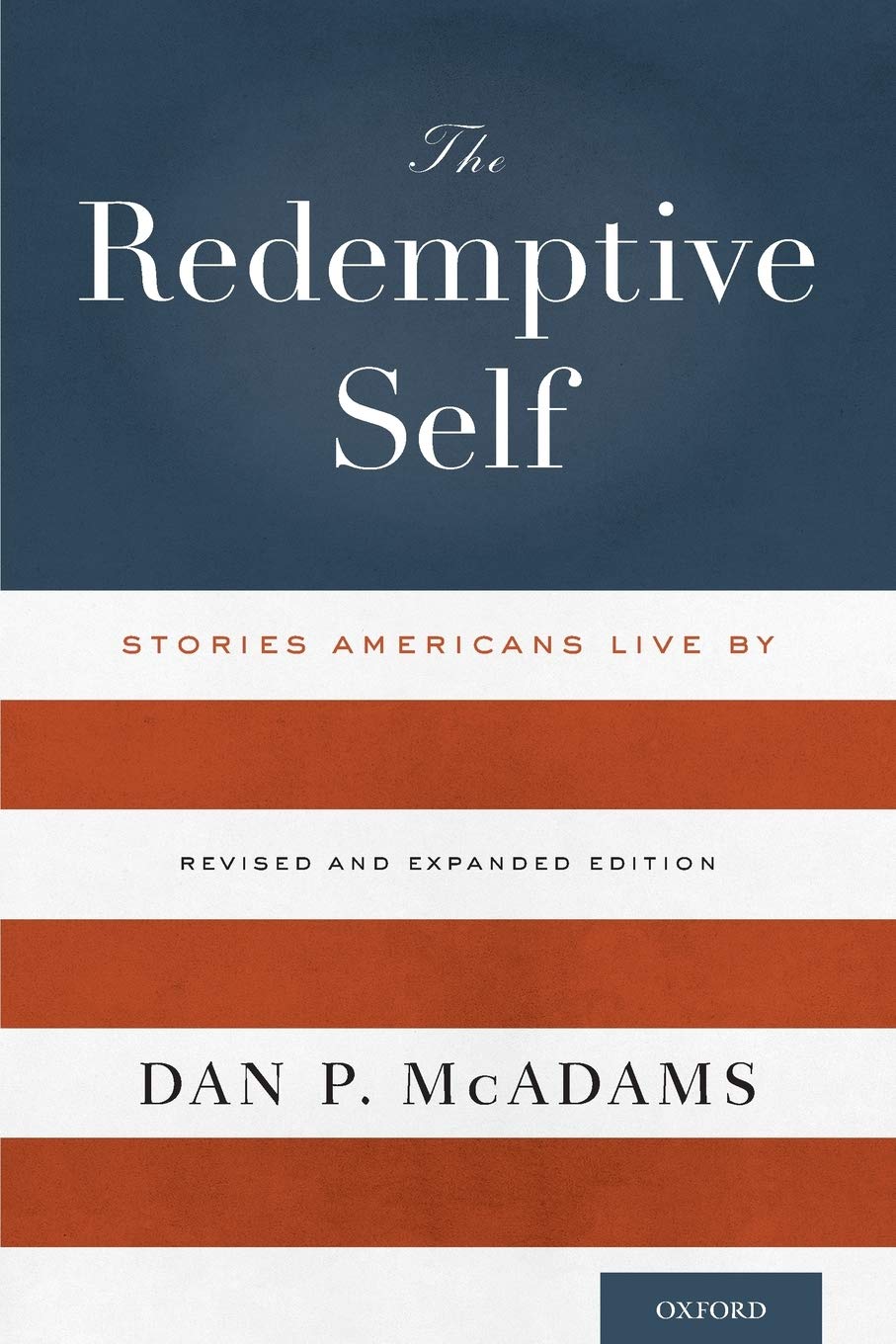
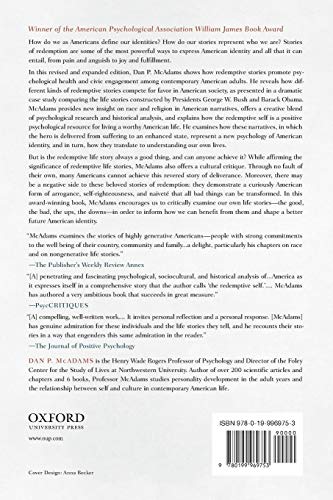
How do we as Americans define our identities? How do our stories represent who we areour successes, our failures, our past, our future? Stories of redemption are some of the most powerful ways to express American identity and all that it can entail, from pain and anguish to joy and fulfillment. Psychologist Dan P. McAdams examines how these narratives, in which the hero is delivered from suffering to an enhanced status or state, represent a new psychology of American identity, and in turn, how they translate to understanding our own lives.In this revised and expanded edition of The Redemptive Self, McAdams shows how redemptive stories promote psychological health and civic engagement among contemporary American adults. He reveals how different kinds of redemptive stories compete for favor in American society, as presented in a dramatic case study comparing the life stories constructed by Presidents George W. Bush and Barack Obama. McAdams provides new insight on race and religion in American narratives, offers a creative blend of psychological research and historical analysis, and explains how the redemptive self is a positive psychological resource for living a worthy American life. From the spiritual testimonials of the Puritans and the celebrated autobiography of Benjamin Franklin, to the harrowing stories of escaped slaves and the modern tales in Hollywood movies, we are surrounded by transformative stories that can inform how we make sense of our American identity.But is the redemptive life story always a good thing, and can anyone achieve it? While affirming the significance of redemptive life stories, McAdams also offers a cultural critique. Through no fault of their own, many Americans cannot achieve this revered story of deliverance. Instead, their lives are rife with contaminated plots, vicious cycles of disappointment, and endless pitfalls. Moreover, there may be a negative side to these beloved stories of redemptionthey demonstrate a curiously American form of arrogance, selfrighteousness, and naivet that all bad things can be transformed. In this revised and expanded edition of the his awardwinning book, McAdams encourages us to critically examine our own life storiesthe good, the bad, the ups, the downsin order to inform how we can benefit from them and shape a better future American identity.
⚠️ WARNING (California Proposition 65):
This product may contain chemicals known to the State of California to cause cancer,
birth defects, or other reproductive harm.
For MAP (Minimum Advertised Price) violations and Intellectual Property (IP) or Trademark concerns, please contact:
support@ergodebooks.com
⚠️ California Proposition 65 Warning: Some products sold on this website may expose you to chemicals known to the State of California to cause cancer, birth defects, or other reproductive harm. For more information, visit www.P65Warnings.ca.gov.