If you have any questions, you are always welcome to contact us. We'll get back to you as soon as possible, withing 24 hours on weekdays.
Customer service
All questions about your order, return and delivery must be sent to our customer service team by e-mail at yourstore@yourdomain.com
Sale & Press
If you are interested in selling our products, need more information about our brand or wish to make a collaboration, please contact us at press@yourdomain.com
Help
If you have any questions, you are always welcome to contact us. We'll get back to you as soon as possible, withing 24 hours on weekdays.
Customer service
All questions about your order, return and delivery must be sent to our customer service team by e-mail at yourstore@yourdomain.com
Sale & Press
If you are interested in selling our products, need more information about our brand or wish to make a collaboration, please contact us at press@yourdomain.com
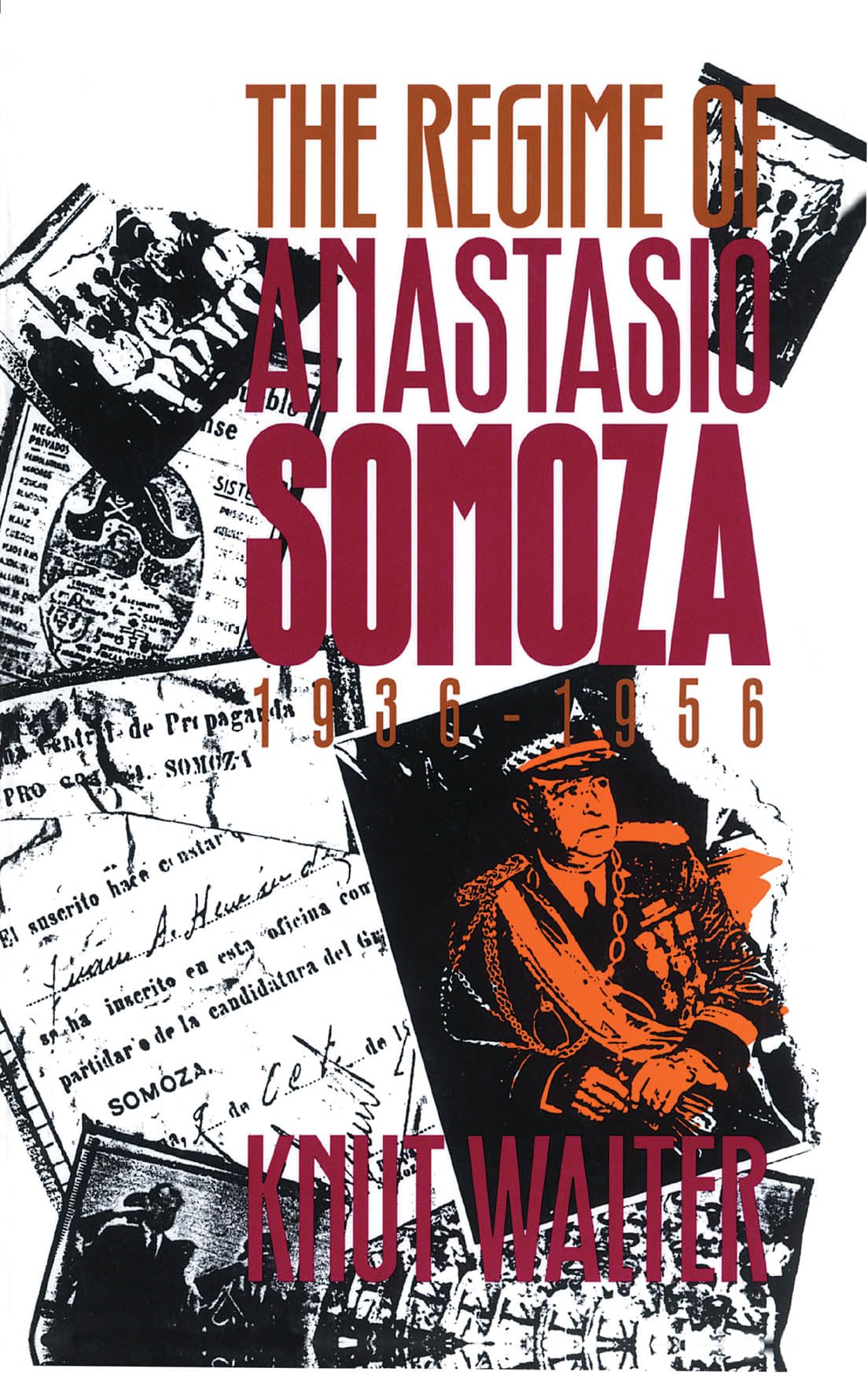
To many observers, Anastasio Somoza, who ruled Nicaragua from 1936 until his assassination in 1956, personified the worst features of a dictator. While not dismissing these characteristics, Knut Walter argues that the regime was in fact more notable for its achievement of stability, economic growth, and state building than for its personalistic and dictatorial features. Using a wide range of sources in Nicaraguan archives, Walter focuses on institutional and structural developments to explain how Somoza gained and consolidated power. According to Walter, Somoza preferred to resolve conflicts by political means rather than by outright coercion. Specifically, he built his government on agreements negotiated with the country's principal political actors, labor groups, and business organizations. Nicaragua's two traditional parties, one conservative and the other liberal, were included in elections, thus giving the appearance of political pluralism. Partly as a result, the opposition was forced to become increasingly radical, says Walter; eventually, in 1979, Nicaragua produced the only successful revolution in Central America and the first in all of Latin America since Cuba's.
⚠️ WARNING (California Proposition 65):
This product may contain chemicals known to the State of California to cause cancer,
birth defects, or other reproductive harm.
For MAP (Minimum Advertised Price) violations and Intellectual Property (IP) or Trademark concerns, please contact:
support@ergodebooks.com
⚠️ California Proposition 65 Warning: Some products sold on this website may expose you to chemicals known to the State of California to cause cancer, birth defects, or other reproductive harm. For more information, visit www.P65Warnings.ca.gov.