
Title
The Republic of Letters: A Cultural History of the French Enlightenment,Used
Sold by Ergodebooks, an authorized reseller.
Returns accepted within 30 days | support@ergodebooks.com
Shipping Information
- Free Standard Shipping — United States only
- Processing Time: 3–5 business days
- Estimated Delivery: 6–10 business days after dispatch
- Double-boxed, fully insured & discreetly packaged
- Tracking number sent via email once dispatched
Returns & Refund
Returns accepted within 30 days of delivery.
Damaged or Defective Item
Free return shipping + replacement or full refund
Wrong Item Received
Free return shipping + replacement or full refund
Change of Mind
Return shipping at customer's expense · 25% restocking fee applies
Payment Option

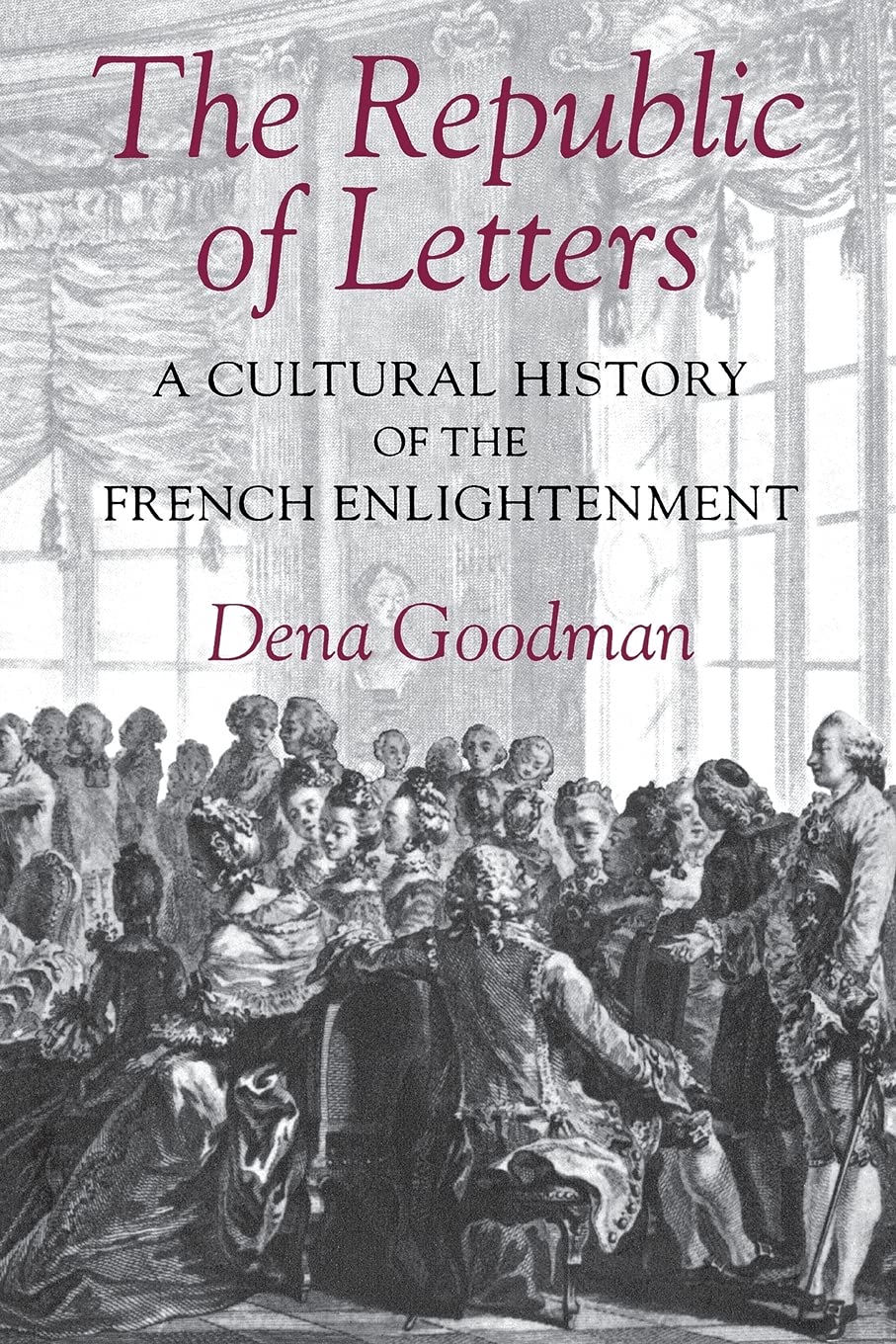
In the first major reinterpretation of the French Enlightenment in twenty years, Dena Goodman moves beyond the traditional approach to the Enlightenment as a chapter in Western intellectual history and examines its deeper significance as cultural history. She finds the very epicenter of the Enlightenment in a community of discourse known as the Republic of Letters, where salons governed by women advanced the Enlightenment project 'to change the common way of thinking.' Goodman details the history of the Republic of Letters in the Parisian salons, where men and women, philosophes and salonnieres, together not only introduced reciprocity into intellectual life through the practices of letter writing and polite conversation but also developed a republican model of government that was to challenge the monarchy. Providing a new understanding of women's importance in the Enlightenment, Goodman demonstrates that in the Republic of Letters men and women played complementary and unequal roles. Salonnieres governed the Republic of Letters by enforcing rules of polite conversation that made possible a discourse characterized by liberty and civility. Goodman chronicles the story of the Republic of Letters from its earliest formation through major periods of change: the production of the Encyclopedia, the proliferation of a print culture that widened circles of readership beyond the control of salon governance, and the early years of the French Revolution. Although the legacy of the Republic of Letters remained a force in French cultural and political life, in the 1780s men formed new intellectual institutions that asserted their ability to govern themselves and that marginalized women. TheRepublic of Letters introduces provocative explanations both for the failure of the Enlightenment and for the role of the Enlightenment in the French Revolution.
⚠️ WARNING (California Proposition 65):
This product may contain chemicals known to the State of California to cause cancer, birth defects, or other reproductive harm.
For more information, please visit www.P65Warnings.ca.gov.
- Q: What is the main theme of 'The Republic of Letters'? A: 'The Republic of Letters' explores the cultural history of the French Enlightenment, focusing on the significance of the Republic of Letters as a community of discourse that facilitated intellectual exchange, particularly through salons governed by women.
- Q: Who is the author of this book? A: The author of 'The Republic of Letters' is Dena Goodman, who provides a major reinterpretation of the French Enlightenment.
- Q: What type of binding does this book have? A: 'The Republic of Letters' is available in paperback binding, making it a flexible and lightweight option for readers.
- Q: How many pages are in 'The Republic of Letters'? A: This book contains 336 pages, providing a comprehensive examination of its themes and subjects.
- Q: When was 'The Republic of Letters' published? A: 'The Republic of Letters' was published on January 10, 1996.
- Q: What is the condition of 'The Republic of Letters'? A: The book is listed as 'New', ensuring that it is in pristine condition for readers.
- Q: What historical period does 'The Republic of Letters' cover? A: 'The Republic of Letters' covers the French Enlightenment period, detailing its evolution and impact on cultural and political life.
- Q: Does the book address women's roles in the Enlightenment? A: 'The Republic of Letters' highlights the complementary yet unequal roles of women in the Enlightenment, particularly in the context of salons and intellectual discourse.
- Q: What is the significance of the salons discussed in 'The Republic of Letters'? A: The salons, as discussed in the book, were crucial in promoting intellectual reciprocity through letter writing and conversation, contributing to the development of a republican model of government.
- Q: Does 'The Republic of Letters' discuss the impact of the Enlightenment on the French Revolution? A: Yes, the book chronicles the legacy of the Republic of Letters and its influence on the French Revolution, providing insights into the challenges faced by Enlightenment ideals.