
Title
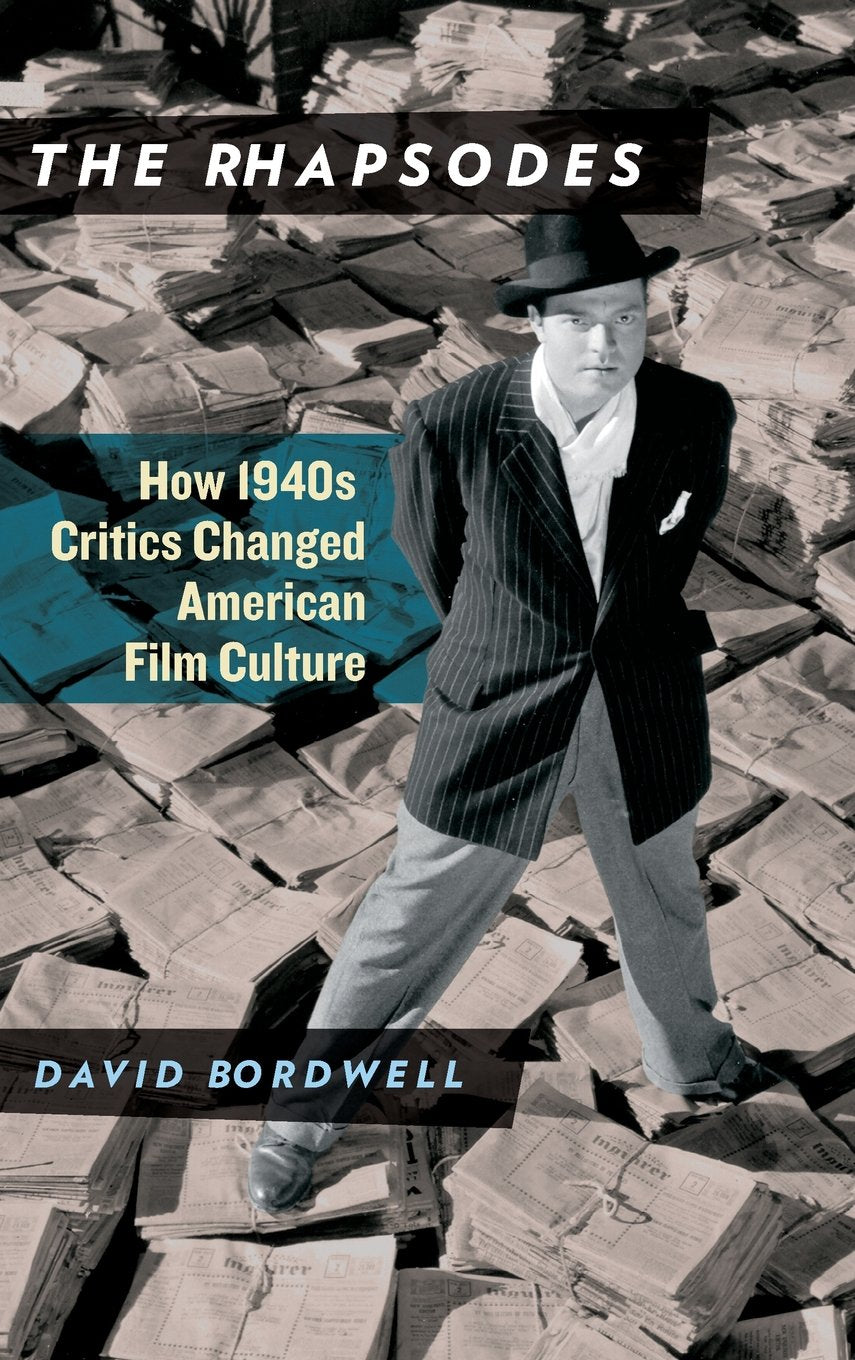
The Rhapsodes: How 1940s Critics Changed American Film Culture,New
Sold by Ergodebooks, an authorized reseller.
Returns accepted within 30 days | support@ergodebooks.com
Shipping Information
- Free Standard Shipping — United States only
- Processing Time: 3–5 business days
- Estimated Delivery: 6–10 business days after dispatch
- Double-boxed, fully insured & discreetly packaged
- Tracking number sent via email once dispatched
Returns & Refund
Returns accepted within 30 days of delivery.
Damaged or Defective Item
Free return shipping + replacement or full refund
Wrong Item Received
Free return shipping + replacement or full refund
Change of Mind
Return shipping at customer's expense · 25% restocking fee applies
Payment Option

Pauline Kael, Andrew Sarris, and Roger Ebert were three of Americas most revered and widely read film critics, more famous than many of the movies they wrote about. But their remarkable contributions to the burgeoning American film criticism of the 1960s and beyond were deeply influenced by four earlier critics: Otis Ferguson, James Agee, Manny Farber, and Parker Tyler. Throughout the 1930s and 40s, Ferguson, Agee, Farber, and Tyler scrutinized what was on the screen with an intensity not previously seen in popular reviewing. Although largely ignored by the arts media of the day, they honed the sort of serious discussion of films that would be made popular decades later by Kael, Sarris, Ebert and their contemporaries.With The Rhapsodes, renowned film scholar and critic David Bordwellan heir to both those legaciesrestores to a wider audience the work of Ferguson, Agee, Farber, and Tyler, critics he calls the Rhapsodes for the passionate and deliberately offbeat nature of their vernacular prose. Each broke with prevailing currents in criticism in order to find new ways to talk about the popular films that contemporaries often saw at best as trivial, at worst as a betrayal of art. Ferguson saw in Hollywood an engaging, adroit mode of popular storytelling. Agee sought in cinema the lyrical epiphanies found in romantic poetry. Farber, trained as a painter, brought a pictorial intelligence to bear on film. A surrealist, Tyler treated classic Hollywood as a collective hallucination that invited both audience and critic to find moments of subversive pleasure. With his customary clarity and brio, Bordwell takes readers through the relevant cultural and critical landscape and considers the critics writing styles, their conceptions of films, and their quarrels. He concludes by examining the profound impact of Ferguson, Agee, Farber, and Tyler on later generations of film writers.The Rhapsodes allows readers to rediscover these remarkable critics who broke with convention to capture what they found moving, artful, or disappointing in classic Hollywood cinema and explores their robustand continuinginfluence.
⚠️ WARNING (California Proposition 65):
This product may contain chemicals known to the State of California to cause cancer, birth defects, or other reproductive harm.
For more information, please visit www.P65Warnings.ca.gov.