
Title
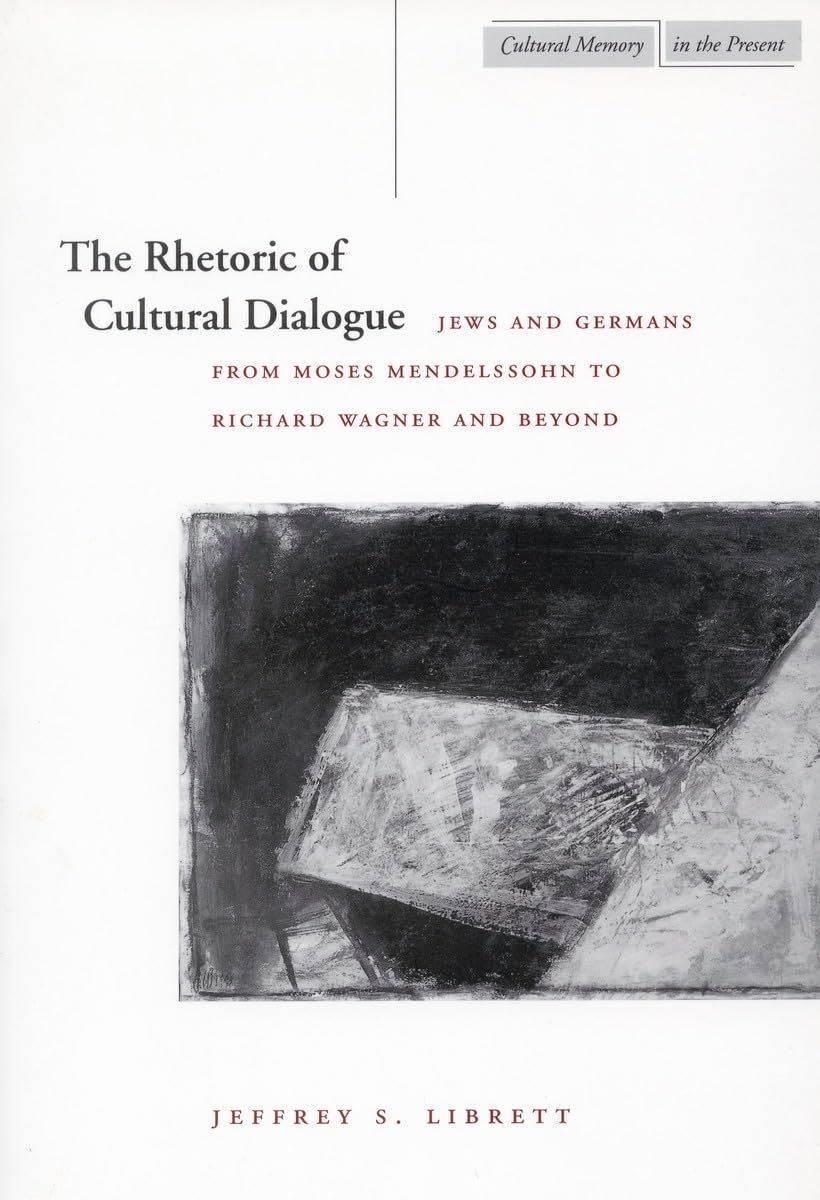
The Rhetoric of Cultural Dialogue: Jews and Germans from Moses Mendelssohn to Richard Wagner and Beyond (Cultural Memory in the ,Used
Sold by Ergodebooks, an authorized reseller.
Returns accepted within 30 days | support@ergodebooks.com
Shipping Information
- Free Standard Shipping — United States only
- Processing Time: 3–5 business days
- Estimated Delivery: 6–10 business days after dispatch
- Double-boxed, fully insured & discreetly packaged
- Tracking number sent via email once dispatched
Returns & Refund
Returns accepted within 30 days of delivery.
Damaged or Defective Item
Free return shipping + replacement or full refund
Wrong Item Received
Free return shipping + replacement or full refund
Change of Mind
Return shipping at customer's expense · 25% restocking fee applies
Payment Option

In this groundbreaking work, the author effects the first extended rhetoricalphilosophical reading of the historically problematic relationship between Jews and Germans, based on an analysis of texts from the Enlightenment through Modernism by Moses Mendelssohn, Friedrich and Dorothea Schlegel, Karl Marx, Richard Wagner, Friedrich Nietzsche, and Sigmund Freud. The theoretical underpinning of the work lies in the authors rereading, in terms of contemporary rhetorical theory, of the medieval tradition known as figural representation, which defines the JewishChristian relation as that between the dead, prefigural letter and the living, fulfilled spirit. After arguing that the German Enlightenment ultimately plays out the historical phantasm of a necessary Judaization of Protestant rationality, the author shows that German Early Romanticism consists fundamentally in the attempt to solve the aporias raised by this impossible confrontation between Protestant spirit and Jewish letter. In readings of Dorothea SchlegelMendelssohns daughterand her husband Friedrich Schlegel, the author provides a new interpretation of the NeoCatholic turn of later German Romanticism. Further, he situates the proleptic end and reversal of the project of Jewish emancipation in the two extreme versions of latenineteenthcentury antiJudaism, those of Marx and Wagner, here viewed as binary concretizations of a specifically postRomantic paganized Protestantism. Finally, the author argues that twentiethcentury Modernism as represented by Nietzsche and Freud renews, if in a multiply ironic displacement, the secret Judaizing tendencies of the Enlightenment. Fascism and Communism both denigrate this Modernism, which affirms the letter of language as quasisynonymous with the force of temporalityor anticipatory repetitionthat disrupts all claims to the full presence of spirit. The book ends with a note on recent debates about Holocaust memory.
⚠️ WARNING (California Proposition 65):
This product may contain chemicals known to the State of California to cause cancer, birth defects, or other reproductive harm.
For more information, please visit www.P65Warnings.ca.gov.