
Title
The Rhetoric Of Romantic Prophecy (Cultural Memory In The Present),New
Sold by Ergodebooks, an authorized reseller.
Returns accepted within 30 days | support@ergodebooks.com
Shipping Information
- Free Standard Shipping — United States only
- Processing Time: 3–5 business days
- Estimated Delivery: 6–10 business days after dispatch
- Double-boxed, fully insured & discreetly packaged
- Tracking number sent via email once dispatched
Returns & Refund
Returns accepted within 30 days of delivery.
Damaged or Defective Item
Free return shipping + replacement or full refund
Wrong Item Received
Free return shipping + replacement or full refund
Change of Mind
Return shipping at customer's expense · 25% restocking fee applies
Payment Option

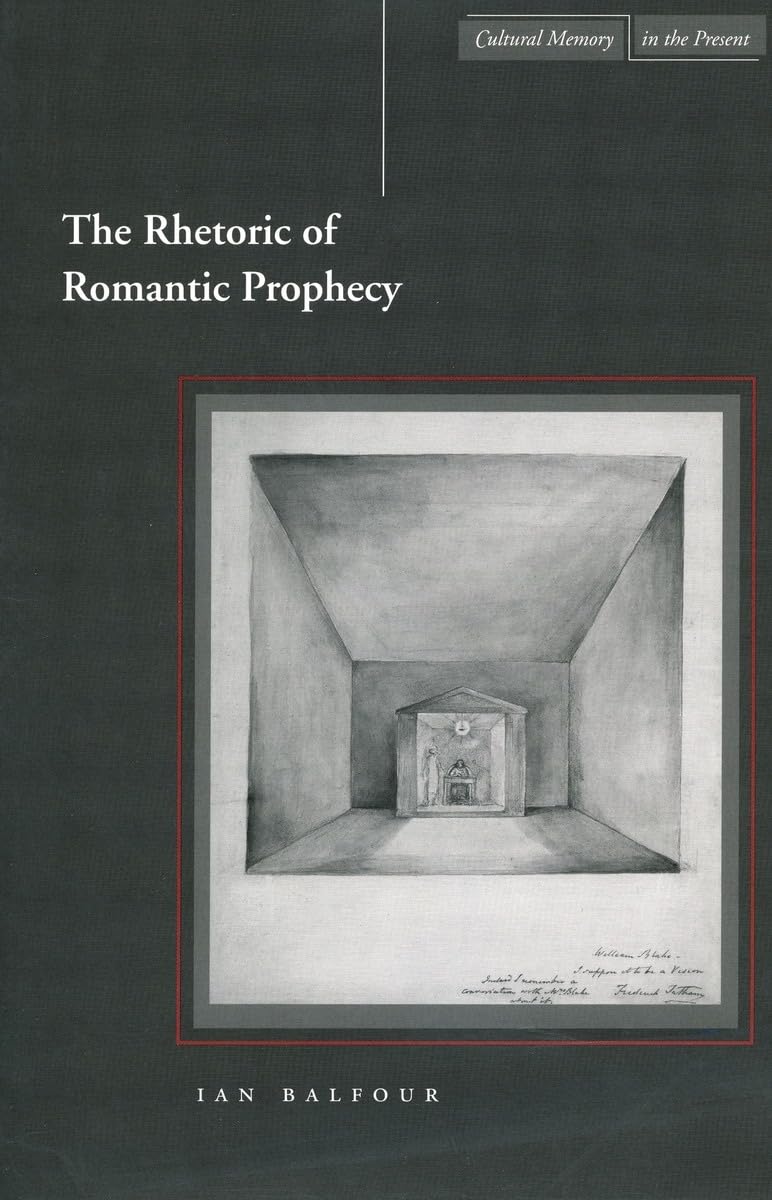
The Romantic era in England and Germany saw a sudden renewal of prophetic modes of writing. Biblical prophecy and, to a lesser extent, classical oracle again became viable models for poetry and even for journalistic prose. Notably, this development arose out of the newfound freedom of biblical interpretation that began in the mideighteenth century, as the Bible was increasingly seen to be a literary and mythical text. Taking Walter Benjamins thinking about history as a point of departure, the author shows how the model for Romantic prophecy emerges less as a prediction of the future than as a call to change in the present, even as it quotes, at key turns, texts from the past. After surveying developments in eighteenthcentury biblical hermeneutics, as well as the numerous instances of prophetic eruption in Romantic poetry, the book culminates in close readings of works by Blake, Hlderlin, and Coleridge. Each of these writers interpreted the Bible in strong, variously radical and conservative ways, and each reworked prophetic texts in often startling fashion. The authors reading of Blake focuses on the complex temporal and rhetorical dynamics at work in a prophetic tradition, with attention paid to the key mediating figure of Milton. The chapter on Hlderlin investigates the truthclaim of poetry and the consequences of Hlderlins insight into the necessarily figural character of poetry. The analysis of Coleridge correlates his theory of allegory and symbol with his theory and practice of political writing, which often relies on mobilizing prophetic authority. Together, the readings force us to reexamine the claims and practices of Romantic poets and thinkers and their ideas and ideologies, not without engendering some allegorical resonance with issues in our own time.
⚠️ WARNING (California Proposition 65):
This product may contain chemicals known to the State of California to cause cancer, birth defects, or other reproductive harm.
For more information, please visit www.P65Warnings.ca.gov.