
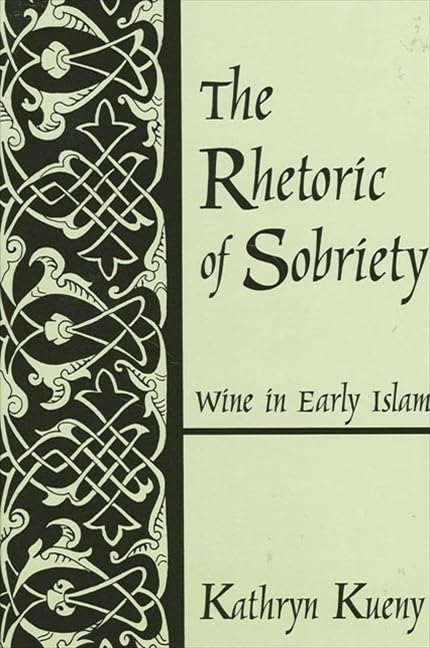
Title
The Rhetoric Of Sobriety: Wine In Early Islam
Sold by Ergodebooks, an authorized reseller.
Returns accepted within 30 days | support@ergodebooks.com
Shipping Information
- Free Standard Shipping — United States only
- Processing Time: 3–5 business days
- Estimated Delivery: 6–10 business days after dispatch
- Double-boxed, fully insured & discreetly packaged
- Tracking number sent via email once dispatched
Returns & Refund
Returns accepted within 30 days of delivery.
Damaged or Defective Item
Free return shipping + replacement or full refund
Wrong Item Received
Free return shipping + replacement or full refund
Change of Mind
Return shipping at customer's expense · 25% restocking fee applies
Payment Option

Why Does Islam Condemn Wine And Other Alcoholic Beverages? The Complexity Behind This Simple Question Is Examined In The Rhetoric Of Sobriety. Drawing On An Array Of Revelatory, Legal, Historical, And Exegetical Materials (Both Sunni And Shi'Ite) From The Early Islamic Period, And Contrasting Them With Comparable Judaic And Christian Works From The Same Era, The Author Analyzes The Rhetoric Used To Establish The Proper Authoritative Boundaries That Would Contain Wine'S Ambiguous Nature. How Believers Chose To Identify Wine As A Marginal Substance And Assert Its Prohibition Offers A Rare Glimpse Into The Underlying Intellectual Strategies Of Early Muslim Thought To Resolve Conflict, Create Meaning, Structure The World, Govern Human Behavior, And Convey The Divine Message. Ultimately, This Examination Reveals Some Of The Ways In Which The Early Islamic Community Created Its Identity, And Asserted It Over Other Confessional Groups With Similar Convictions.
⚠️ WARNING (California Proposition 65):
This product may contain chemicals known to the State of California to cause cancer, birth defects, or other reproductive harm.
For more information, please visit www.P65Warnings.ca.gov.
- Q: How many pages does the book have? A: The book has one hundred ninety-nine pages. This length makes it a comprehensive yet accessible read on the topic.
- Q: What is the binding type of this book? A: This book is hardcover. The durable binding ensures that it withstands regular use.
- Q: What are the dimensions of the book? A: The book measures five point ninety-eight inches in length, zero point ninety-eight inches in width, and nine point twenty-five inches in height. This size is standard for hardcover volumes.
- Q: Who is the author of 'The Rhetoric of Sobriety'? A: The author is Kathryn M. Kueny. She provides a detailed analysis of the prohibition of alcohol in early Islam.
- Q: What topics are covered in this book? A: The book explores the prohibition of alcohol in Islam using legal, historical, and exegetical materials. It contrasts Islamic views with those from Judaic and Christian traditions.
- Q: Is this book suitable for academic study? A: Yes, it is suitable for academic study. The book draws on a wide range of scholarly materials, making it a valuable resource for researchers.
- Q: How should I care for this hardcover book? A: To care for this hardcover book, store it upright in a cool, dry place. Avoid exposing it to direct sunlight to prevent fading.
- Q: Can this book be used as a reference for religious studies? A: Yes, it can be used as a reference for religious studies. Its in-depth analysis of early Islamic thought provides valuable insights.
- Q: What is the condition of the used book? A: The book is in good condition. It has been previously owned but shows minimal signs of wear.
- Q: Is the book suitable for beginners in Islamic studies? A: Yes, it is suitable for beginners. The author presents complex ideas in an accessible manner.
- Q: What themes are explored in the book? A: The book explores themes of identity, prohibition, and the intellectual strategies of early Muslim thought regarding alcohol.
- Q: What should I do if the book arrives damaged? A: If the book arrives damaged, please contact the seller for a return or exchange. Most sellers have policies in place for such issues.
- Q: What makes this book unique compared to other books on Islam? A: This book is unique due to its comparative analysis of alcohol prohibition across Islamic, Judaic, and Christian texts from the same era.
- Q: Is there any sensitive content in this book? A: Yes, the book discusses sensitive topics related to alcohol and religious beliefs. It addresses the complexities of these discussions.
- Q: Can this book be used for a thesis or dissertation? A: Yes, it can be used for a thesis or dissertation. Its thorough research and insights would support academic arguments.
- Q: Does the book contain any illustrations or images? A: No, the book does not contain illustrations or images. It focuses on textual analysis and scholarly discussion.