
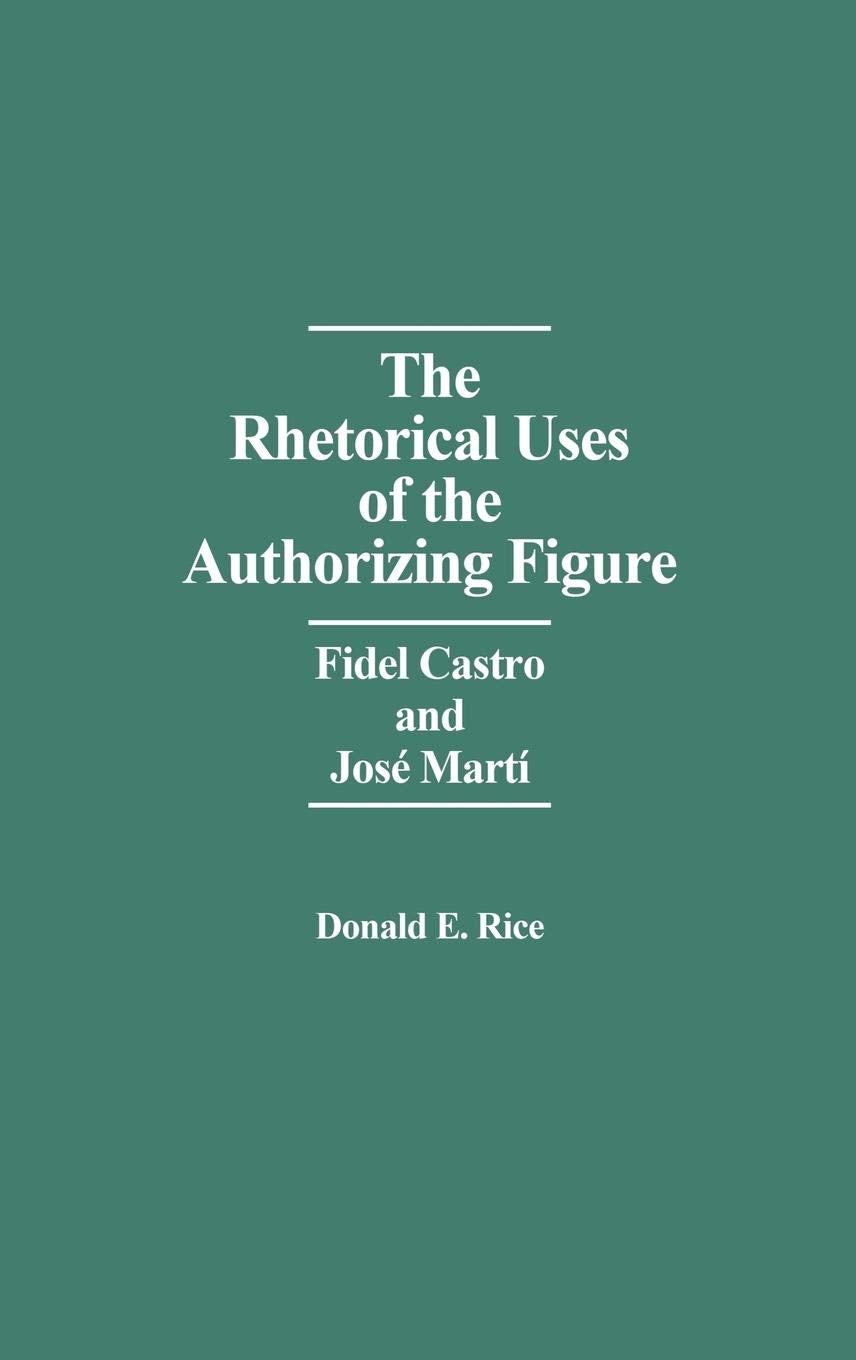
Title
The Rhetorical Uses Of The Authorizing Figure: Fidel Castro And Jose Marti,New
Sold by Ergodebooks, an authorized reseller.
Returns accepted within 30 days | support@ergodebooks.com
Shipping Information
- Free Standard Shipping — United States only
- Processing Time: 3–5 business days
- Estimated Delivery: 6–10 business days after dispatch
- Double-boxed, fully insured & discreetly packaged
- Tracking number sent via email once dispatched
Returns & Refund
Returns accepted within 30 days of delivery.
Damaged or Defective Item
Free return shipping + replacement or full refund
Wrong Item Received
Free return shipping + replacement or full refund
Change of Mind
Return shipping at customer's expense · 25% restocking fee applies
Payment Option

One of the tools often used by a rhetor to motivate, solidify, and manage his constituency is the authorizing figure. While the referencing to historical figures is a common practice and frequently employed in the political realm, it takes on a special role in the inception, activation, and maintenance of social movements. This study analyzes the rhetorical uses of the authorizing figure during the Cuban revolution and Fidel Castro's use of Jose Marti, the civilian leader of the 1890s independence wars from Spain. Donald Rice discusses how the authorizing figure defines and unifies the emerging revolutionary movement, contributes to the application of the sanctioning authority of the state, and legitimizes the revolutionary vision over time.These three uses provide the framework for the detailed analysis of Castro's discourse over the course of the revolution and its institutionalization, both representing and describing Castro's rehetorical strategy of using the past for present purposes. Chapter 1 is a discussion of the theoretical concepts of authority and authorization, which includes an explanation of the threetiered approach used in the analysis. Chapter 2 gives a short history of Marti and a review of relevant Marti studies. Chapters 3, 4, and 5 contain the analyses of discourses relevant to Rice's established uses. Chapter 6, the concluding chapter, provides a synthesis of the preceding analyses and suggests areas of future research. These three uses provide the framework for the detailed analysis of Castro's discourse over the course of the revolution and its institutionalization, both representing and describing Castro's rhetorical strategy of using the past for present purposes.
⚠️ WARNING (California Proposition 65):
This product may contain chemicals known to the State of California to cause cancer, birth defects, or other reproductive harm.
For more information, please visit www.P65Warnings.ca.gov.