If you have any questions, you are always welcome to contact us. We'll get back to you as soon as possible, withing 24 hours on weekdays.
Customer service
All questions about your order, return and delivery must be sent to our customer service team by e-mail at yourstore@yourdomain.com
Sale & Press
If you are interested in selling our products, need more information about our brand or wish to make a collaboration, please contact us at press@yourdomain.com
Help
If you have any questions, you are always welcome to contact us. We'll get back to you as soon as possible, withing 24 hours on weekdays.
Customer service
All questions about your order, return and delivery must be sent to our customer service team by e-mail at yourstore@yourdomain.com
Sale & Press
If you are interested in selling our products, need more information about our brand or wish to make a collaboration, please contact us at press@yourdomain.com
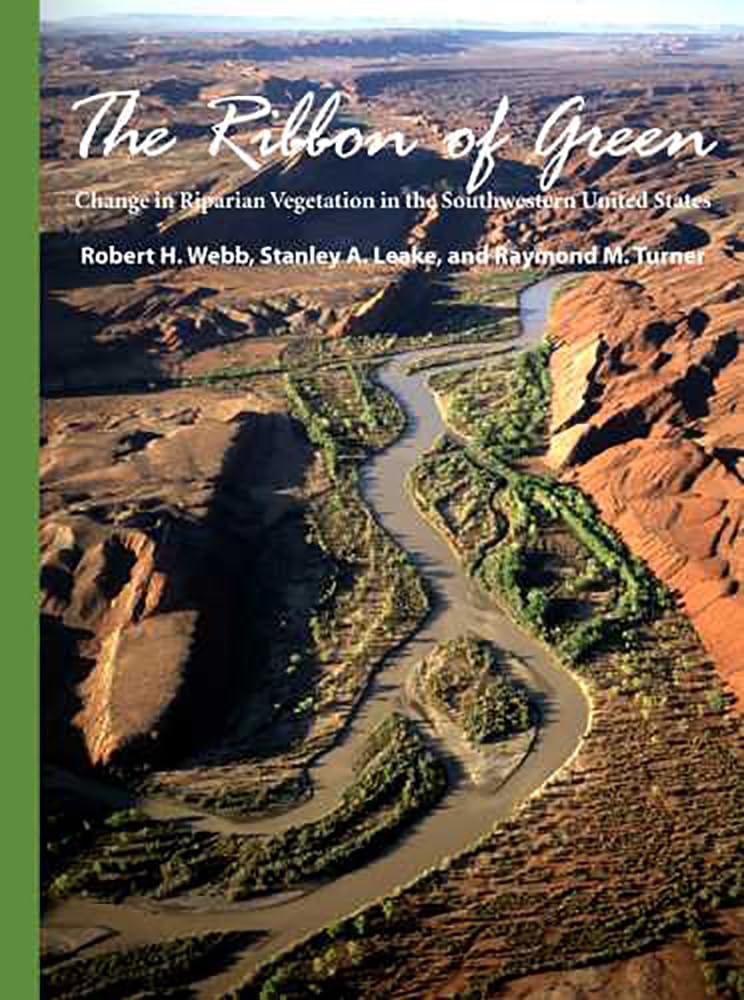
Woody wetlands constitute a relatively small but extremely important part of the landscape in the southwestern United States. These riparian habitats support more than onethird of the regions vascular plant species, are home to a variety of wildlife, and provide essential havens for dozens of migratory animals. Because of their limited size and disproportionately high biological value, the goal of protecting wetland environments frequently takes priority over nearly all other habitat types. In The Ribbon of Green, hydrologists Robert H. Webb, and Stanley A. Leake and botanist Raymond M. Turner examine the factors that affect the stability of woody riparian vegetation, one of the largest components of riparian areas. Such factors include the diversion of surface water, flood control, and the excessive use of groundwater. Combining repeat photography with historical context and information on species composition, they document more than 140 years of change. Contrary to the common assumption of widespread losses of this type of ecosystem, the authors show that vegetation has increased on many river reaches as a result of flood control, favorable climatic conditions, and large winter floods that encourage ecosystem disturbance, germination, and the establishment of species in newly generated openings. Bringing welldocumented and accessible insights to the ecological study of wetlands, this book will influence our perception of change in riparian ecosystems and how riparian restoration is practiced in the Southwest, and it will serve as an important reference in courses on plant ecology, riparian ecology, and ecosystem management.
⚠️ WARNING (California Proposition 65):
This product may contain chemicals known to the State of California to cause cancer,
birth defects, or other reproductive harm.
For MAP (Minimum Advertised Price) violations and Intellectual Property (IP) or Trademark concerns, please contact:
support@ergodebooks.com
⚠️ California Proposition 65 Warning: Some products sold on this website may expose you to chemicals known to the State of California to cause cancer, birth defects, or other reproductive harm. For more information, visit www.P65Warnings.ca.gov.