
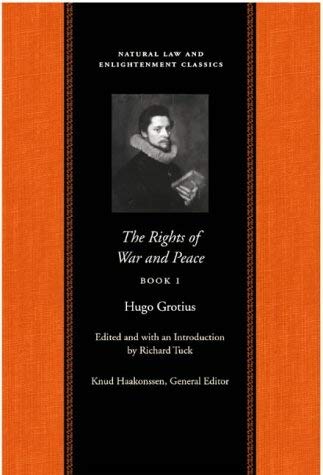
Title
The Rights Of War And Peace, Book 1 (Natural Law And Enlightenment Classics),Used
Sold by Ergodebooks, an authorized reseller.
Returns accepted within 30 days | support@ergodebooks.com
Shipping Information
- Free Standard Shipping — United States only
- Processing Time: 3–5 business days
- Estimated Delivery: 6–10 business days after dispatch
- Double-boxed, fully insured & discreetly packaged
- Tracking number sent via email once dispatched
Returns & Refund
Returns accepted within 30 days of delivery.
Damaged or Defective Item
Free return shipping + replacement or full refund
Wrong Item Received
Free return shipping + replacement or full refund
Change of Mind
Return shipping at customer's expense · 25% restocking fee applies
Payment Option

Since The Nineteenth Century, Hugo Grotius' 'Rights Of War And Peace' Has Commonly Been Seen As The Classic Work In Modern Public International Law, Laying The Foundation For A Universal Code Of Law. However, In The Seventeenth Century And During The Enlightenment, The Work Was Considered A Major Work Of Political Theory That Strongly Defended The Rights Of Individual Agents States As Well As Private Persons To Use Their Power To Secure Themselves And Their Property. Grotius' Continuing Influence Owed Much To The Eighteenthcentury French Editor Jean Barbeyrac, Whose Extensive Commentary Was Standard In Most Editions, Including The Classic, Anonymously Translated, English One (1738), Which Is The Basis For The Liberty Fund Edition. The Present Edition Also Includes The Prolegomena To The First Edition Of 'Rights Of War And Peace' (1625); This Document Has Never Before Been Translated Into English, And Adds New Dimensions To The Great Work.
⚠️ WARNING (California Proposition 65):
This product may contain chemicals known to the State of California to cause cancer, birth defects, or other reproductive harm.
For more information, please visit www.P65Warnings.ca.gov.
- Q: How many pages does this book have? A: This book has three hundred eighty-seven pages. It provides a comprehensive exploration of Hugo Grotius' work on international law.
- Q: What is the binding type of this book? A: The binding type is paperback. This makes it lightweight and easy to handle for reading.
- Q: Who is the author of this book? A: The author is Hugo Grotius. He is recognized as a foundational figure in international law and political theory.
- Q: What are the dimensions of this book? A: The book measures five point ninety-eight inches in length, zero point ninety-eight inches in width, and eight point seventy-four inches in height. These dimensions make it a standard size for easy reading.
- Q: Is this book suitable for all age levels? A: Yes, this book is suitable for adults and older teens. The content discusses complex themes in international law and political theory.
- Q: What is the main theme of this book? A: The main theme is the rights of individuals and states during war and peace. It discusses the moral and legal justifications for conflict.
- Q: How should I store this book to keep it in good condition? A: Store the book in a cool, dry place, away from direct sunlight. This prevents fading and damage to the pages.
- Q: Can I read this book if I'm new to international law? A: Yes, beginners can read this book. However, some prior knowledge of political theory may enhance understanding.
- Q: What if my book arrives damaged? A: If the book arrives damaged, you should contact the seller for a return or exchange. Most sellers have customer service options for this.
- Q: Is there a warranty for this book? A: No, there is typically no warranty for books. However, check with the seller for their return policy.
- Q: Does this book contain any illustrations or diagrams? A: No, this book does not contain illustrations or diagrams. It is primarily text-based with a focus on Grotius' arguments.
- Q: Is there a specific edition for this book? A: Yes, this is the Liberty Fund edition. It includes the Prolegomena, which adds context to Grotius' original work.
- Q: What is the publication date of this book? A: The publication date is not specified in the details provided. However, it is based on the original work from the seventeenth century.
- Q: Can this book be used for academic purposes? A: Yes, this book is suitable for academic purposes. It is considered a classic in international law and political theory.
- Q: Is this book in good condition if it's used? A: Yes, it is labeled as a used book in good condition. Expect minimal wear and tear typical for pre-owned books.
- Q: Does this book include any additional content? A: Yes, it includes the Prolegomena, which has never been translated into English before. This adds new insights to Grotius' arguments.