
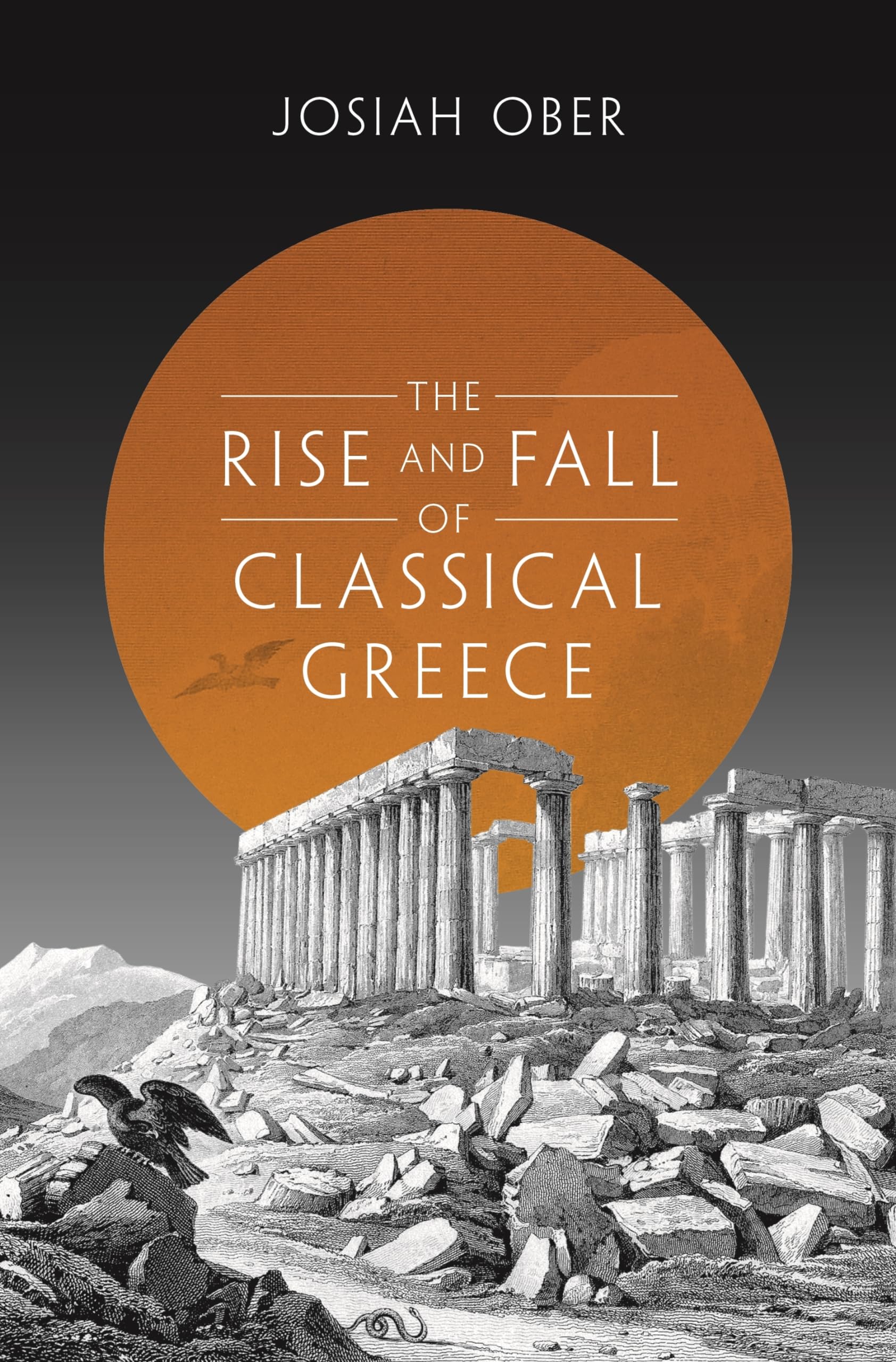
Title
The Rise and Fall of Classical Greece (The Princeton History of the Ancient World, 1),Used
Sold by Ergodebooks, an authorized reseller.
Returns accepted within 30 days | support@ergodebooks.com
Shipping Information
- Free Standard Shipping — United States only
- Processing Time: 3–5 business days
- Estimated Delivery: 6–10 business days after dispatch
- Double-boxed, fully insured & discreetly packaged
- Tracking number sent via email once dispatched
Returns & Refund
Returns accepted within 30 days of delivery.
Damaged or Defective Item
Free return shipping + replacement or full refund
Wrong Item Received
Free return shipping + replacement or full refund
Change of Mind
Return shipping at customer's expense · 25% restocking fee applies
Payment Option

A major new history of classical Greecehow it rose, how it fell, and what we can learn from itLord Byron described Greece as great, fallen, and immortal, a characterization more apt than he knew. Through most of its long history, Greece was poor. But in the classical era, Greece was densely populated and highly urbanized. Many surprisingly healthy Greeks lived in remarkably big houses and worked for high wages at specialized occupations. Middleclass spending drove sustained economic growth and classical wealth produced a stunning cultural efflorescence lasting hundreds of years.Why did Greece reach such heights in the classical periodand why only then? And how, after 'the Greek miracle' had endured for centuries, did the Macedonians defeat the Greeks, seemingly bringing an end to their glory? Drawing on a massive body of newly available data and employing novel approaches to evidence, Josiah Ober offers a major new history of classical Greece and an unprecedented account of its rise and fall.Ober argues that Greece's rise was no miracle but rather the result of political breakthroughs and economic development. The extraordinary emergence of citizencentered citystates transformed Greece into a society that defeated the mighty Persian Empire. Yet Philip and Alexander of Macedon were able to beat the Greeks in the Battle of Chaeronea in 338 BCE, a victory made possible by the Macedonians' appropriation of Greek innovations. After Alexander's death, battlehardened warlords fought ruthlessly over the remnants of his empire. But Greek cities remained populous and wealthy, their economy and culture surviving to be passed on to the Romansand to us.A compelling narrative filled with uncanny modern parallels, this is a book for anyone interested in how great civilizations are born and die.This book is based on evidence available on a new interactive website. To learn more, please visit: http://polis.stanford.edu/.
⚠️ WARNING (California Proposition 65):
This product may contain chemicals known to the State of California to cause cancer, birth defects, or other reproductive harm.
For more information, please visit www.P65Warnings.ca.gov.
- Q: What is the main theme of 'The Rise and Fall of Classical Greece'? A: The main theme of the book is the exploration of how classical Greece rose to prominence and the factors that contributed to its eventual decline, highlighting political, economic, and cultural developments.
- Q: Who is the author of this book? A: The author of 'The Rise and Fall of Classical Greece' is Josiah Ober, a prominent historian known for his work on ancient Greek history.
- Q: What is the publication date of this book? A: This book was published on May 4, 2015.
- Q: How many pages does the book contain? A: The book contains 448 pages.
- Q: What type of binding does this edition have? A: This edition of the book is a hardcover.
- Q: Is this book suitable for someone interested in economic history? A: Yes, this book is categorized under Economic History and provides insights into the economic developments of classical Greece.
- Q: Are there any online resources related to the book? A: Yes, the book is based on evidence available on an interactive website. More information can be found at http://polis.stanford.edu/.
- Q: What are some key topics covered in the book? A: Key topics include the political breakthroughs in ancient Greece, the rise of citizen-centered city-states, and the impact of the Macedonian conquests on Greek civilization.
- Q: Is this book part of a series? A: Yes, 'The Rise and Fall of Classical Greece' is part of 'The Princeton History of the Ancient World' series.
- Q: What makes this book a compelling read? A: The book offers a compelling narrative filled with modern parallels, making it relevant for readers interested in the dynamics of great civilizations.