If you have any questions, you are always welcome to contact us. We'll get back to you as soon as possible, withing 24 hours on weekdays.
Customer service
All questions about your order, return and delivery must be sent to our customer service team by e-mail at yourstore@yourdomain.com
Sale & Press
If you are interested in selling our products, need more information about our brand or wish to make a collaboration, please contact us at press@yourdomain.com
Help
If you have any questions, you are always welcome to contact us. We'll get back to you as soon as possible, withing 24 hours on weekdays.
Customer service
All questions about your order, return and delivery must be sent to our customer service team by e-mail at yourstore@yourdomain.com
Sale & Press
If you are interested in selling our products, need more information about our brand or wish to make a collaboration, please contact us at press@yourdomain.com
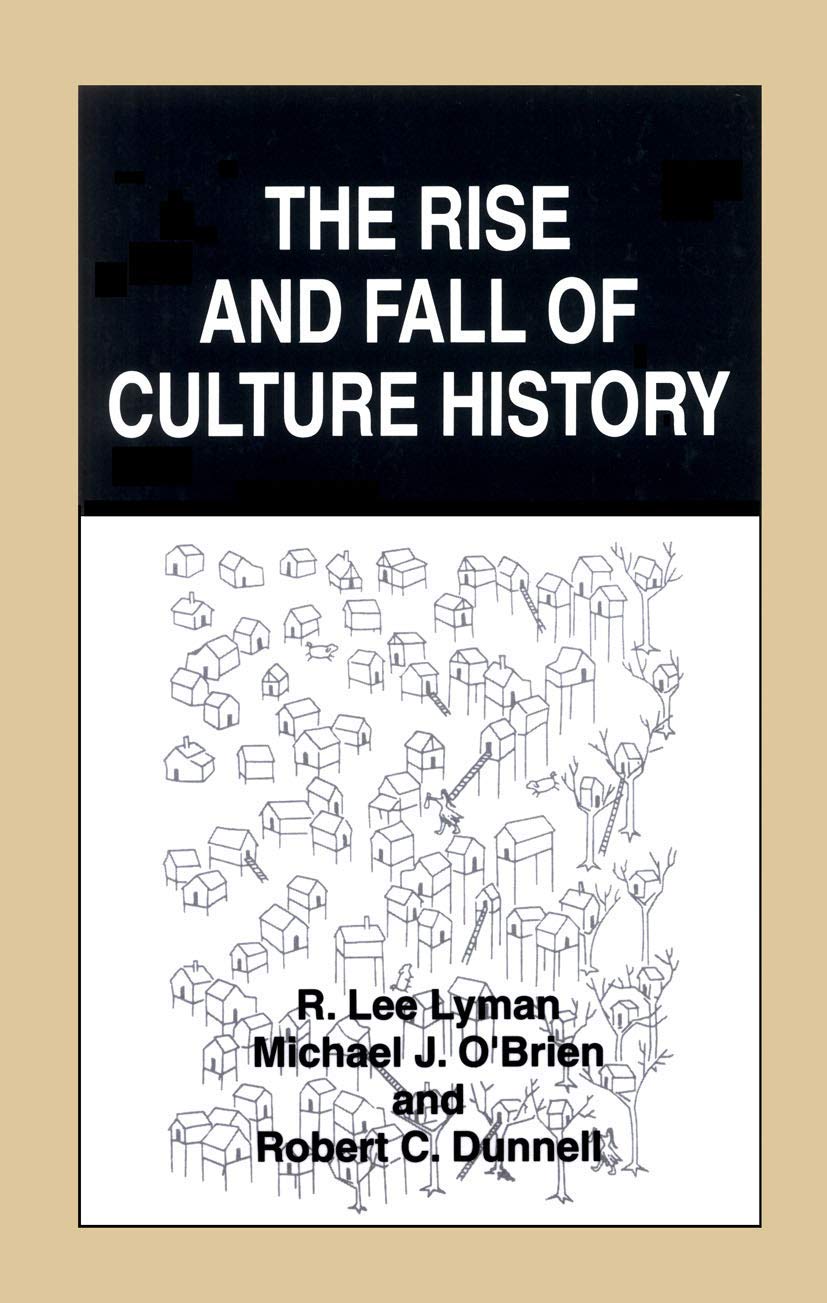
VJver forty years ago Gordon R. Willey (1953b:361) stated that '[t]he objectives of archeology . . . are approached by the study and manipulation of three basic factors: form, space, and time. ' A few years later, Albert C. Spaulding (1960b:439) repeated this thought using different words: '[AJrchaeology can be defined minimally as the study of the interrelation ship of form, temporal locus, and spatial locus exhibited by artifacts. In other words, archaeologists are always concerned with these interrelation ships, whatever broader interests they may have, and these interrelation ships are the special business of archaeology. ' Many of the means Americanist archaeologists use to examine formal variation in artifacts and the distribution of that variation across space and through time were formulated early in the twentieth century. The analytical tenets, or principles, underlying the various methods and techniques were formalized and axiomatized in later years such that by the 1930s they con stituted the first formal paradigm for Americanist archaeologya paradigm commonly termed culture history. This paradigm began with a very specific goalto document the history of the development of prehistoric cultures in the Americas. Although it fell from favor in the 1960s, many of its central tenets were carried over to newer paradigms and thus continue to be fun damental within Americanist archaeology. With Willey's and Spaulding's conceptions as our guide, we elsewhere reprinted (Lyman et al.
⚠️ WARNING (California Proposition 65):
This product may contain chemicals known to the State of California to cause cancer,
birth defects, or other reproductive harm.
For MAP (Minimum Advertised Price) violations and Intellectual Property (IP) or Trademark concerns, please contact:
support@ergodebooks.com
⚠️ California Proposition 65 Warning: Some products sold on this website may expose you to chemicals known to the State of California to cause cancer, birth defects, or other reproductive harm. For more information, visit www.P65Warnings.ca.gov.