
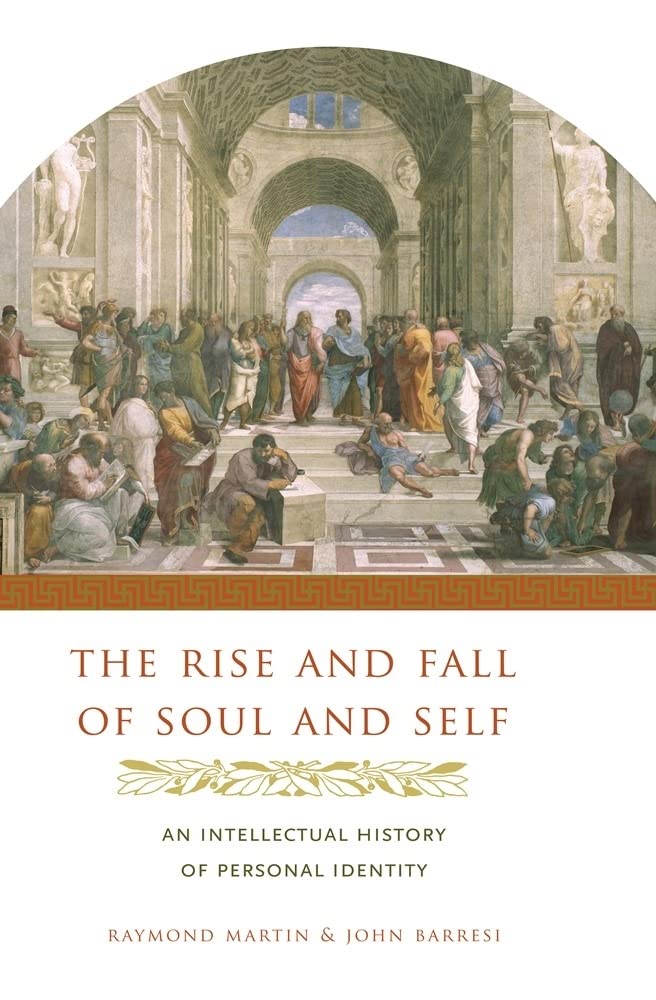
Title
The Rise And Fall Of Soul And Self: An Intellectual History Of Personal Identity
Sold by Ergodebooks, an authorized reseller.
Returns accepted within 30 days | support@ergodebooks.com
Shipping Information
- Free Standard Shipping — United States only
- Processing Time: 3–5 business days
- Estimated Delivery: 6–10 business days after dispatch
- Double-boxed, fully insured & discreetly packaged
- Tracking number sent via email once dispatched
Returns & Refund
Returns accepted within 30 days of delivery.
Damaged or Defective Item
Free return shipping + replacement or full refund
Wrong Item Received
Free return shipping + replacement or full refund
Change of Mind
Return shipping at customer's expense · 25% restocking fee applies
Payment Option

This Book Traces The Development Of Theories Of The Self And Personal Identity From The Ancient Greeks To The Present Day. From Plato And Aristotle To Freud And Foucault, Raymond Martin And John Barresi Explore The Works Of A Wide Range Of Thinkers And Reveal The Larger Intellectual Trends, Controversies, And Ideas That Have Revolutionized The Way We Think About Ourselves.The Authors Open With Ancient Greece, Where The Ideas Of Plato, Aristotle, And The Materialistic Atomists Laid The Groundwork For Future Theories. They Then Discuss The Ideas Of The Church Fathers And Medieval And Renaissance Philosophers, Including St. Paul, Philo, Augustine, Aquinas, And Montaigne. In Their Coverage Of The Emergence Of A New Mechanistic Conception Of Nature In The Seventeenth Century, Martin And Barresi Note A Shift Away From Religious And Purely Philosophical Notions Of Self And Personal Identity To More Scientific And Social Conceptions, A Trend That Has Continued To The Present Day. They Explore Modern Philosophy And Psychology, Including The Origins Of Different Traditions Within Each Discipline, And Explain Both The Theoretical Relevance Of Feminism And Gender And Ethnic Studies And Also The Ways That Derrida And Other Recent Thinkers Have Challenged The Very Idea That A Unified Self Or Personal Identity Even Exists.Martin And Barresi Cover A Number Of Issues Broached By Philosophers And Psychologists, Such As The Existence Of A Fixed And Unchanging Self And Whether The Concept Of The Soul Has A Use Outside Of Religious Contexts. They Address The Question Of Whether Notions Of The Soul And The Self Are Still Viable In Today'S World. Together, They Reveal The Fascinating Ways In Which Great Thinkers Have Grappled With These And Other Questions And The Astounding Impact Their Ideas Have Had On The Development Of Selfunderstanding In The West.
⚠️ WARNING (California Proposition 65):
This product may contain chemicals known to the State of California to cause cancer, birth defects, or other reproductive harm.
For more information, please visit www.P65Warnings.ca.gov.
- Q: How many pages does this book have? A: This book contains four hundred pages. It provides an in-depth exploration of personal identity throughout history.
- Q: What is the binding type of this book? A: This book is a hardcover edition. Hardcover bindings are known for their durability and longevity.
- Q: What are the dimensions of this book? A: This book measures six point twenty-two inches in length, one point eighteen inches in width, and nine point fifty-eight inches in height. These dimensions make it a standard size for easy handling.
- Q: What topics does this book cover? A: This book discusses theories of the self and personal identity. It explores ideas from ancient thinkers to modern philosophers and psychologists.
- Q: Is this book suitable for beginners in philosophy? A: Yes, this book is suitable for beginners. It presents complex ideas in an accessible manner, making it a good starting point for those new to philosophy.
- Q: Can I read this book if I'm not familiar with psychology? A: Yes, you can read this book without prior knowledge of psychology. It provides historical context to help readers understand the concepts.
- Q: How should I store this book to keep it in good condition? A: Store this book upright in a cool, dry place. Avoid exposing it to direct sunlight to prevent fading of the cover.
- Q: Is there a return policy if I don’t like the book? A: Yes, there is a no quibbles return policy. You can return the book if you are not satisfied with your purchase.
- Q: How can I clean the cover of this book? A: To clean the cover, gently wipe it with a dry cloth. Avoid using water or cleaning solutions that may damage the material.
- Q: What if the book arrives damaged? A: If the book arrives damaged, you can return it for a full refund or replacement. Make sure to contact customer support.
- Q: Are there any notable authors referenced in this book? A: Yes, the book references notable authors like Plato, Freud, and Foucault. Their theories are discussed in relation to personal identity.
- Q: Does this book include modern philosophical perspectives? A: Yes, it includes modern philosophical perspectives. The authors discuss contemporary thinkers and their challenges to traditional notions of self.
- Q: Is this book appropriate for adults only? A: No, this book is appropriate for a general audience. It is suitable for anyone interested in psychology and philosophy.
- Q: What is the main theme of this book? A: The main theme is the evolution of personal identity theories through history. It examines how these theories have shaped self-understanding.
- Q: Who are the authors of this book? A: The authors are Raymond Martin and John Barresi. They are both respected figures in the field of philosophy and psychology.