
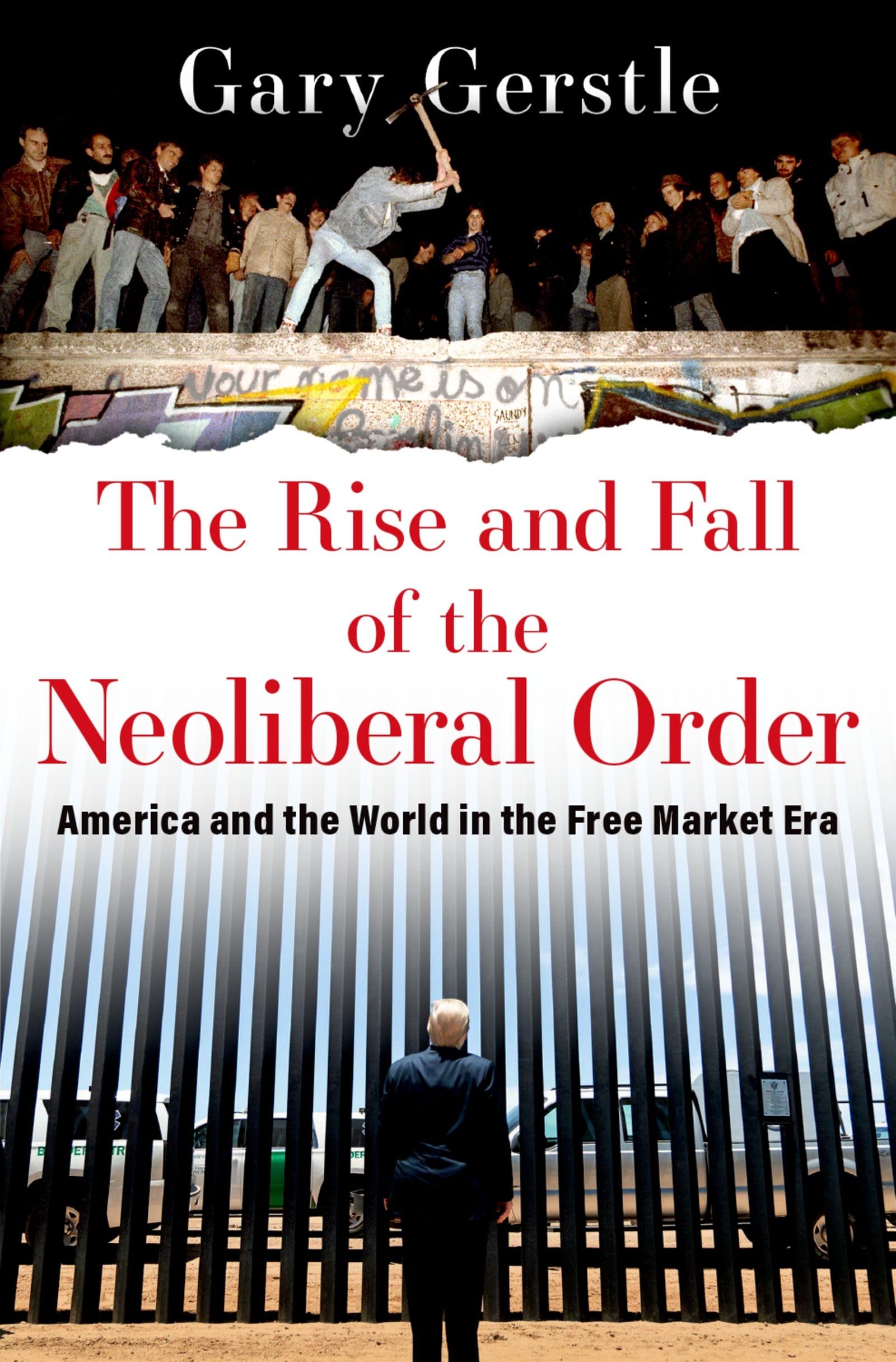
Title
The Rise And Fall Of The Neoliberal Order: America And The World In The Free Market Era,New
Sold by Ergodebooks, an authorized reseller.
Returns accepted within 30 days | support@ergodebooks.com
Shipping Information
- Free Standard Shipping — United States only
- Processing Time: 3–5 business days
- Estimated Delivery: 6–10 business days after dispatch
- Double-boxed, fully insured & discreetly packaged
- Tracking number sent via email once dispatched
Returns & Refund
Returns accepted within 30 days of delivery.
Damaged or Defective Item
Free return shipping + replacement or full refund
Wrong Item Received
Free return shipping + replacement or full refund
Change of Mind
Return shipping at customer's expense · 25% restocking fee applies
Payment Option

The Most Sweeping Account Of How Neoliberalism Came To Dominate American Politics For Nearly A Half Century Before Crashing Against The Forces Of Trumpism On The Right And A New Progressivism On The Left.The Epochal Shift Toward Neoliberalisma Web Of Related Policies That, Broadly Speaking, Reduced The Footprint Of Government In Society And Reassigned Economic Power To Private Market Forcesthat Began In The United States And Great Britain In The Late 1970S Fundamentally Changed The World. Today, The Word 'Neoliberal' Is Often Used To Condemn A Broad Swath Of Policies, From Prizing Free Market Principles Over People To Advancing Privatization Programs In Developing Nations Around The World.To Be Sure, Neoliberalism Has Contributed To A Number Of Alarming Trends, Not Least Of Which Has Been A Massive Growth In Income Inequality. Yet As The Eminent Historian Gary Gerstle Argues In The Rise And Fall Of The Neoliberal Order, These Indictments Fail To Reckon With The Full Contours Of What Neoliberalism Was And Why Its Worldview Had Such Persuasive Hold On Both The Right And The Left For Three Decades. As He Shows, The Neoliberal Order That Emerged In America In The 1970S Fused Ideas Of Deregulation With Personal Freedoms, Open Borders With Cosmopolitanism, And Globalization With The Promise Of Increased Prosperity For All. Along With Tracing How This Worldview Emerged In America And Grew To Dominate The World, Gerstle Explores The Previously Unrecognized Extent To Which Its Triumph Was Facilitated By The Collapse Of The Soviet Union And Its Communist Allies. He Is Also The First To Chart The Story Of The Neoliberal Order'S Fall, Originating In The Failed Reconstruction Of Iraq And Great Recession Of The Bush Years And Culminating In The Rise Of Trump And A Reinvigorated Bernie Sandersled American Left In The 2010S.An Indispensable And Sweeping Reinterpretation Of The Last Fifty Years, This Book Illuminates How The Ideology Of Neoliberalism Became So Infused In The Daily Life Of An Era, While Probing What Remains Of That Ideology And Its Political Programs As America Enters An Uncertain Future.
⚠️ WARNING (California Proposition 65):
This product may contain chemicals known to the State of California to cause cancer, birth defects, or other reproductive harm.
For more information, please visit www.P65Warnings.ca.gov.
- Q: How many pages does this book have? A: This book has four hundred thirty-two pages. It offers an in-depth examination of neoliberalism's impact on American politics.
- Q: What is the binding type of this book? A: This book is a hardcover edition. Hardcover bindings are durable and ideal for extensive reading.
- Q: What are the dimensions of this book? A: The dimensions of this book are six point five five inches in length, one point four two inches in width, and nine point five three inches in height. These dimensions make it a suitable size for most bookshelves.
- Q: Who is the author of this book? A: The author of this book is Gary Gerstle. He is an eminent historian known for his insights into American political history.
- Q: What category does this book fall under? A: This book falls under the category of United States. It specifically explores American political history and economic ideology.
- Q: What is the main theme of this book? A: The main theme of this book is the rise and fall of neoliberalism in America. It analyzes how neoliberal policies shaped the political landscape over several decades.
- Q: Is this book suitable for beginners in political theory? A: Yes, this book is suitable for beginners. It provides a comprehensive overview of neoliberalism that is accessible to readers new to political theory.
- Q: How does this book explore the concept of neoliberalism? A: This book explores neoliberalism by tracing its historical emergence and its effects on society and politics. It discusses both its advantages and shortcomings.
- Q: Does this book cover the impact of Trumpism on neoliberalism? A: Yes, this book covers the impact of Trumpism on neoliberalism. It details how Trumpism represents a reaction against the neoliberal order.
- Q: What audience is this book intended for? A: This book is intended for readers interested in political history, economics, and social theory. It appeals to academics and general readers alike.
- Q: How should I store this book to keep it in good condition? A: Store this book upright on a shelf away from direct sunlight. This helps prevent damage to the cover and pages.
- Q: Can I read this book in a day? A: No, reading this book in a day may be challenging. With four hundred thirty-two pages, it requires a more extended commitment.
- Q: What should I do if the book arrives damaged? A: If the book arrives damaged, you should contact the seller for a return or replacement. Most sellers have customer support for such issues.
- Q: Is this book appropriate for academic study? A: Yes, this book is appropriate for academic study. It serves as a scholarly resource for understanding neoliberalism and its implications.
- Q: What kind of writing style does the author use? A: The author uses a clear and engaging writing style. This approach makes complex ideas more accessible to readers.
- Q: Does this book provide historical context for neoliberalism? A: Yes, this book provides extensive historical context for neoliberalism. It discusses how global events influenced its rise and fall.