
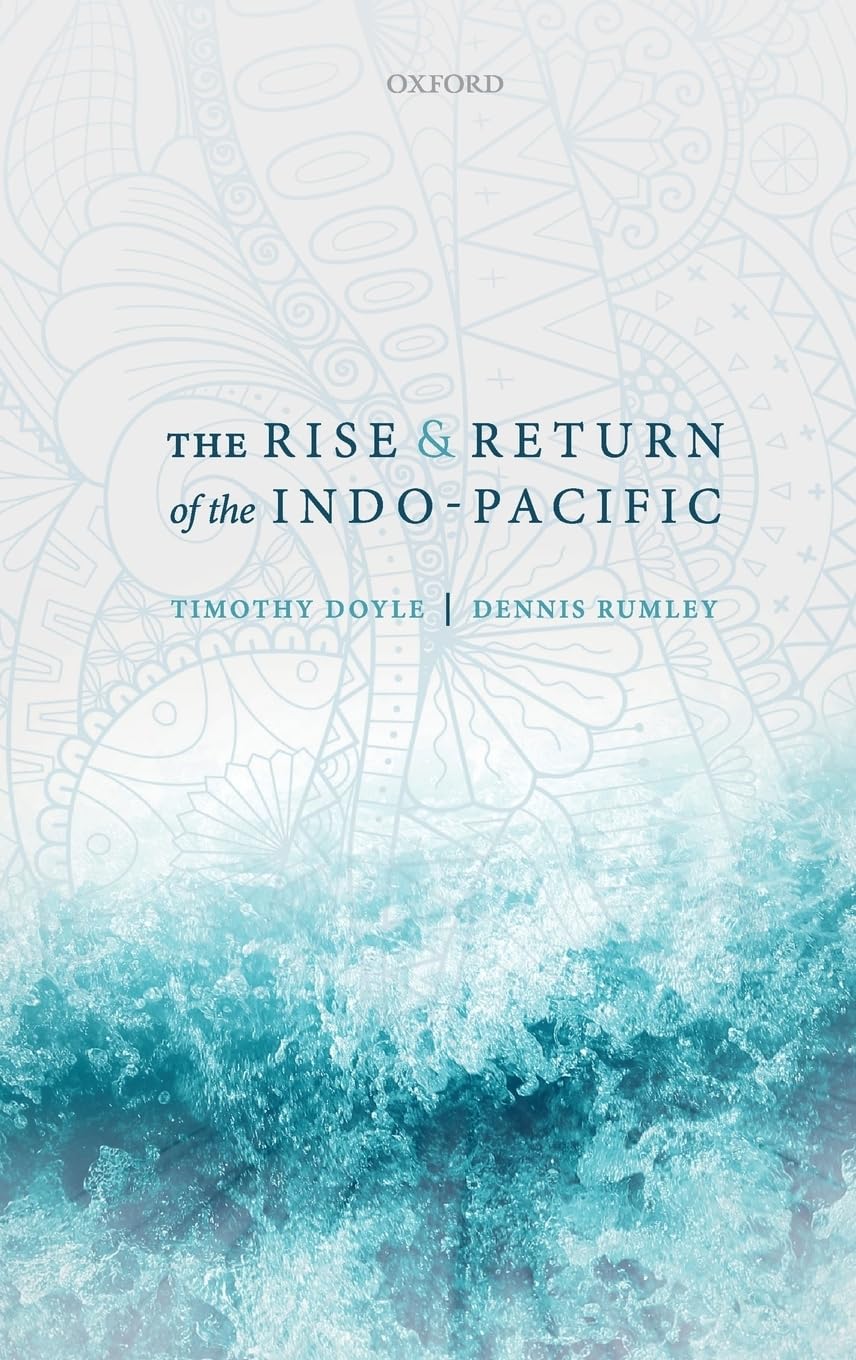
Title
The Rise and Return of the IndoPacific,Used
Sold by Ergodebooks, an authorized reseller.
Returns accepted within 30 days | support@ergodebooks.com
Shipping Information
- Free Standard Shipping — United States only
- Processing Time: 3–5 business days
- Estimated Delivery: 6–10 business days after dispatch
- Double-boxed, fully insured & discreetly packaged
- Tracking number sent via email once dispatched
Returns & Refund
Returns accepted within 30 days of delivery.
Damaged or Defective Item
Free return shipping + replacement or full refund
Wrong Item Received
Free return shipping + replacement or full refund
Change of Mind
Return shipping at customer's expense · 25% restocking fee applies
Payment Option

In the 21st century, the IndoPacific region has become the new centre of the world. The concept of the 'IndoPacific', though still under construction, is a potentially 'pivotal' site, where various institutions and intellectuals of statecraft are seeking common ground on which to anchor new regional coalitions, alliances. and allies to better serve their respective national agendas. This book explores the 'IndoPacific' as an ambiguous and hotly contested regional security construction. It critically examines the major drivers behind the revival of classical geopolitical concepts and their deployment through different national lenses. The book also analyses the presence of India and the U.S in the IndoPacific, and the manner in which China has reacted to their positions in the IndoPacific to date. It suggests that national constructions of the IndoPacific region are more informed by domestic political realities, antiChinese bigotries, distinctive properties of 21st century U.S hegemony, and narrow nationstatist sentiments rather than genuine panregional aspirations.The Rise and Return of the IndoPacific argues that the spouting of contested depictions of the IndoPacific region depend on the fixed geostrategic lenses of nationstates, but what is also important is the reemergence of older ideas a class conceptual revival based on early to mid20th century geopolitical ideas in many of these countries. The book deliberately raises the issue of the sea and constructions of 'nature', as these symbols are indispensable parts of many of these IndoPacific regional narratives. Despite the existence of diverse nationstatist, pan and subregional discourses, the narratives of the most powerful states still dominate 21st century IndoPacific statecraft. The term 'IndoPacific' has the potential of unsettling various existing bilateral and multilateral geopolitical equations within the Indian Ocean region. Despite substantial heterogeneity in IndoPacific regional imaginations, the most dominant 'stories' and 'maps' are crafted and disseminated by the most dominant nation in this case, the U.S as it grapples with new ways of retaining its hegemony into the 21st century.
⚠️ WARNING (California Proposition 65):
This product may contain chemicals known to the State of California to cause cancer, birth defects, or other reproductive harm.
For more information, please visit www.P65Warnings.ca.gov.